Join us as we travel North America's rivers, waterways, and canals; visit U.S. and Canadian cities, historical landmarks, national parks and river towns. We may even take you to the Bahamas.
Apalachicola, Franklin County, The Forgotten Coast, Florida; Scipio Creek Marina
Jan 1, 2024; Mile 351.4; Day’s Run: 32 miles
To view in large format, click on ‘reader’ or ‘In new window’ on the top right of this blog.
To return to the Gulf Intracoastal Waterway from Port St Joe, we backtracked on the 5-mile long Gulf County Canal to a section of Waterway we hadn’t travelled.
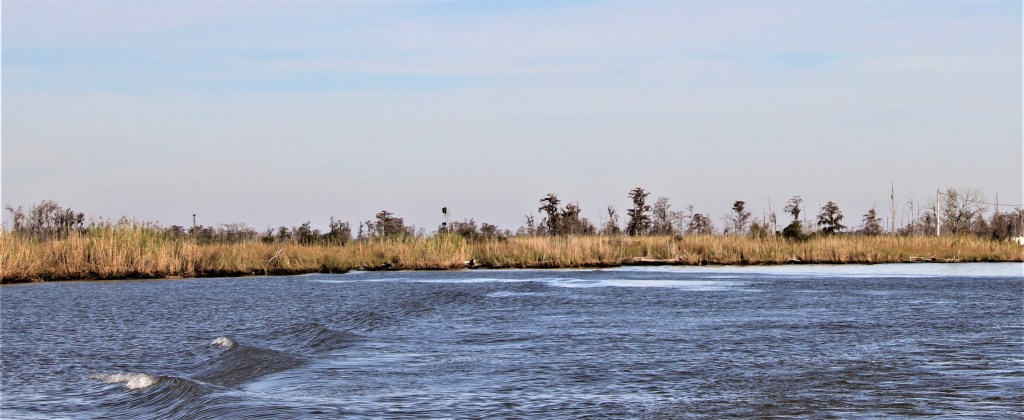
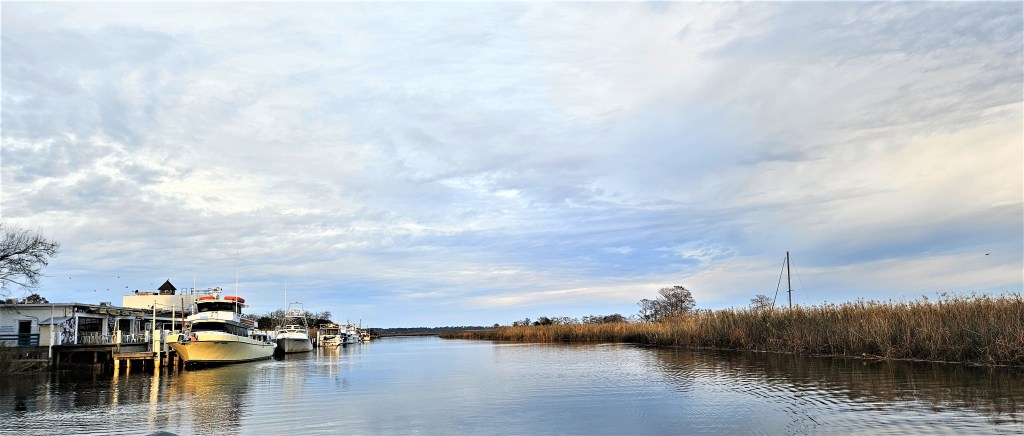
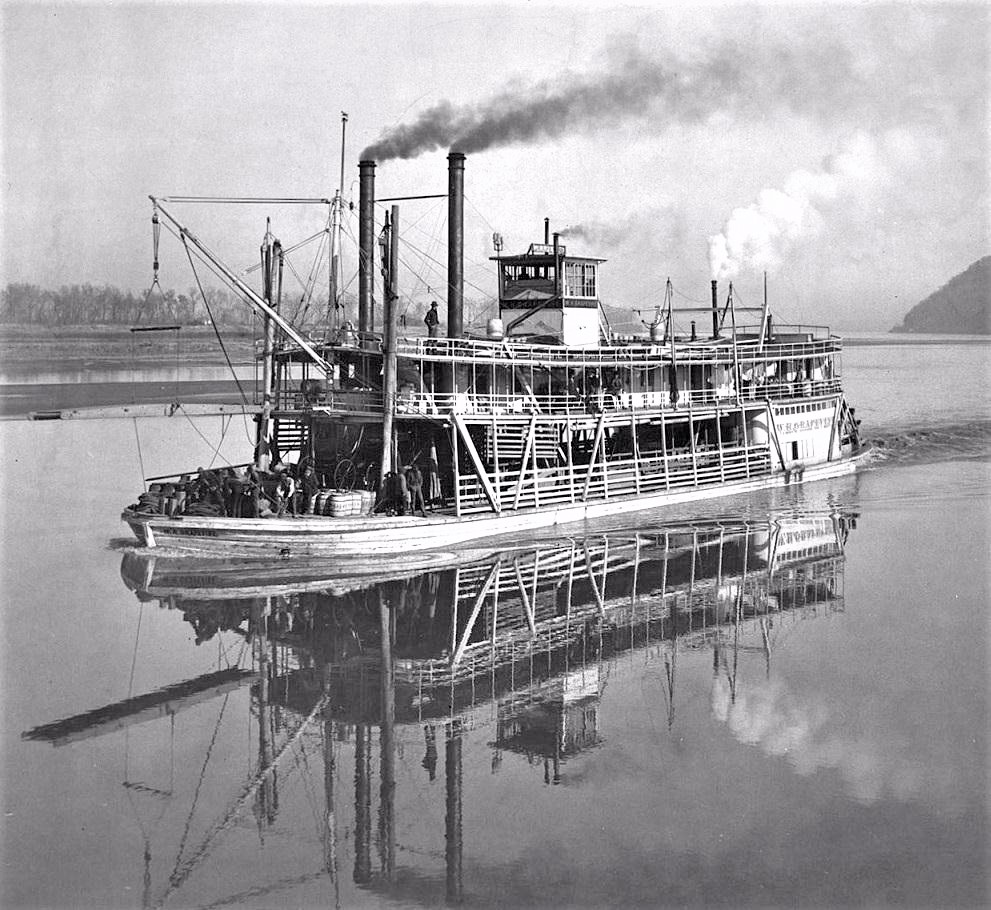
The Apalachicola River is part of the Waterway and where in the 1820s, the Apalachicola economy began. Sawmills sprung up along the river serving the lumber industry that supplied the world with pine, cypress and cottonwood. Pine supplied sap that was distilled into turpentine and resin which was used in ship building.Two hundred steamboats plied the river transporting bales of cotton, lumber, dry goods, furniture, salt, seafood and passengers to the northern mid west.By 1836, 3-masted sailing ships were delivering compressed bales of cotton to lace and textile factories in England, Belgium, and France.We turned off the river onto Scipio Creek towards Apalachicola. We motored past miles of seagrasses.Arriving to Scipio Creek Marina
Originally known as Cottontown, the waterfront was lined with 43, three storied brick warehouses where cotton was compressed into bales.For 20 years, between 6 and 8 million dollars worth of cotton left Apalachicola annually.
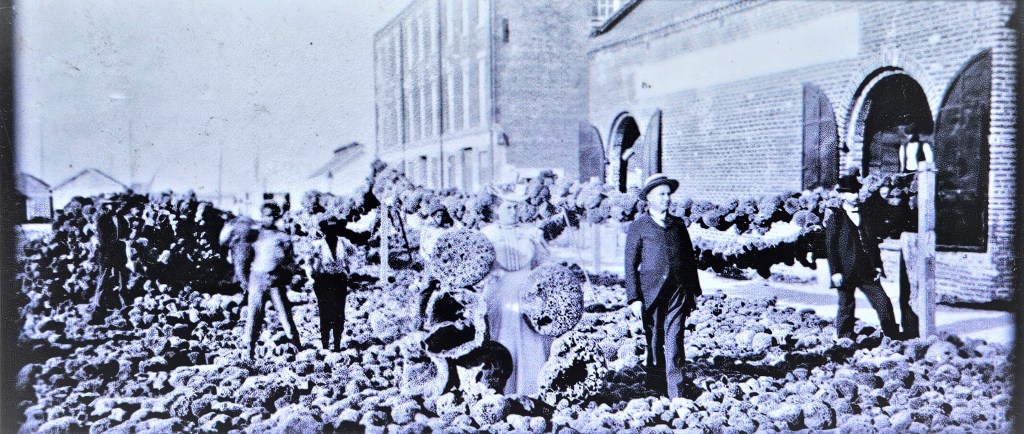
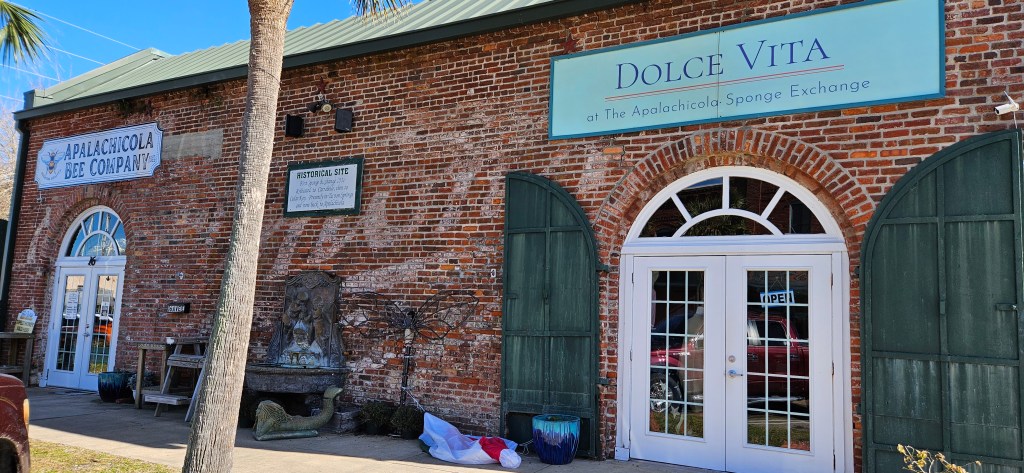
Greek immigrants brought their sponge-trade practices to Florida and by 1895, two sponge warehouses and a fleet of 16 small schooner-harvesting boats, each spending a month at a time retrieving sponges from the Gulf, were part of the hustle on the waterfront. About 100 men were employed by the industry.
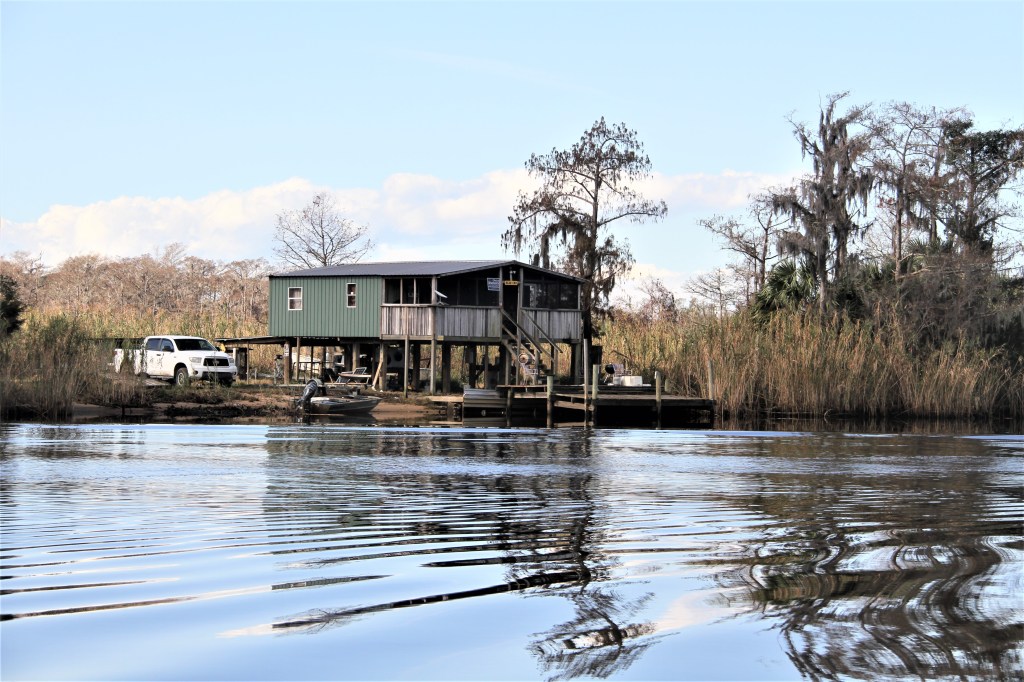
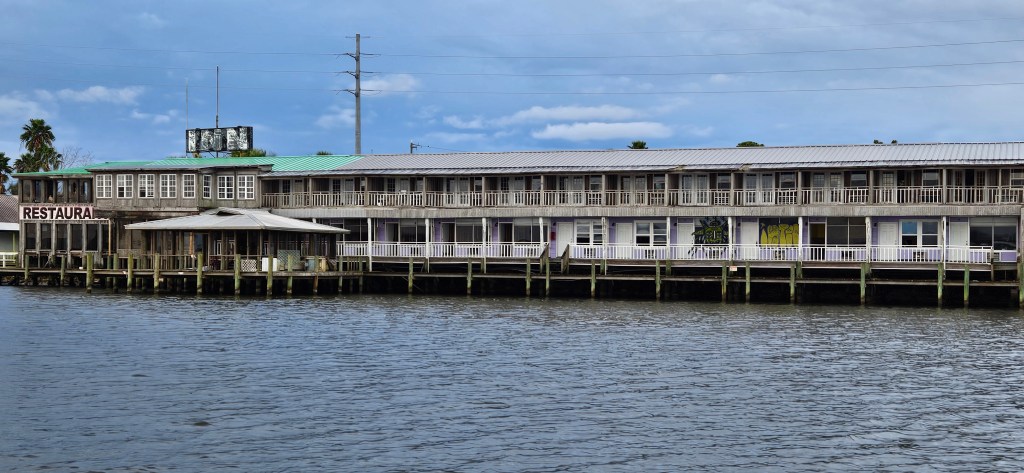
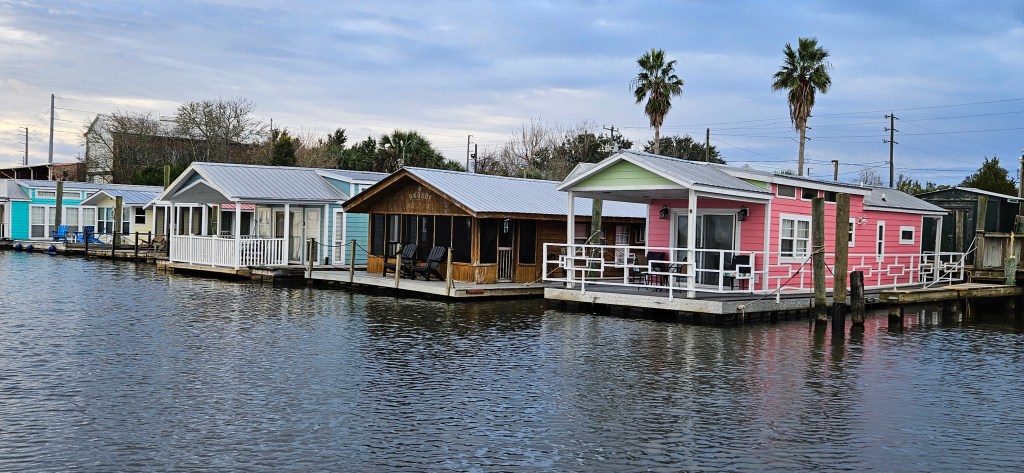
River flooding inhibits waterfront development.Floating rental cottages along the river.
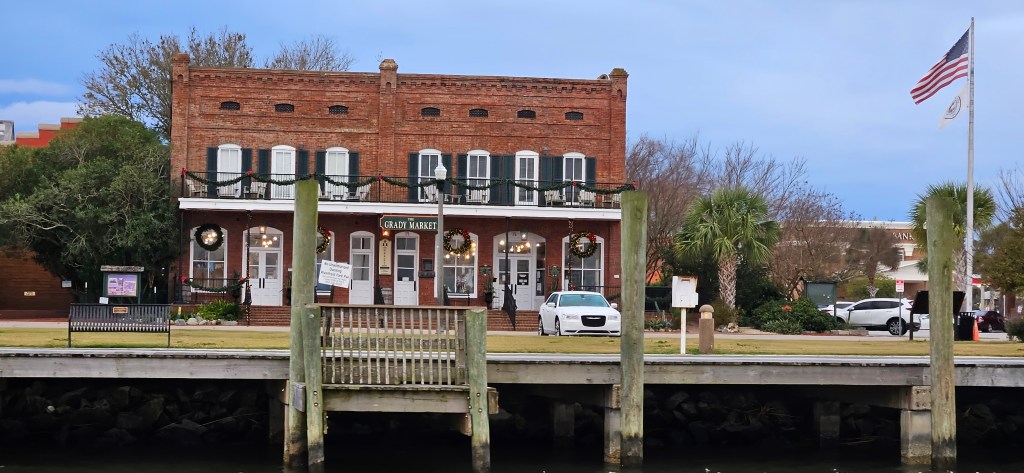
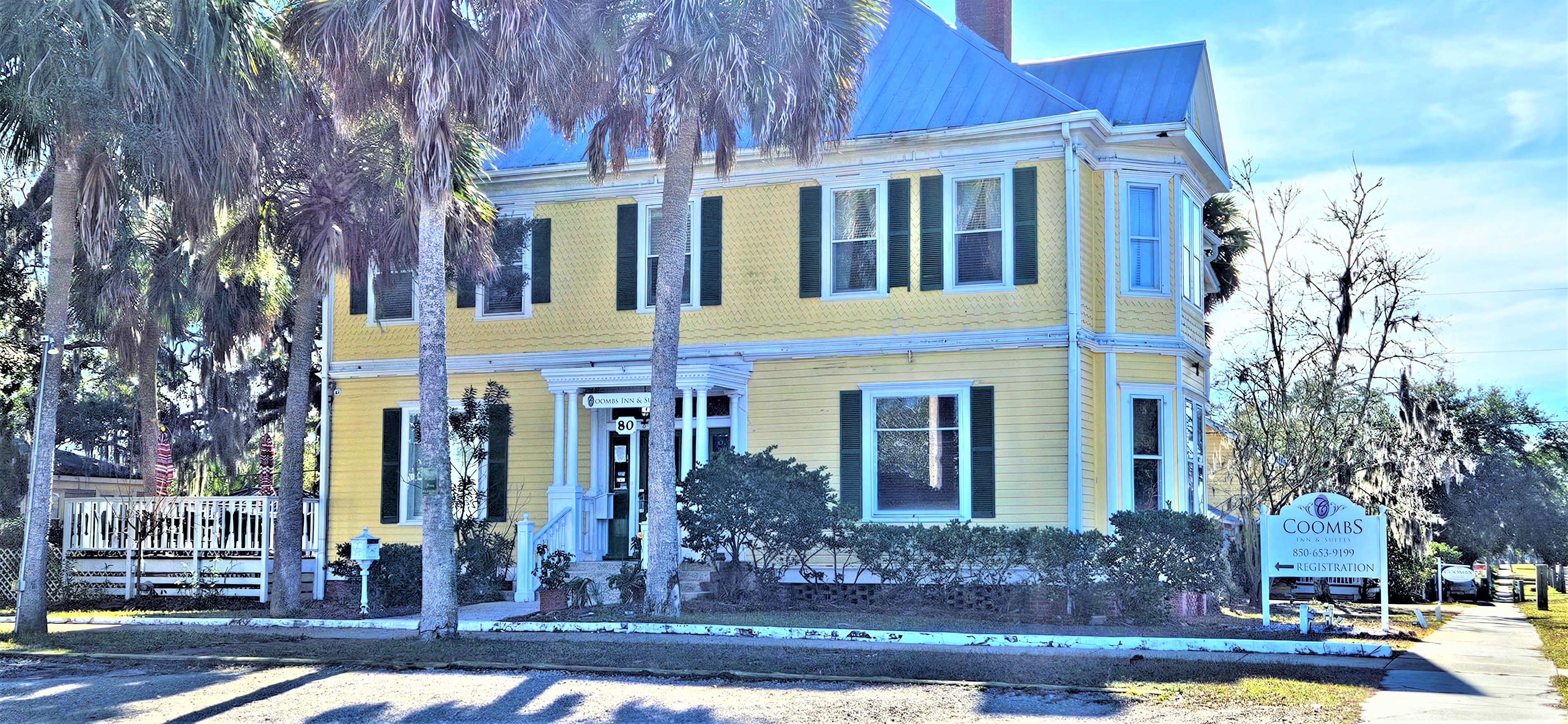
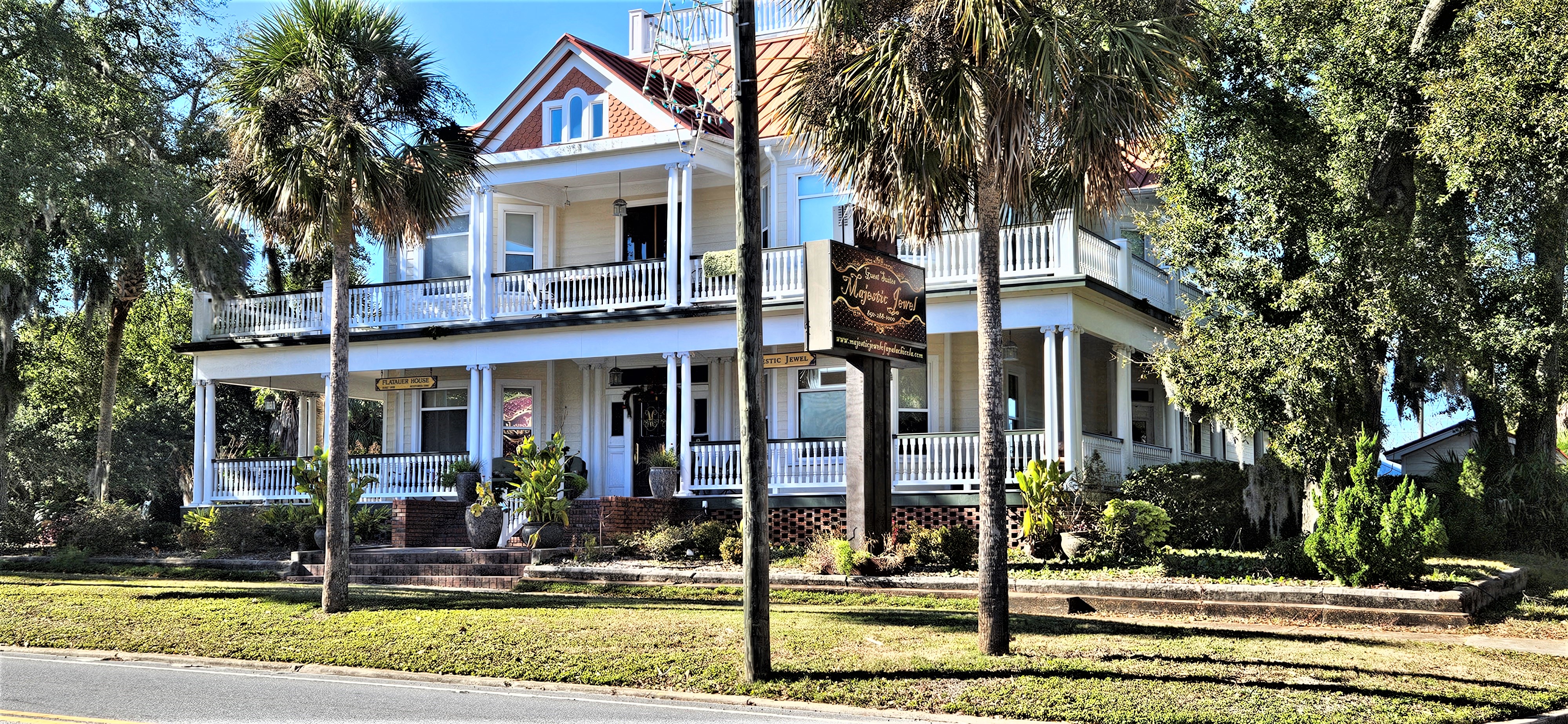
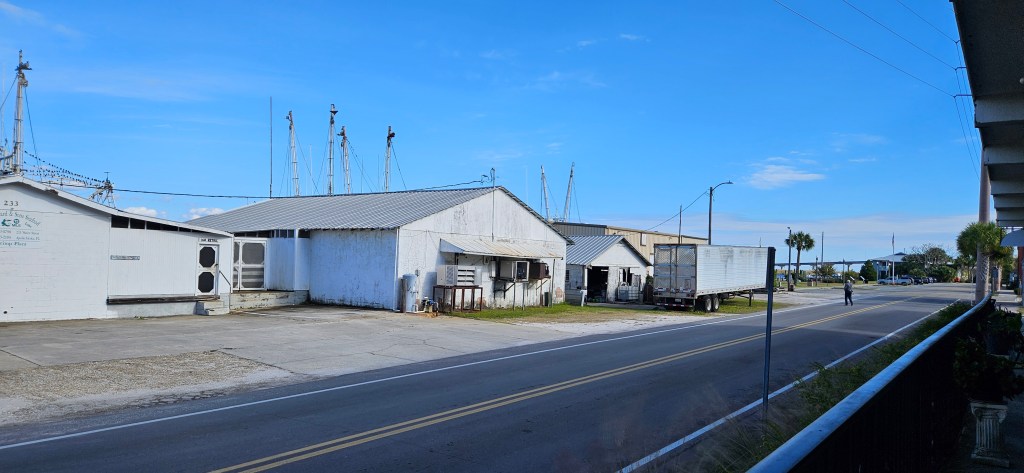
Apalachicola, or ‘Apalach’ in local slang, has a population of 2,300 residents. From the marina, we could walk uptown.
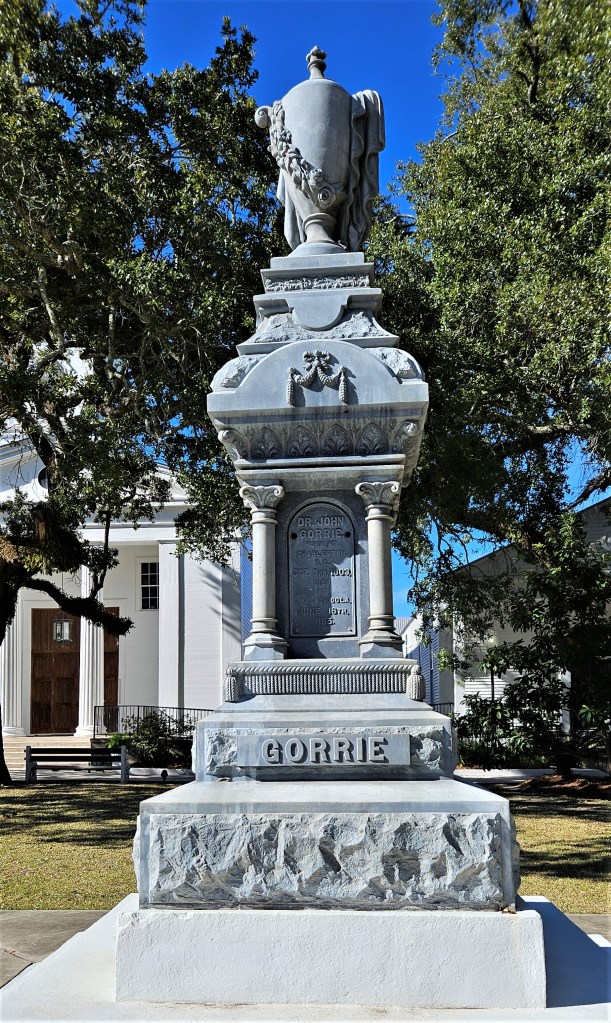
Hoping to cure yellow fever, which included diminishing the effects of high fever in his patients, Dr. John Gorrie, an early pioneer to the area, invented the initial steps to producing artificial ice, refrigeration and air conditioning. In 1852, he was issued a patent for mechanical refrigeration.The former Apalachicola Sponge Exchange
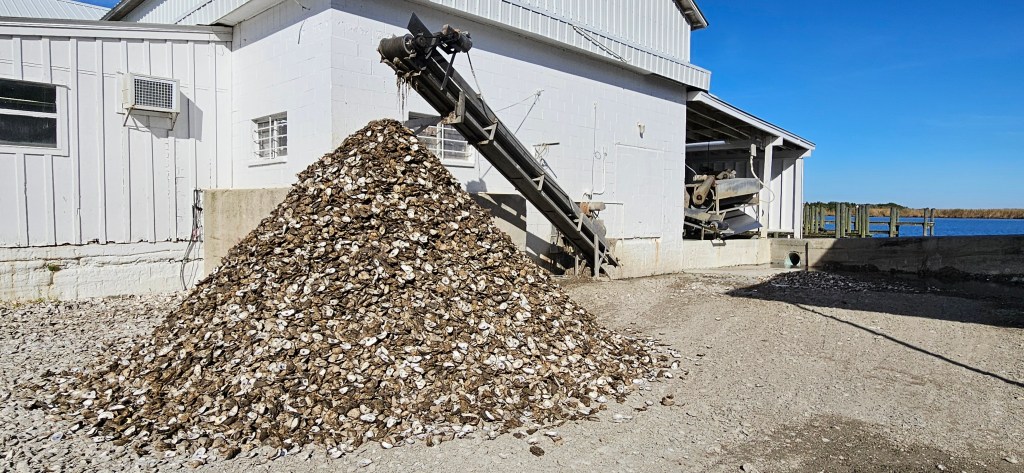
A pile of oyster shells outside Leavins Seafood company.
Grady Leavins, a Floridian entrepreneur, developed a new way to package oysters. The ‘Frosted Oyster’ method automatically shucks oysters and flash freezes them using liquid nitrogen.
Although Apalachicola Bay is just one of many estuaries in the Gulf of Mexico, it once provided 90 percent of Florida’s oysters. The industry has been part of the Bay, for over 175 years. According to Garen & Gun, Land and Conservation: In 2020, the Apalachicola Bay oysters were so depleted that the Florida Fish and Wildlife Conservation Commission closed the wild oyster harvest for five years to allow populations to recover. “The oysters are a very important part of the ecosystem and with their decline comes the decline of certain fish species. Oyster reefs, [oyster shells attached to other shells], are in more trouble than coral reefs. Overharvesting is the primary reason.” At its height, oyster boats could bring in 100 or more bags a day. By 2020, the few people left on the water might haul in three bags a day. The Apalachicola Bay System Initiative (ABSI) experiment with wild habitat recovery, has resulted in successful aquaculture techniques taking over. Now farmers lease water plots: oysters attach themselves to cages that are lowered into the water. But success is still dependent on mother nature such as hurricanes and water temperature.
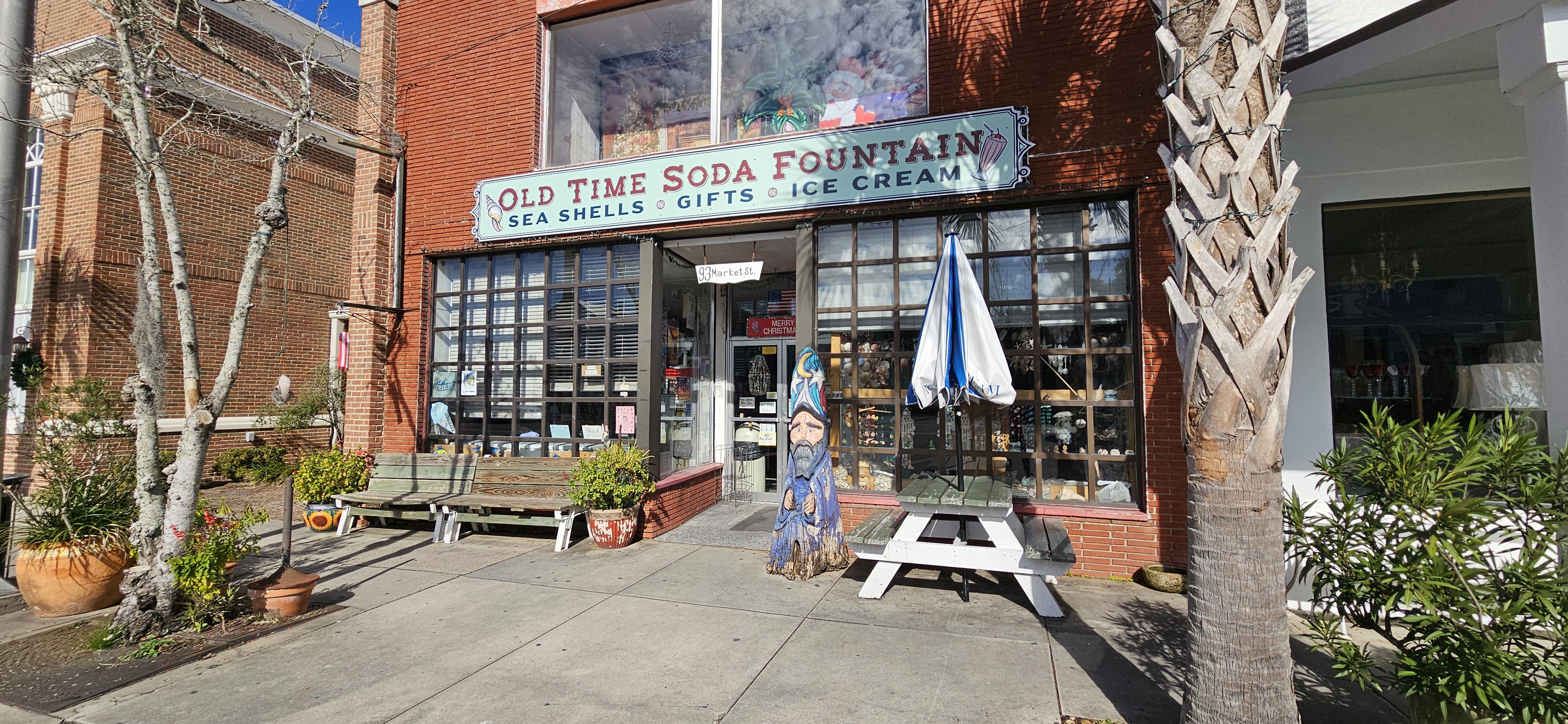
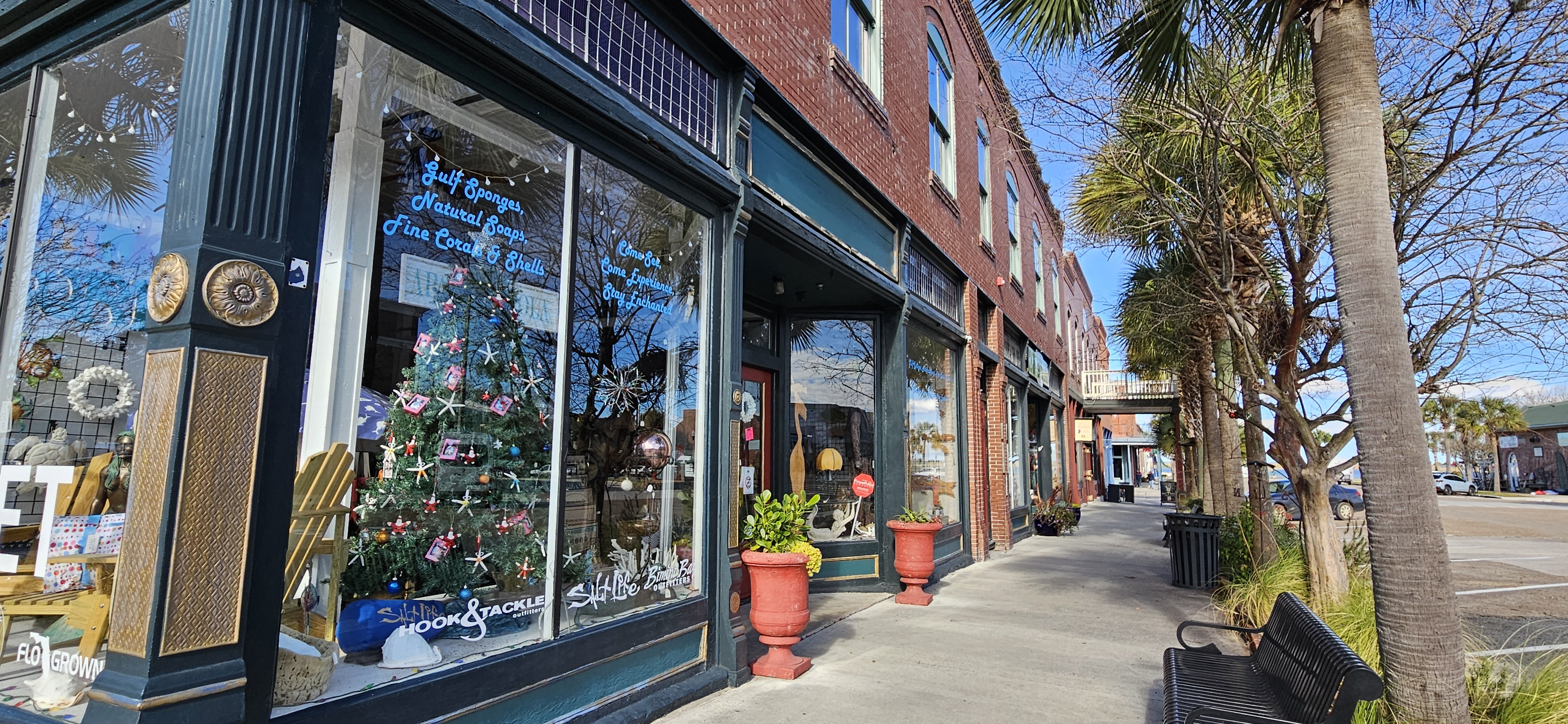
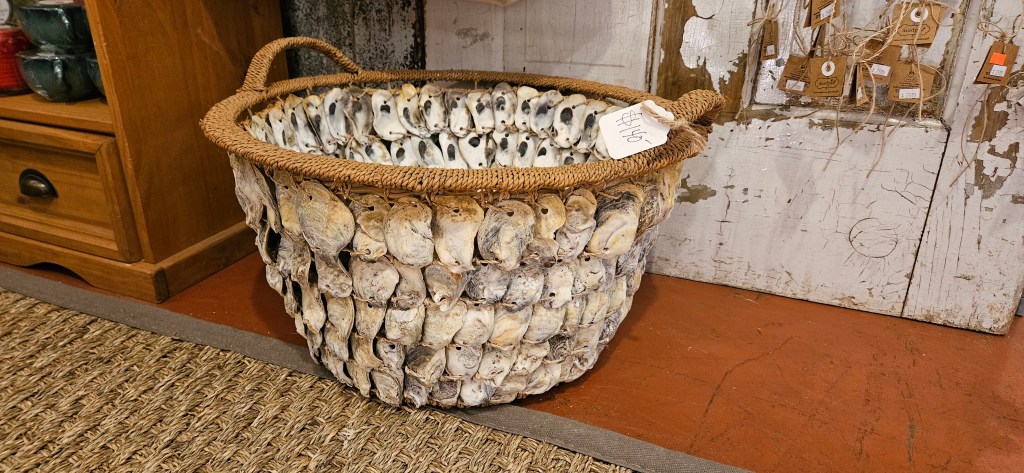
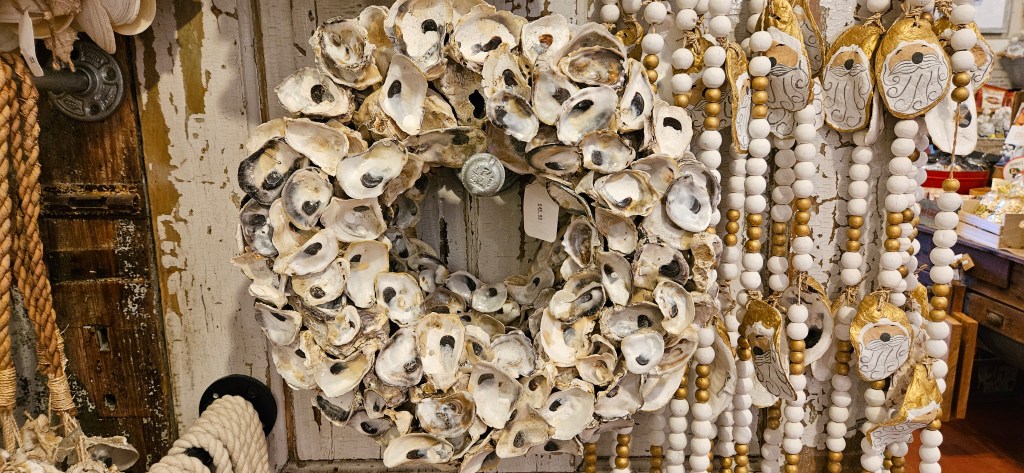
Stores sell unique merchandise made of oyster shells.
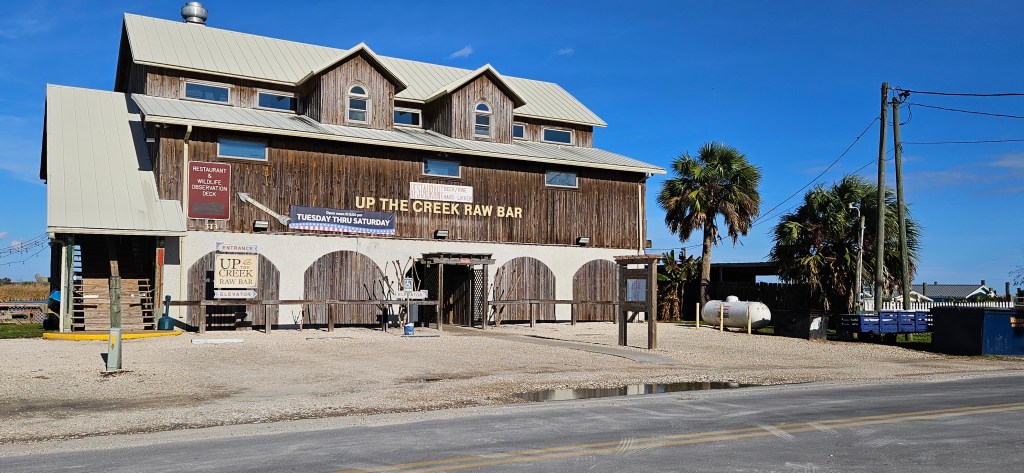
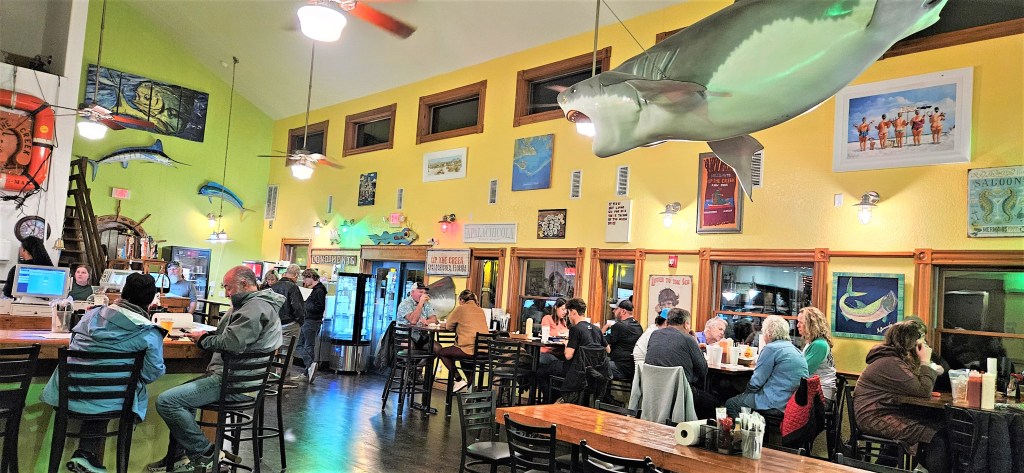
UP The Creek Raw Bar
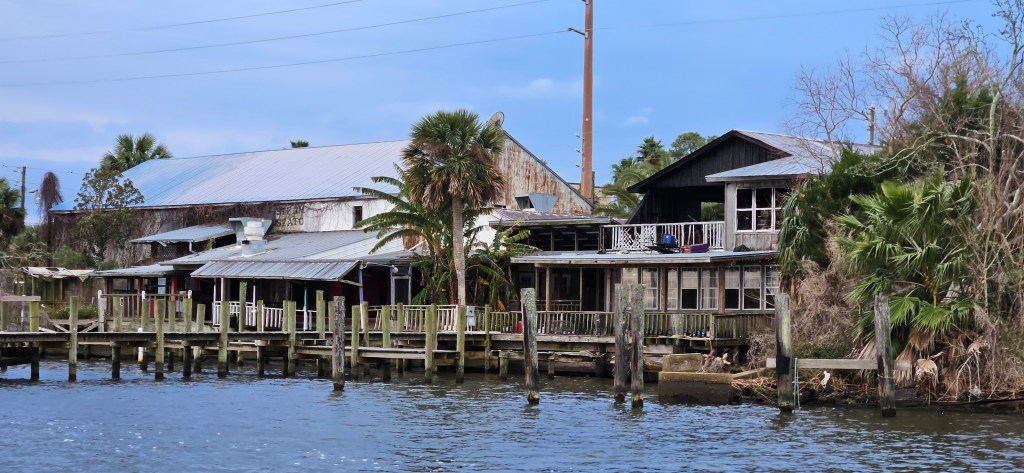
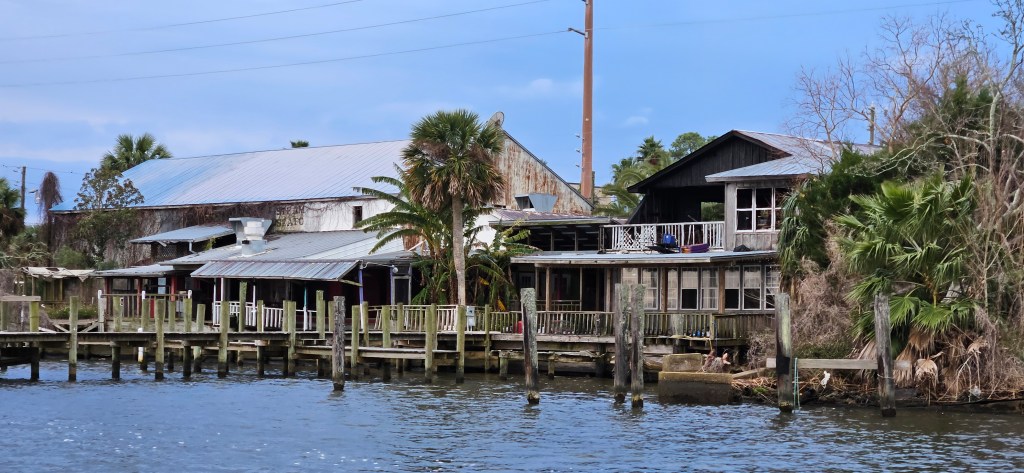
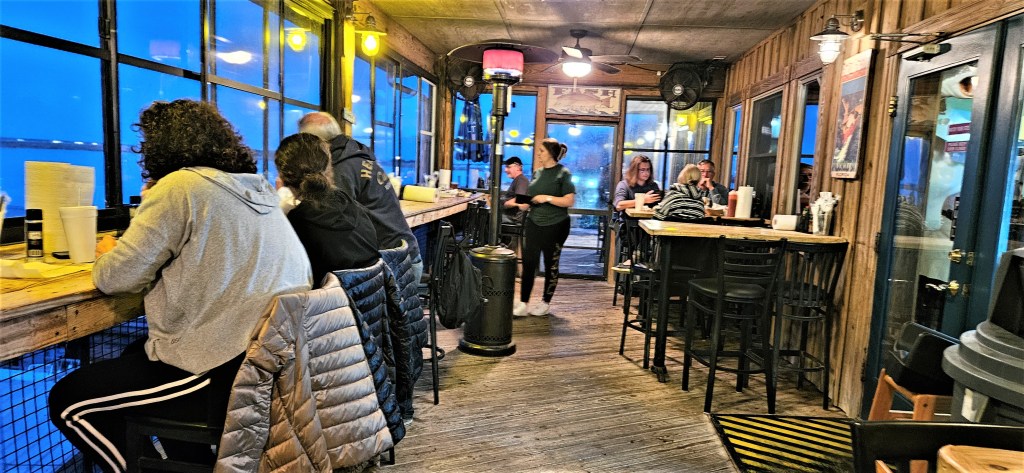
We have eaten in some pretty interesting restaurants while exploring America’s riverways. Up the Creek Raw Bar is one of them.It was a cold evening the night we were there. But the indoor porch was warm and cosy even though surrounded by windows. The structure of the building itself was weathered wood, one of those places that looked as if it could go up in flames if someone lit a cigarette. We sat at a counter overlooking the river. Partway through our meal, we realized the porch was being heated by propane heaters! And we were indoors!
We purchased a pound of shrimp from the 13-Mile Seafood Market. I prepared it by sautéing the shrimp in a simple mixture of butter, olive oil, white wine and lots of fresh garlic and then I served it over pasta. It was one of the best tasting shrimp meals I have had. I don’t know if I have ever cooked with fresh shrimp before.
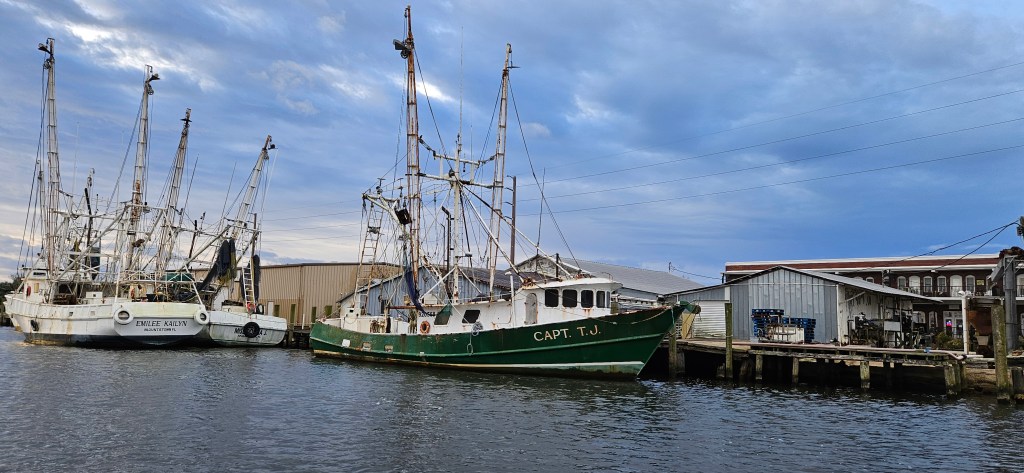
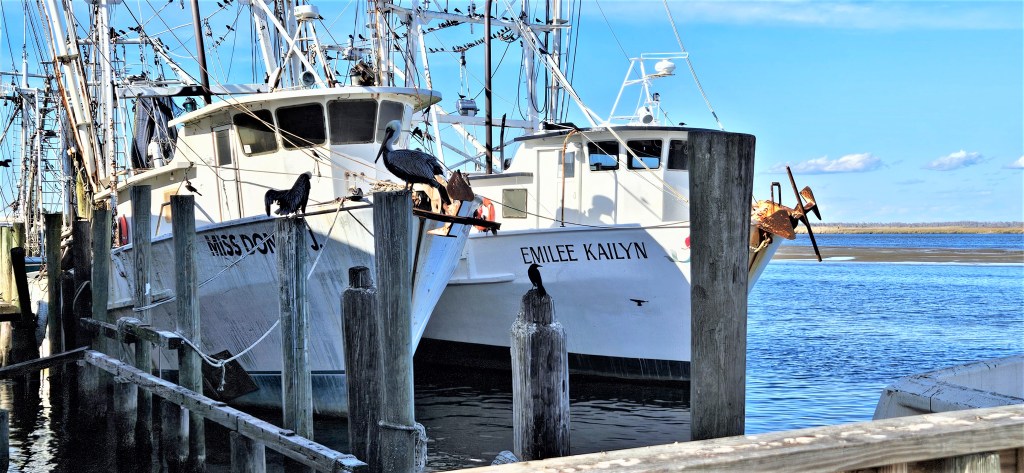
Industrial-sized shrimp vessels stay out 10 days at a time and flash freeze their catch. Smaller inshore shrimpers, like the ones pictured above in Apalachicola harbour, make shorter trips out and back to deliver fresh shrimp to their markets. Apalachicola Bay shrimping accounts for 20% of the U.S. supply. Blue crabs are also fished in the estuaries.
Before I Go
Boaters might complain about all the required maintenance needed to keep their boats running smoothly, but seldom does our work teeter on the edge of blowing ourselves up. Operating steamboats was an exact science. Maintaining water levels and steam pressure were critical. A sudden increase in temperature could, and often did, cause explosions.


 Traveling the Great Loop
Leave a comment