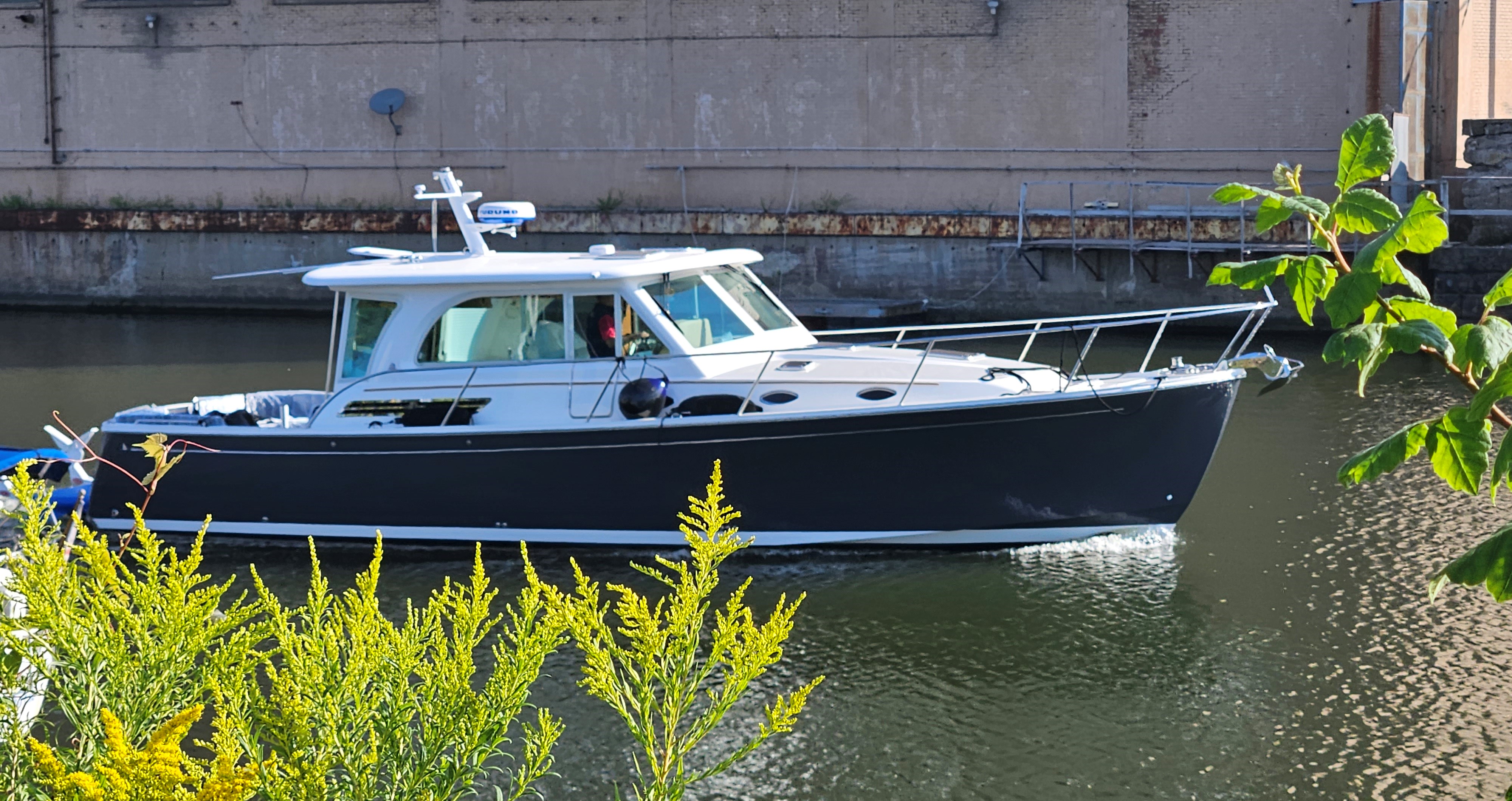
January 7-10, Day’s run: 86 mi.
Sunday, January 7th forecast: N to NE winds (offshore); winds 16 knots and diminishing; waves 3 feet and diminishing, with 7 second wave period.
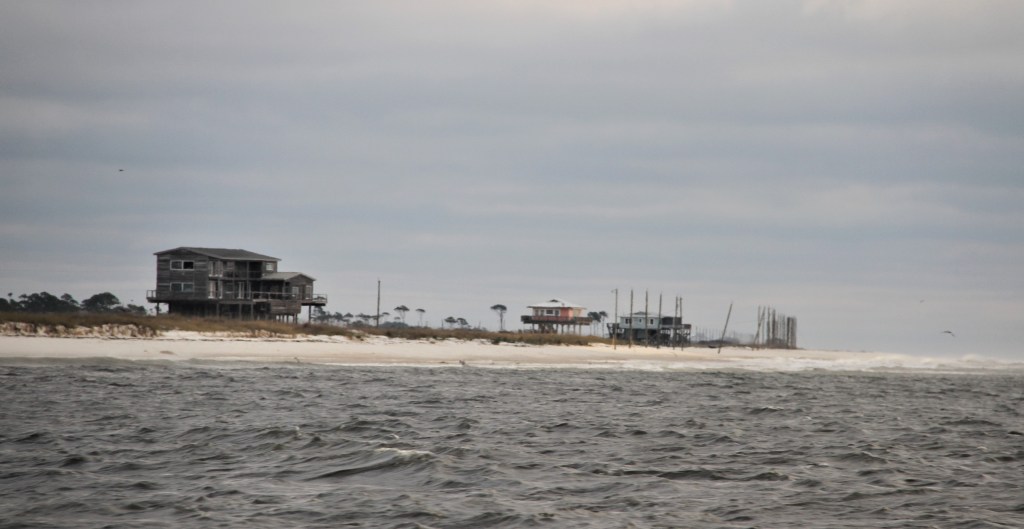
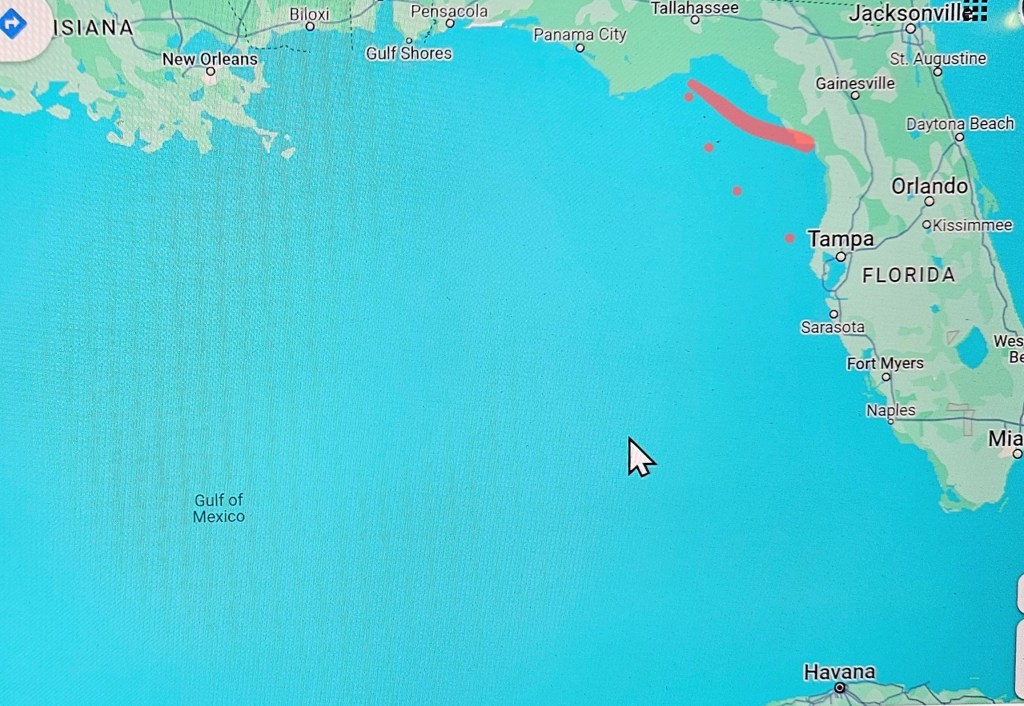
The Gulf of Mexico is vast: over 600,000 sq mi./965,000 sq km. But even several miles offshore, depths remain shallow. These shoaly waters create short wave periods and steepened seas. If the weather had been obliging, we would have gone straight to Clearwater from Carrabelle, a 170 mile passage, (indicated above by the dotted line). Instead, we took a direct route to Steinhatchee, a destination of 86 miles.
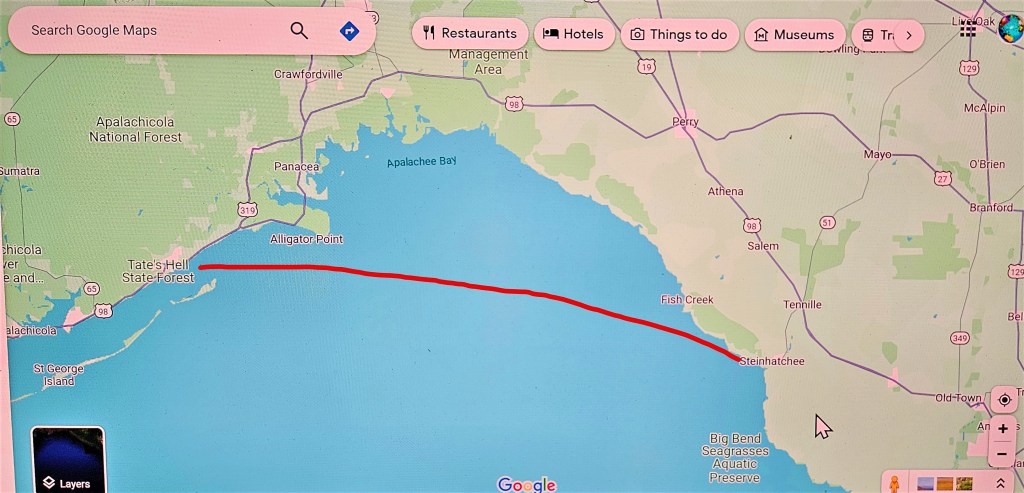
There is no marked channel crossing the Gulf. The weather service suggested we not do a dead reckoning to Steinhatchee but follow the curvature of the Gulf instead, resulting in a few more miles to Clearwater, but with quieter waves and softer winds.
I cleared the counter, put everything in a plastic crate and secured it in the guest cabin where it couldn’t move. I laid non-skid matting over the counter and table so that we could place drinking cups and lunch items down without them falling to the floor.
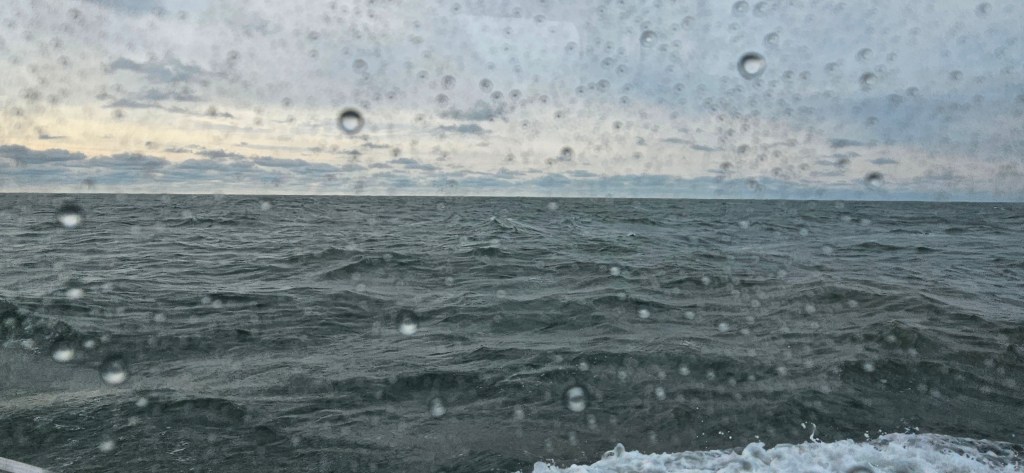
Seas were 3-4 feet on the port stern with occasional 5 footers rolling underneath the hull lifting us to new levels. They would always stimulate me to say; “Whoa!”
Secretly, I was wishing we had a nice heavy keel beneath us. But the boat handled well and so did the auto helm. (Auto helms can steer more accurately than most people in such conditions.) We found traveling at 16 mph gave us a better ride than at 18-19 mph.
The crossing took 5 hours. The passage was bumpy but manageable. We had made the right decision to leave when we did. Weather forecasts predicted the Gulf would not be suitable to cross for the next 3-4 days.
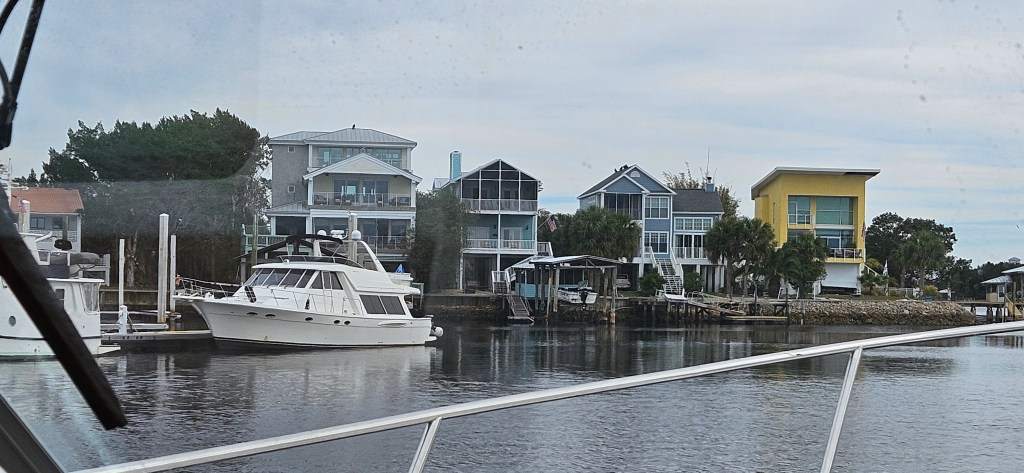
There are 3 marinas on the river, we had made reservations at one of them. We were aware this marina did not have a VHF radio; a very unusual occurrence for a marina. Using our cellphone, we called for directions to the marina and to learn the location of our slip. While waiting for a return call, we noticed, while passing the first marina, someone standing at the end of a dock, waving us in. “We’ve never have seen anyone do that before!” I exclaimed. There was no signage indicating the name of the marina but a sign that read ‘Welcome Loopers’ “I’ve never seen that before either. ” “What shall we do?” we asked each other. “Well, this must be our marina because why would they be waving us in?” In retrospect, that was pretty stupid because how would they know who we were? ( It must have been that bumpy ride across the Gulf that had shaken our senses loose.)
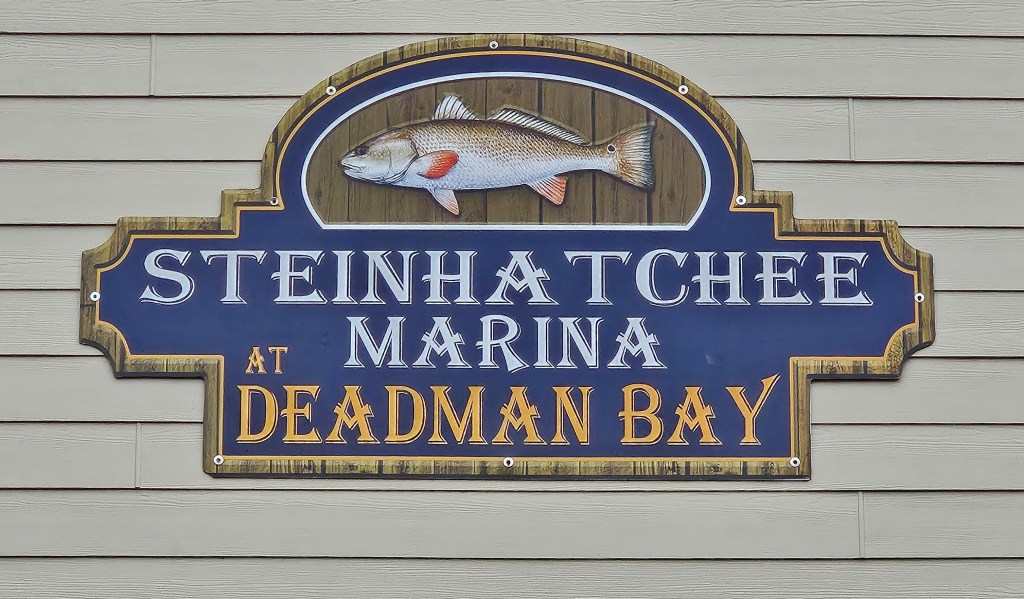
We pulled in. The dock boy, who we learned later was the assistance manager, was incredibly helpful. But soon another man, apparently the manager, came marching down the dock swinging his arms like he was annoyed and wanted to say so. He tore into Mike for tying up without a reservation. Woops! We had tied up in the wrong marina. (We still had not received a call from the marina we had made reservations with.) The dock boy continued to put every effort into welcoming us; tying and retying our lines until he had them perfectly adjusted. He was apologetic for waving us in. “It’s my fault,” he exclaimed over and over. “What should we do”, we wondered? “Leave? Stay? It looked like a nice marina and there were other Loopers there. We presumed they knew what they were doing when they chose to stay there. Four of them had showed up on the dock to greet us and to assist with coming to dock.
The manager never suggested that we leave, so we stayed. The other marina returned our call around 4 o’clock that afternoon!
There was no power at our boat slip but neither did the other marina have power. When we woke in the morning, the only way we could source some heat was to start the generator, and since I get up at 5 and I didn’t want to wake our neighbours, (I dressed in about 5 layers of clothing instead, that I had pulled under the covers for warming.), I didn’t start the generator. I’m such a wimp when it’s cold. The temperature was 15°C/59°F.
The next day, our next door neighbours, who were using two 30 amp plug-ins, offered to share one of their 30s with us. That allowed us to put the heat on in the morning and to do everything we normally do with power other than use certain appliances at the same time; or we would blow a fuse (and that would include our nice neighbour’s fuse).
The name Steinhatchee is derived from the Native American “estenn hatchie” ,‘river of man’: population 537. We could walk to the village from the marina but there was no ‘down-town’ in the village, just a few buildings strung along a county road.
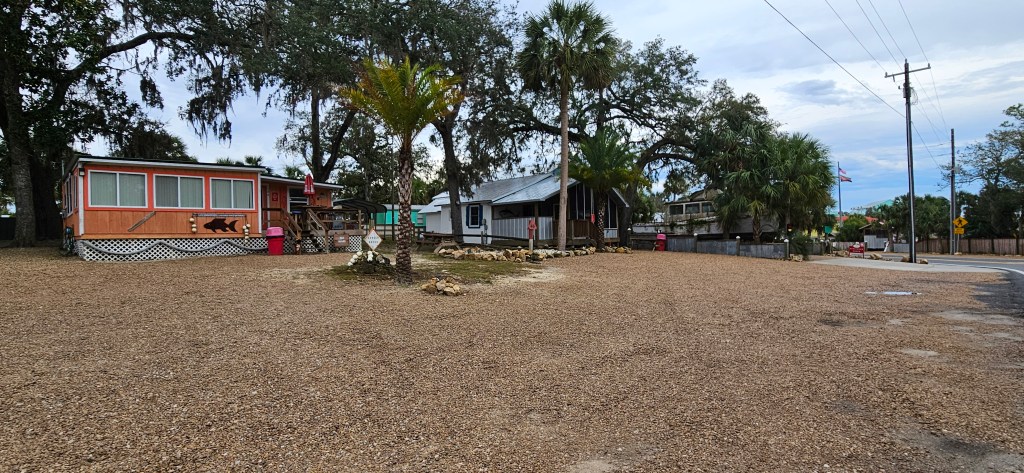
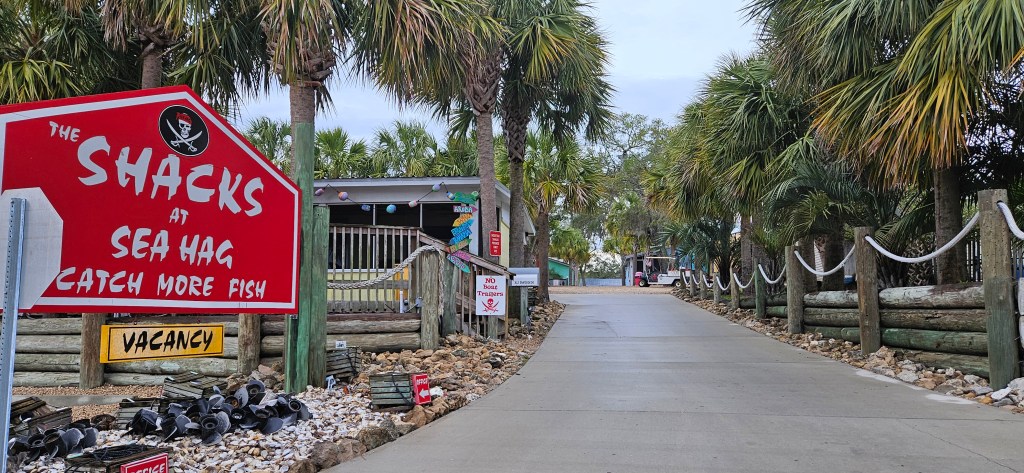
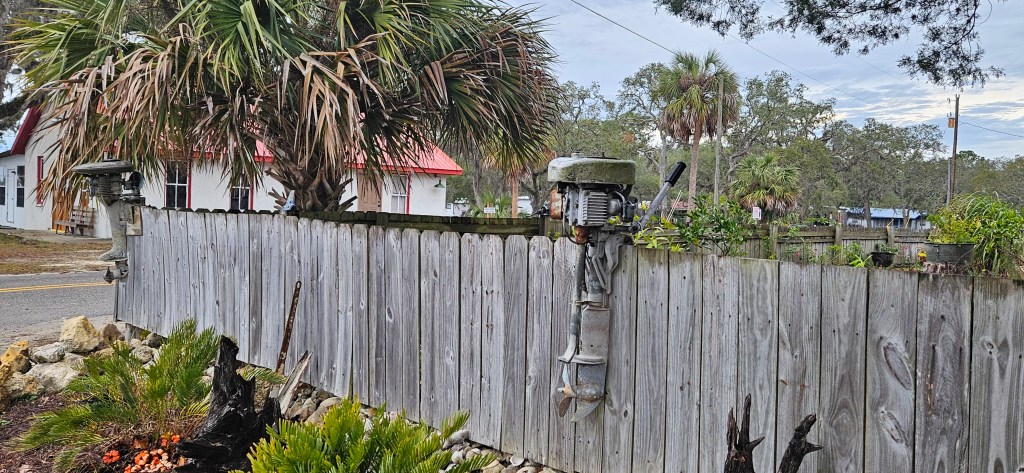
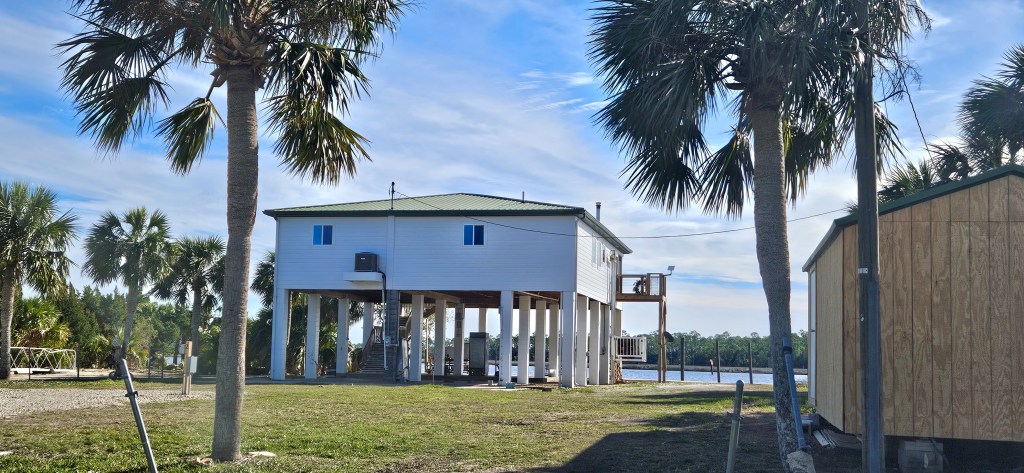
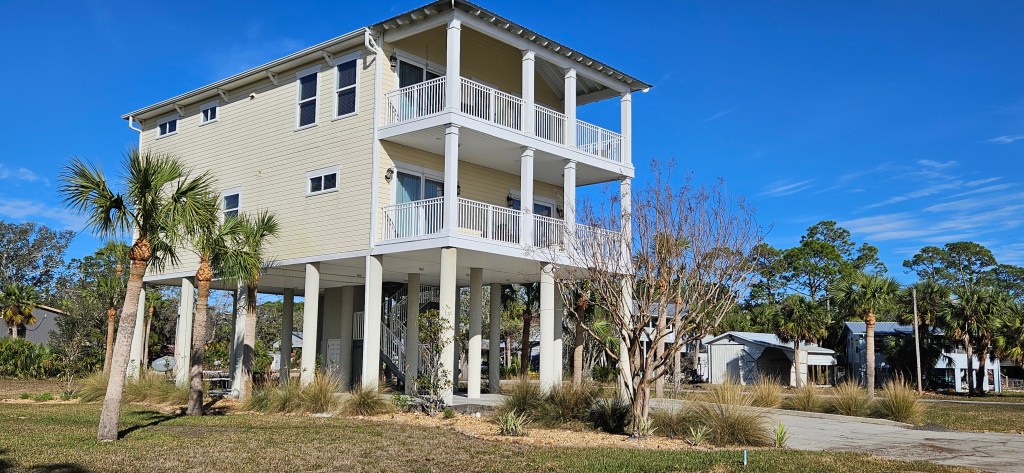
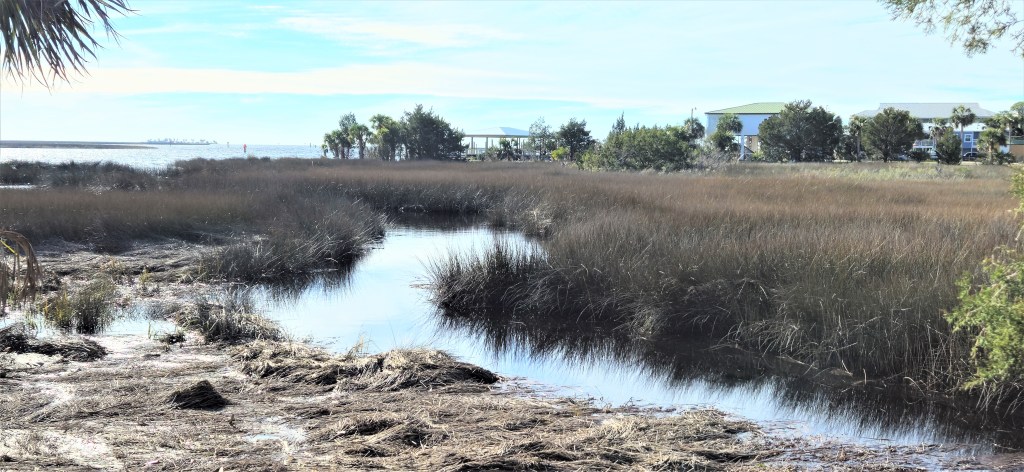
A little bit of history: From the 15th to 18th centuries, pirates took refuge in Steinhatchee, loggers laboured here in the 1800s cutting cypress and cedar, sponge divers arrived in the 1940s and 50s, and today, commercial fishermen fish for mullet & roe, crab and shrimp, but most of the village’s income comes from tourists during the scallop season, (mid-June to Labour Day).
The day after arriving, a storm warning was issued for the area. The location of Steinhatchee is represented by the blue dot on the map below.
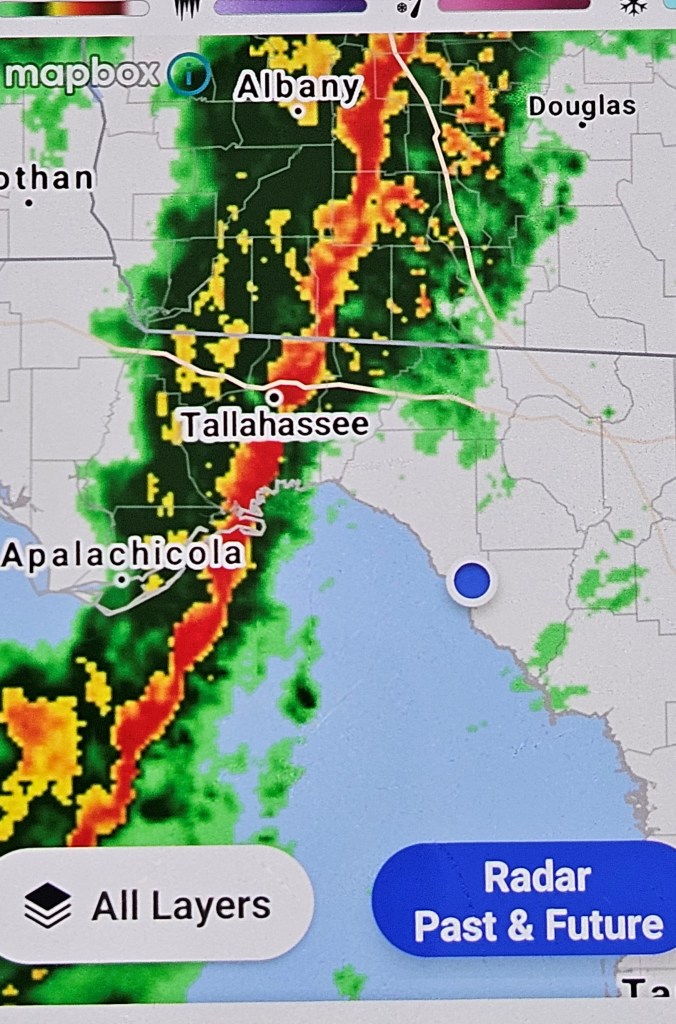
We received warnings of possible river flooding, coastal flooding, and a gale warning for the Gulf. The wind advisory for land, warned of possible gusts up to 50 mph. The warning included a possible tornado that might run through the area.
Everyone added dock lines, checked, and double checked for anything that could be torn loose in high winds and either removed them or strapped them down.
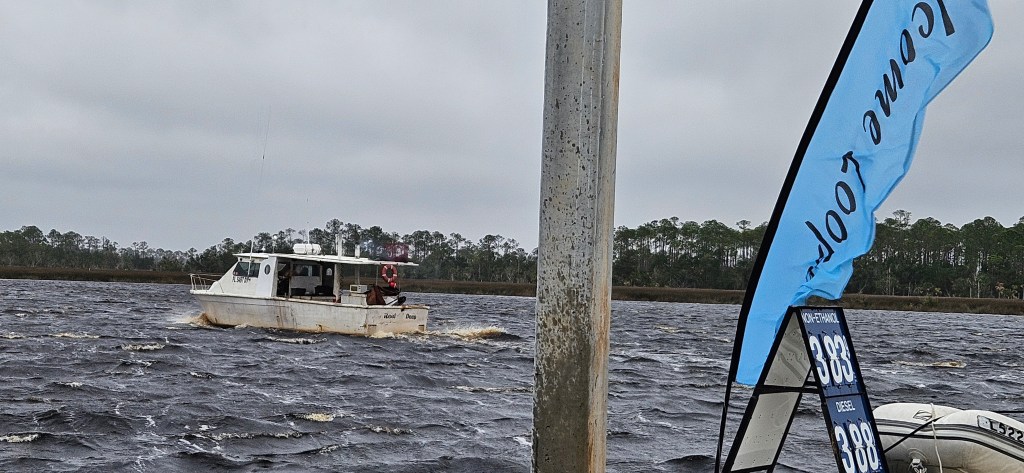
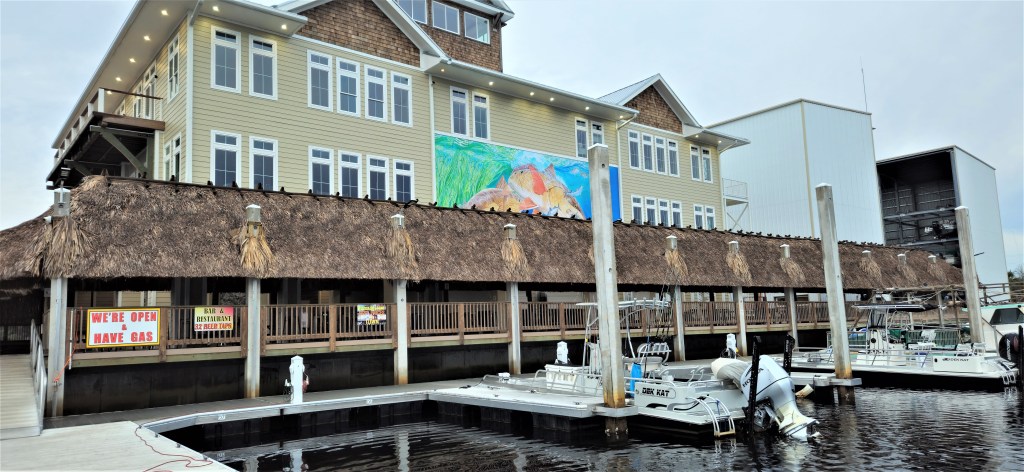
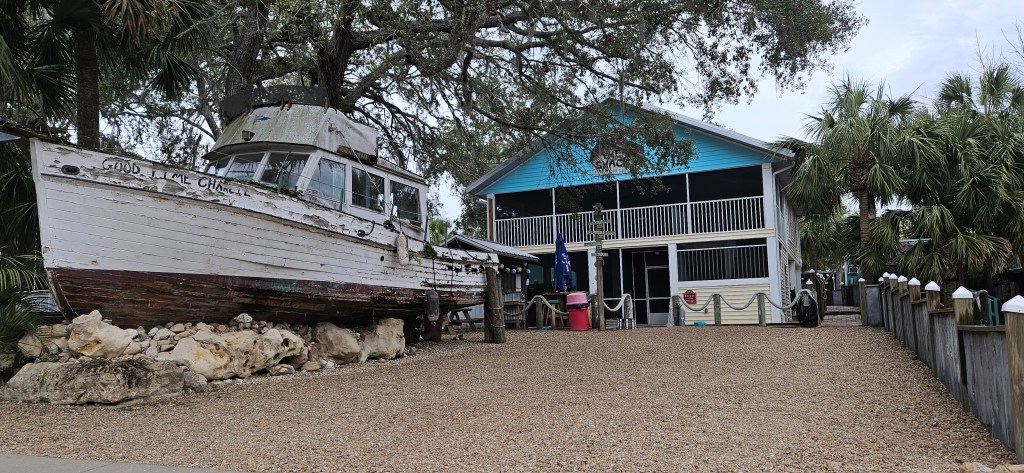
The worst of the current predicted storm was due to arrive around 1:00pm. Marina workers walked the docks checking that boats were secure. They invited us to take cover in their store, (picture above).
Using our personal cell phone weather radars, we watched as the storm grew nearer. When it was an hour away, most everyone went to the marina store to take cover. We packed our passports, cash, computers, camera, warm clothing, and any medications we thought we might need if the boat was lost.
At the time, it seemed odd to climb to the top floor of a building to seek protection from high winds and a possible tornado, but there are no basements in the immediate area. Gathering with fellow boaters, it was the first time we had met others in the marina and together, we watched the weather and our boats from the second floor window of the marine store. The radar indicated we were located on the edge of the storm. High winds blew through, rain, and lightning flashed in the distance, but there was no damage to the marina or to the boats.
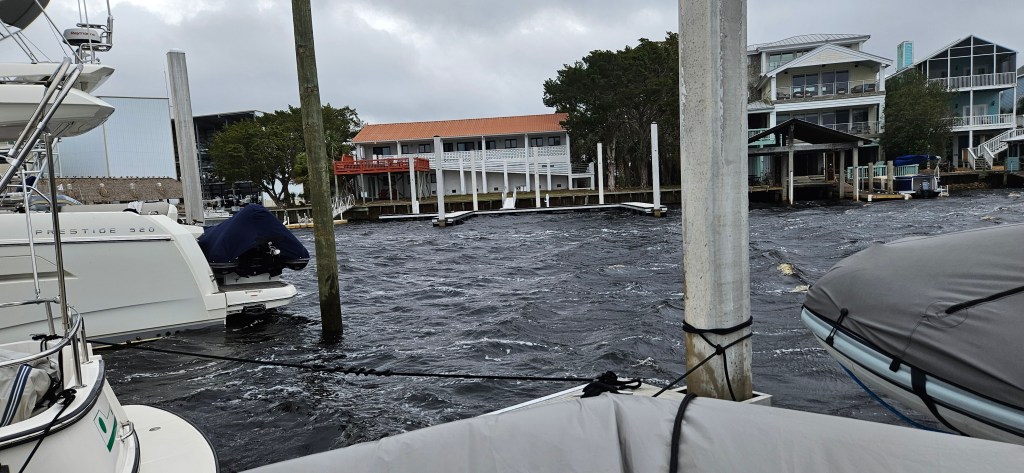
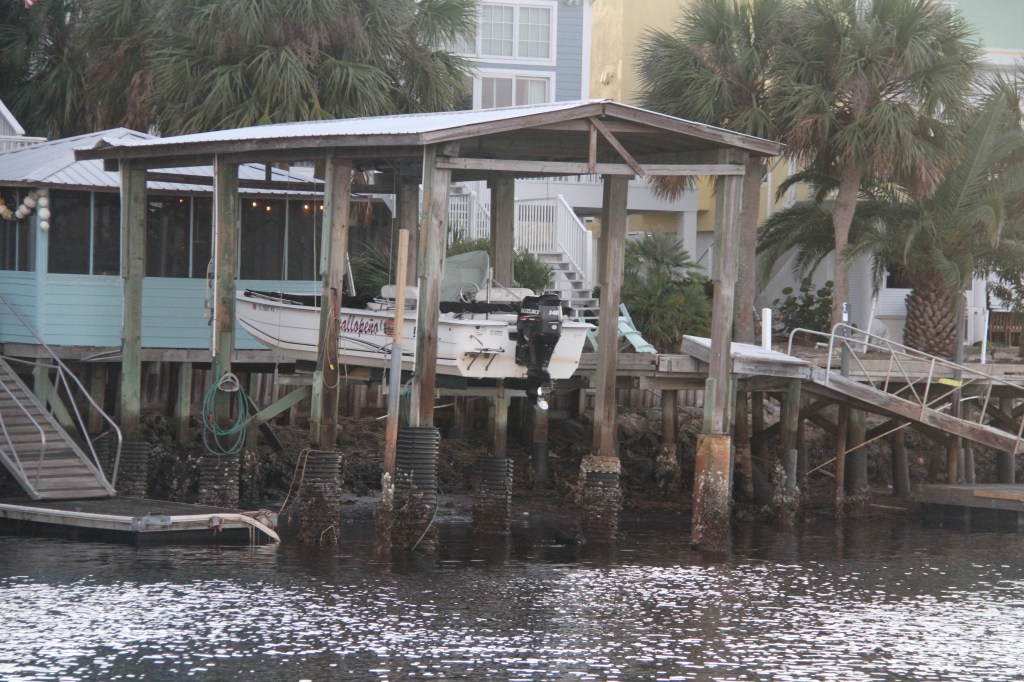
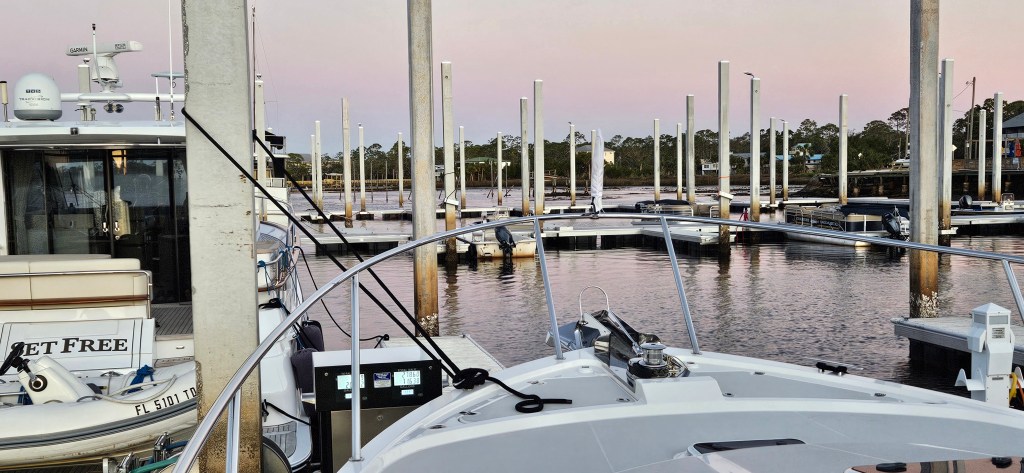
Panama City, where we had been tied up a few days before, had suffered collapsed hydro lines, buildings moved off their foundations, and roofing torn away. One of our fellow Loopers, who was in the marina at the time of the storm, sustained damage to their boat.
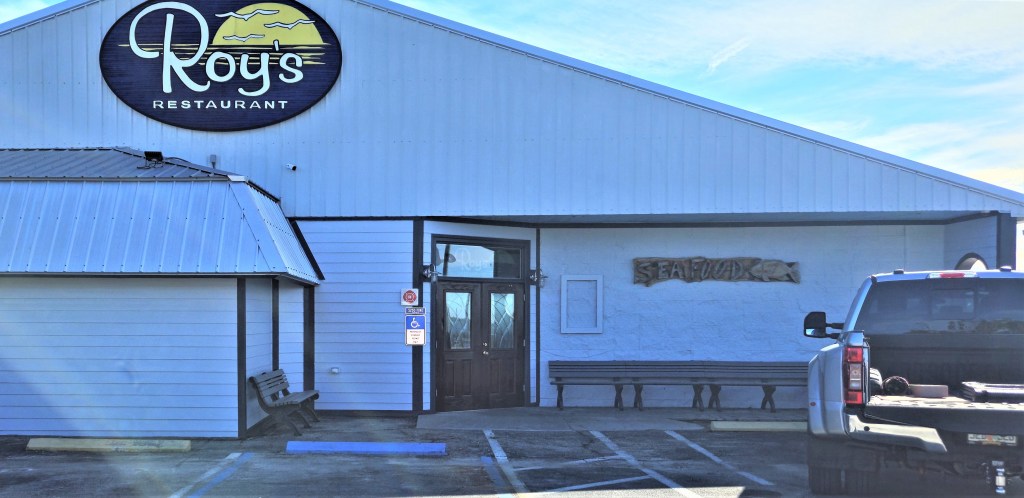
Well Deserved Praise: Steinhatchee Marina at Deadman Bay was one of the best marinas we had stayed at. It had good floating docks and the people who worked there were friendly and very attentive. Dockage was $2 /foot and Loopers received a .50/ foot discount making it the least expensive dockage we had seen. They offered us another .50 discount because there was no power at our slip like most other boats had. Diesel costs were $3.89 /gal., the least expensive we had seen. And Roy’s, a nearby restaurant, served good meals. All these things plus the attentiveness and friendly nature of the young men who worked there, is what puts Steinhatchee Marina above most others.
One day, while walking into the village, we passed the marina we had made reservations at, the one that did not own a VHF radio. Nothing other than fishing boats and crabbers, were docked there. We were lucky to have been waved in at the Marina at Dead Man Bay.
Author’s note: In September 2024, Steinhatchee took a direct hit from Hurricane Helene.
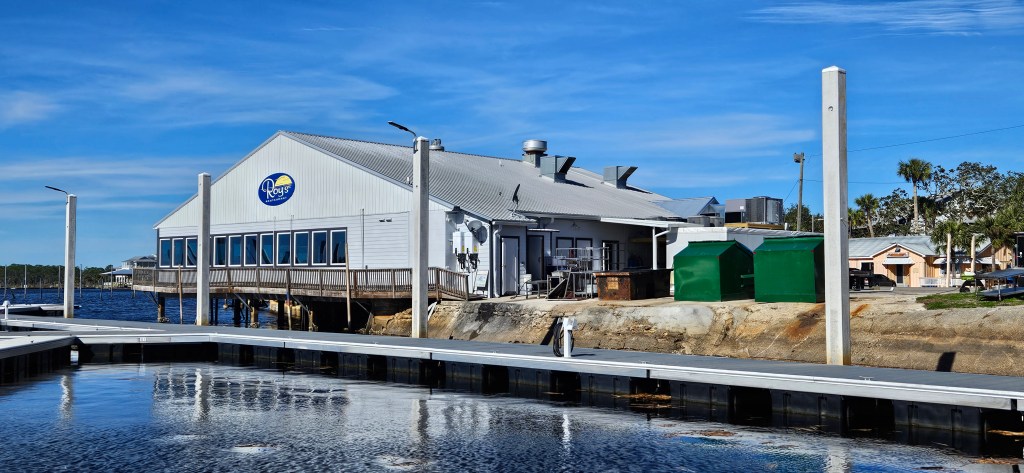
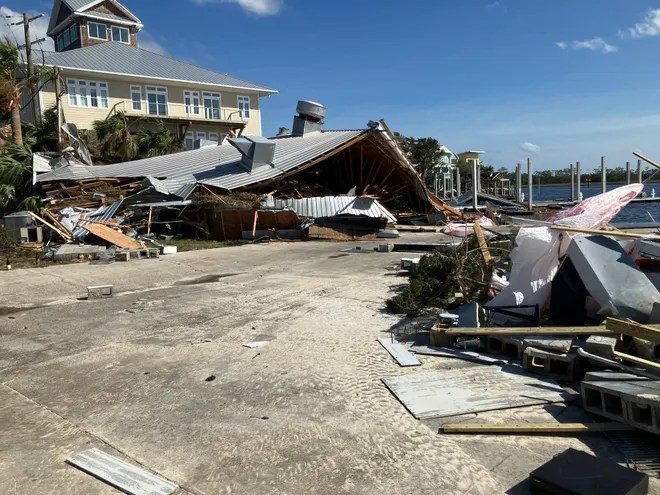
To view a video of the damage inflicted by Hurricane Helene at Steinhatchee, click here: https://www.nbcnews.com/news/us-news/florida-town-steinhatchee-hit-one-two-punch-hurricanes-rcna173050

 Traveling the Great Loop
Leave a comment