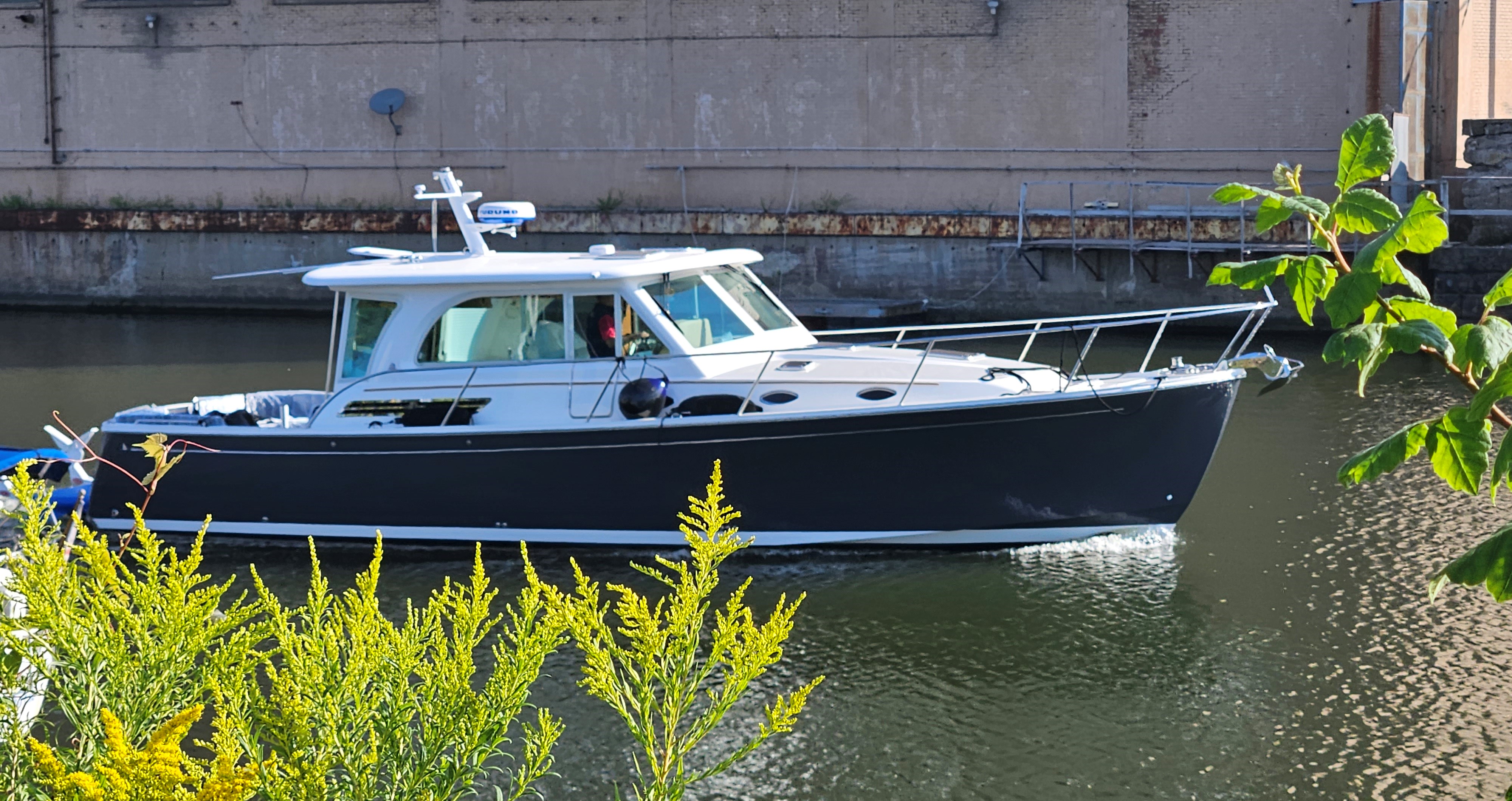
February 10- 23, 2024; Marco Island to Key West: Today’s run: 107 miles
Leaving Marco Island for Key West, seas in the Gulf were approximately 2 feet with short wave periods. It is the short wave period that makes for rough travel in a boat our size. Staying 20 miles offshore, 15 mph suited the conditions.
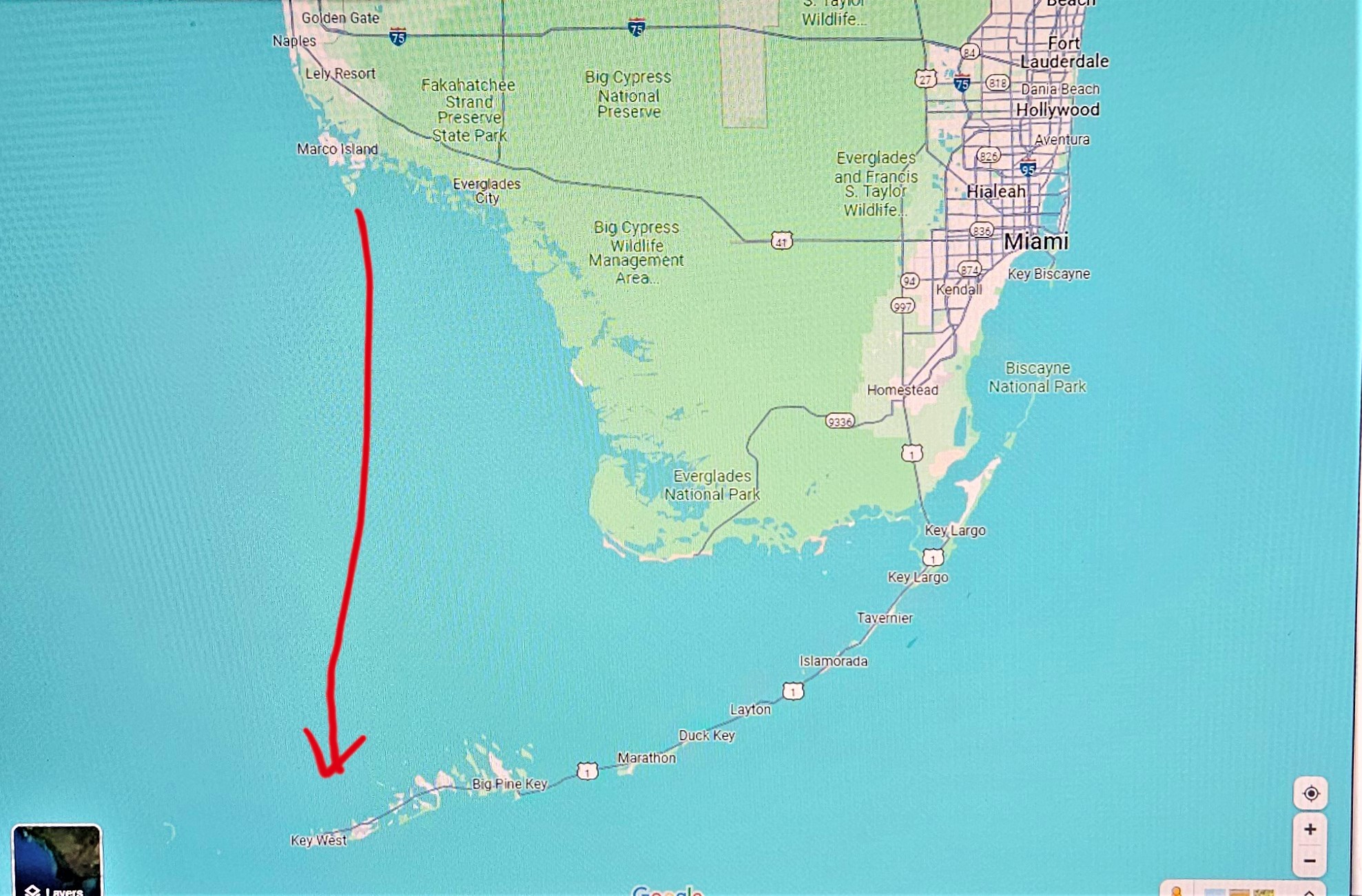
Traveling southward, we motored passed Florida Everglades National Park, over a million and a half acres of protected wetlands. There is no marked channel across the Gulf and crab pots, baited for blue crab, can be set anywhere, although water depth determines where commercial fishermen drop them. We kept close attention to our heading and zig-zagged around numerous lines consisting of 15-20 buoyed pots.
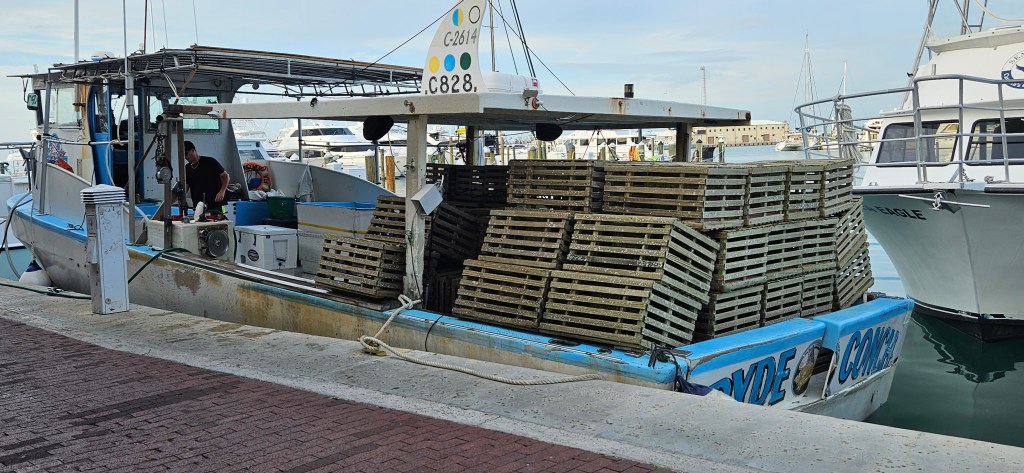
You might wonder what happens to captured crabs when their pots are detached from a fisherman’s retrieving line and sink to the ocean floor. Cage doors are fitted with ‘rotten cotton’ which deteriorate allowing the door to open and the crab to escape. In many areas, ‘rotten cotton’ or degradable panels are required by state law. With that said, lost cages are a costly loss to fishermen. Crab fishermen must meet numerous regulations: for instance, it is mandatory that while fishing blue crab, each cage is pulled up by hand, unlike further north where stone crab is trapped and hydraulic pot haulers pull in 200 traps to a line. Handling the two crab species also requires different techniques: blue crabs are sent to market whole, whereas the claws of stone crabs are snapped off from the body and the crab returned to the sea where they will regenerate new claws. The claws are cooked before sending to market.
From the city of Homestead, located at the southern tip of the U.S. mainland, Key West, is approximately 128 miles/206 km.
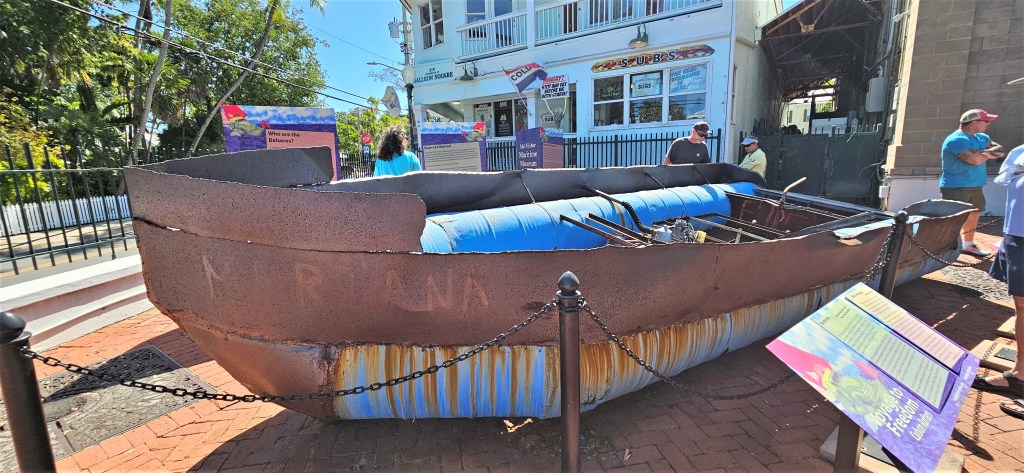
Key West is located 90 miles/144 km north of Cuba. In August of 2015, The Mariana, (pictured above), comprising of several empty 55-gallon drums and a pickup truck engine, arrived in Key West just over 24 hours after it had left Cuba. Twenty-three men and one woman were onboard.
KEY WEST
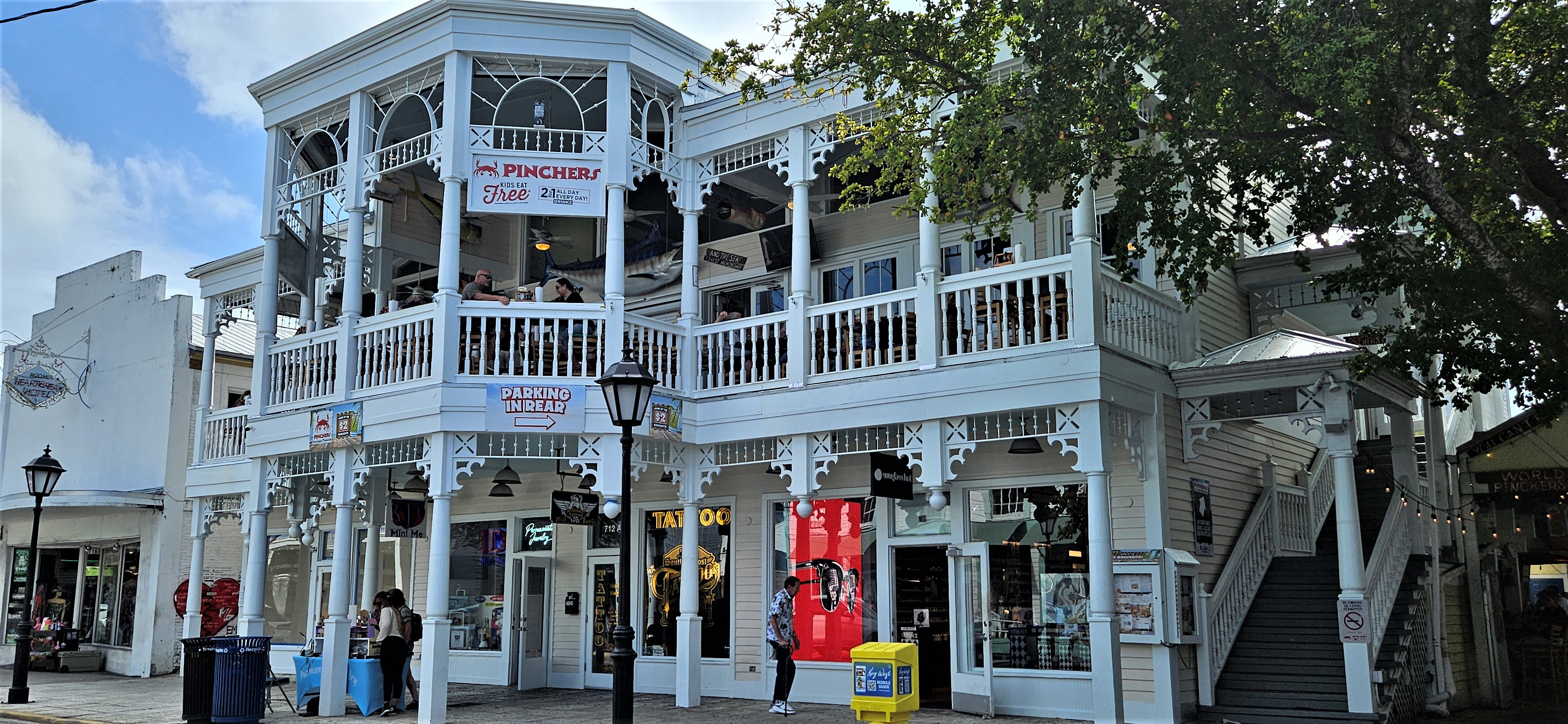
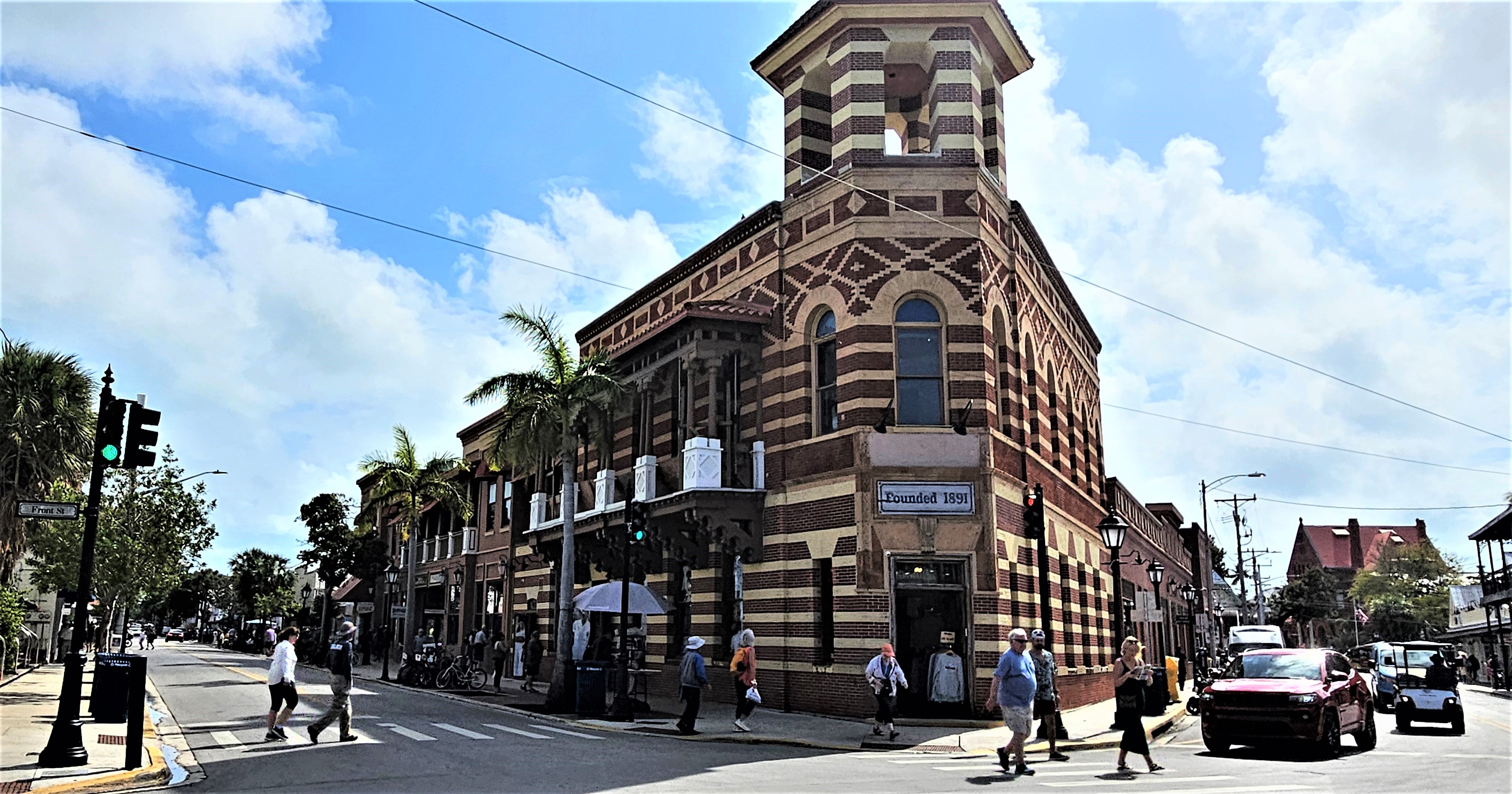
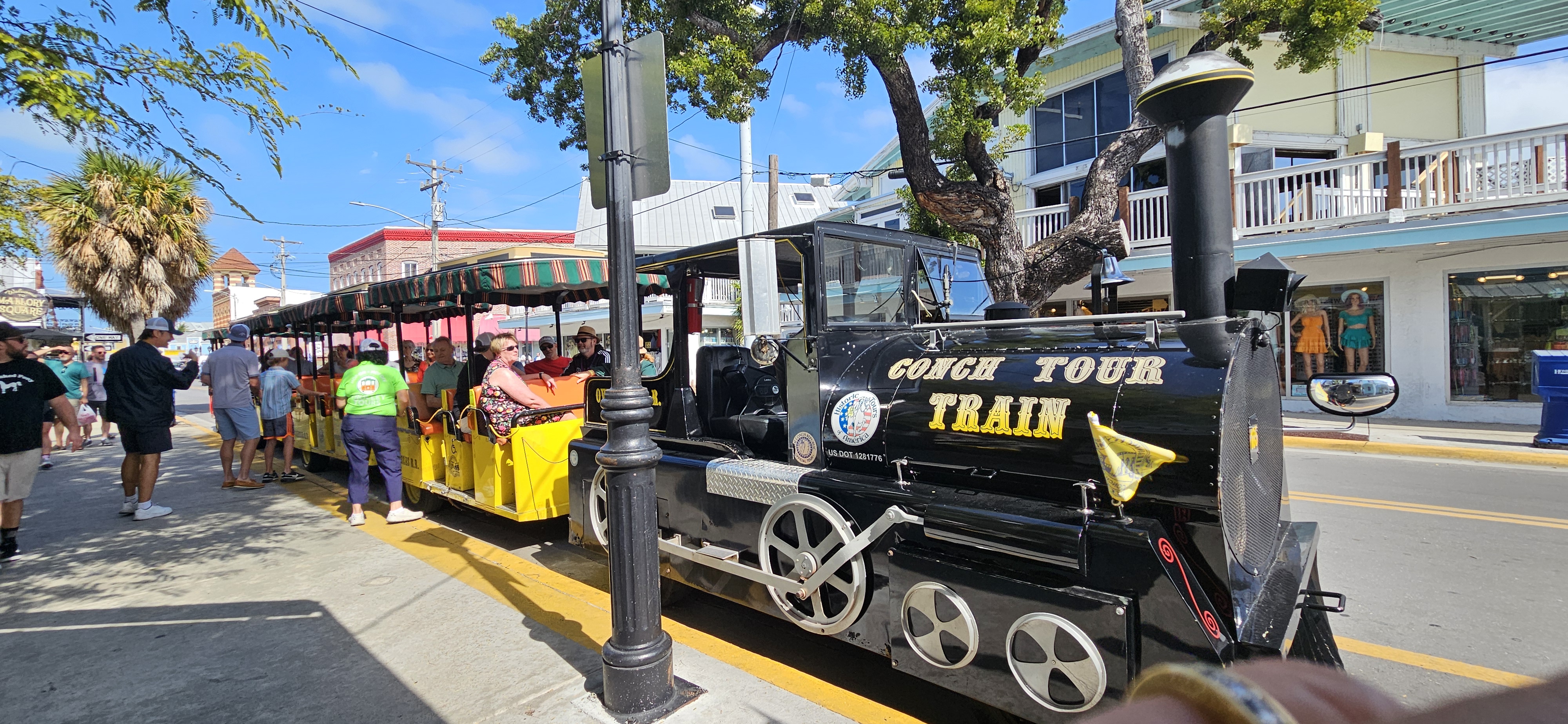
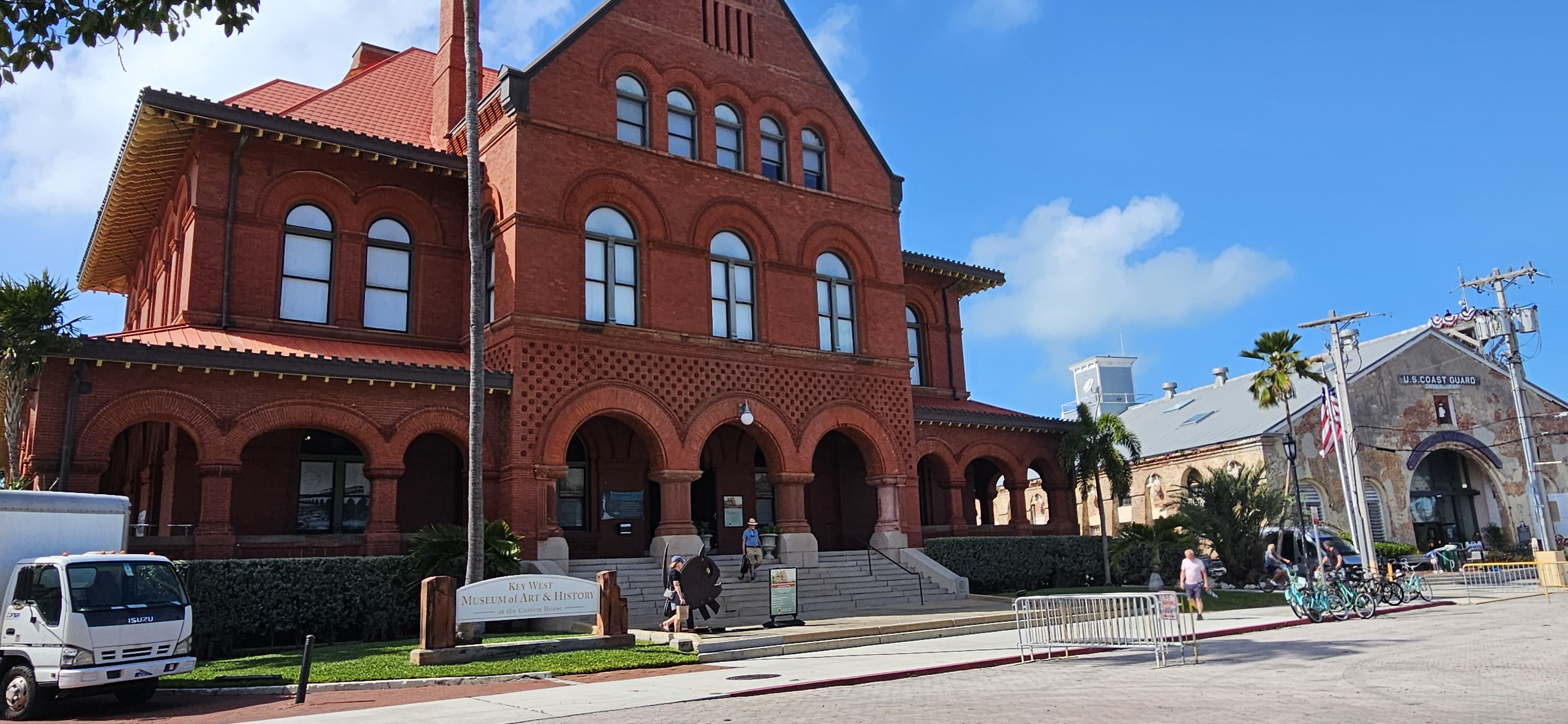
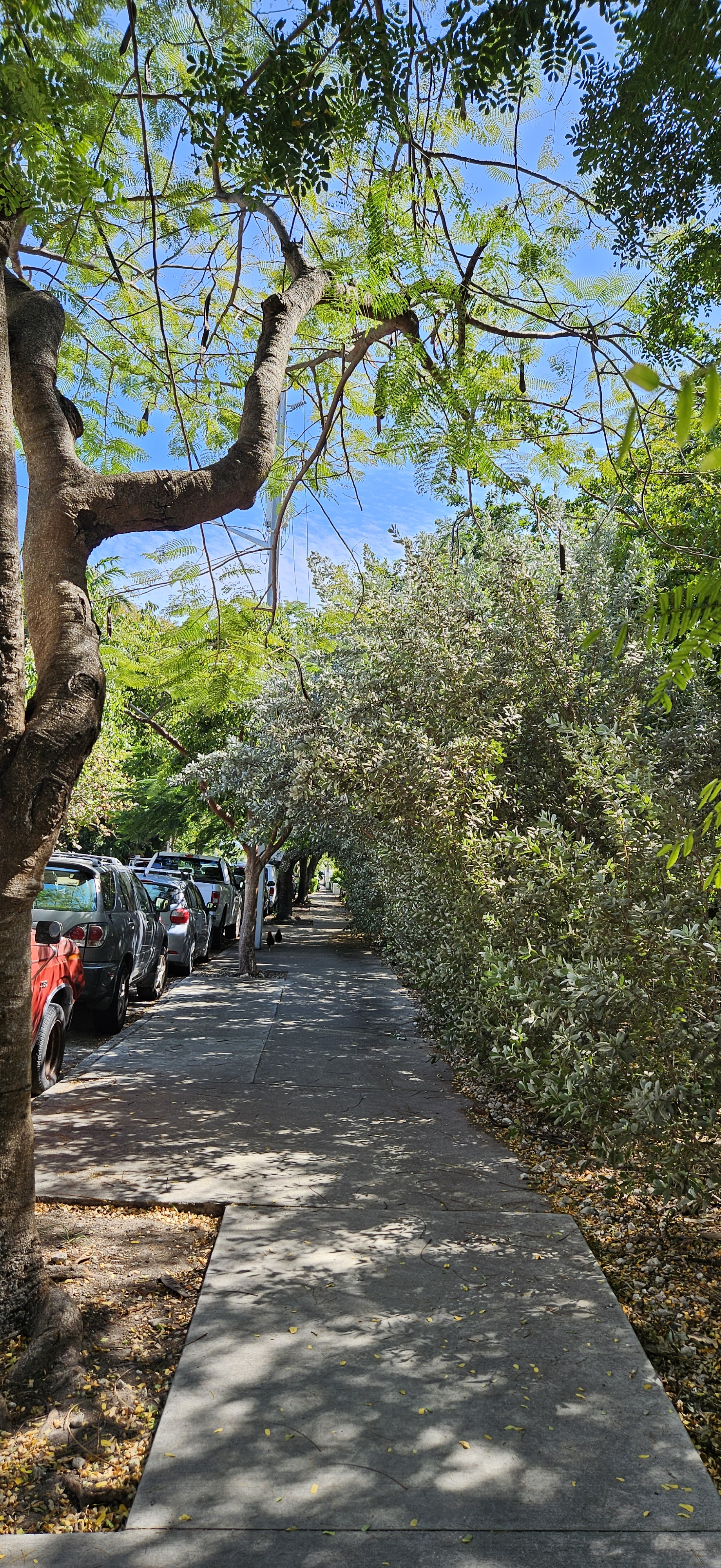
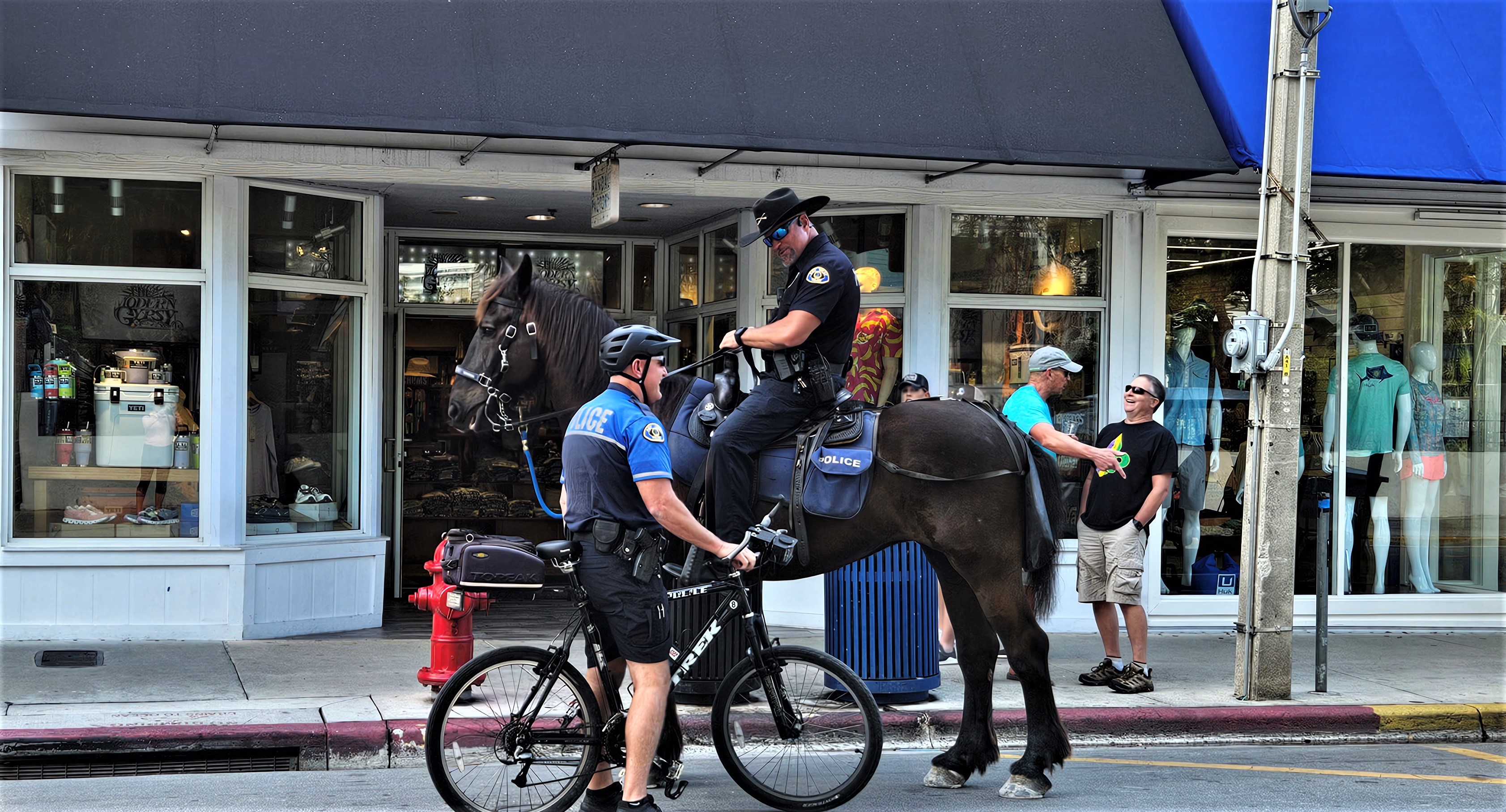
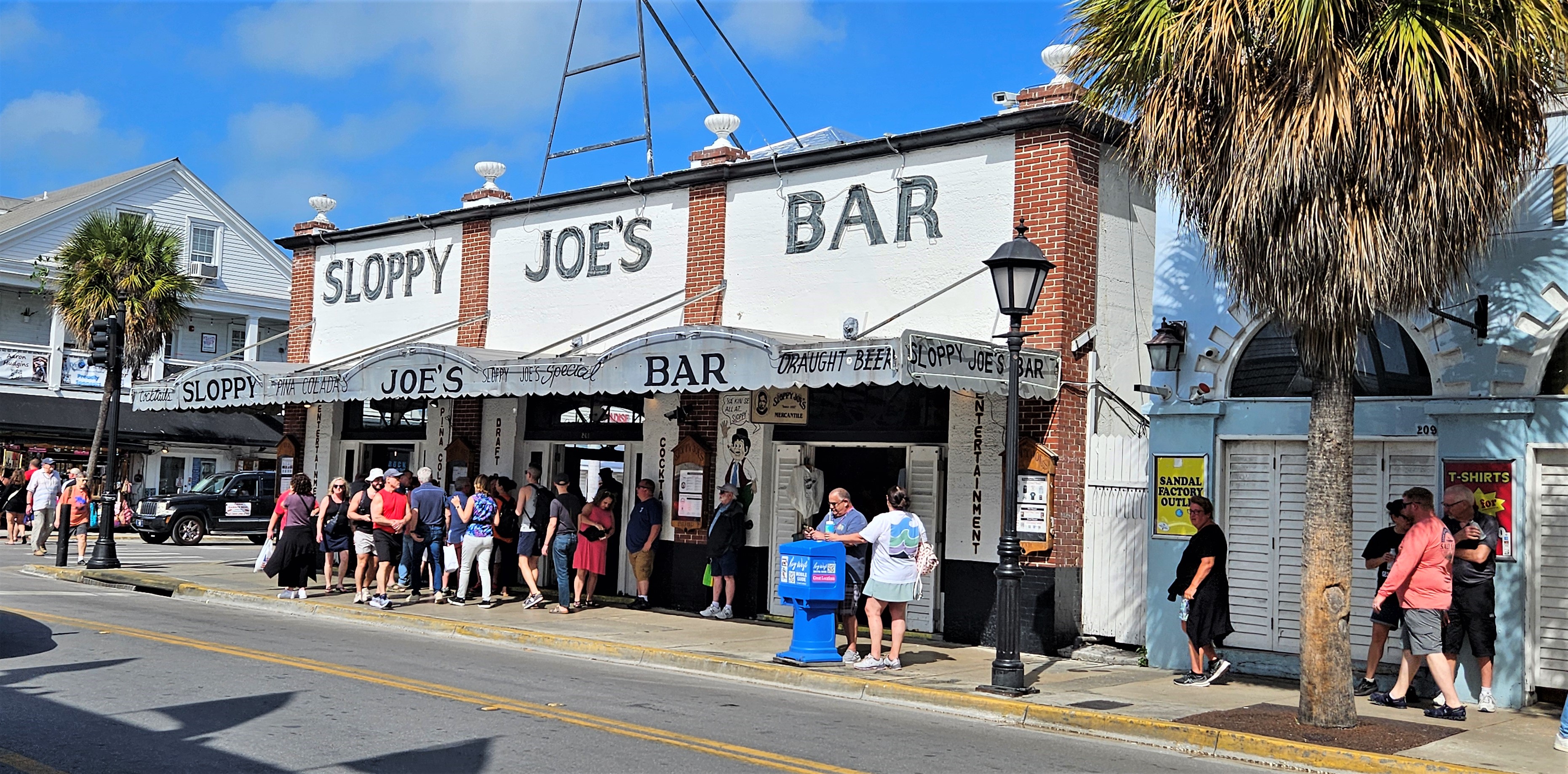
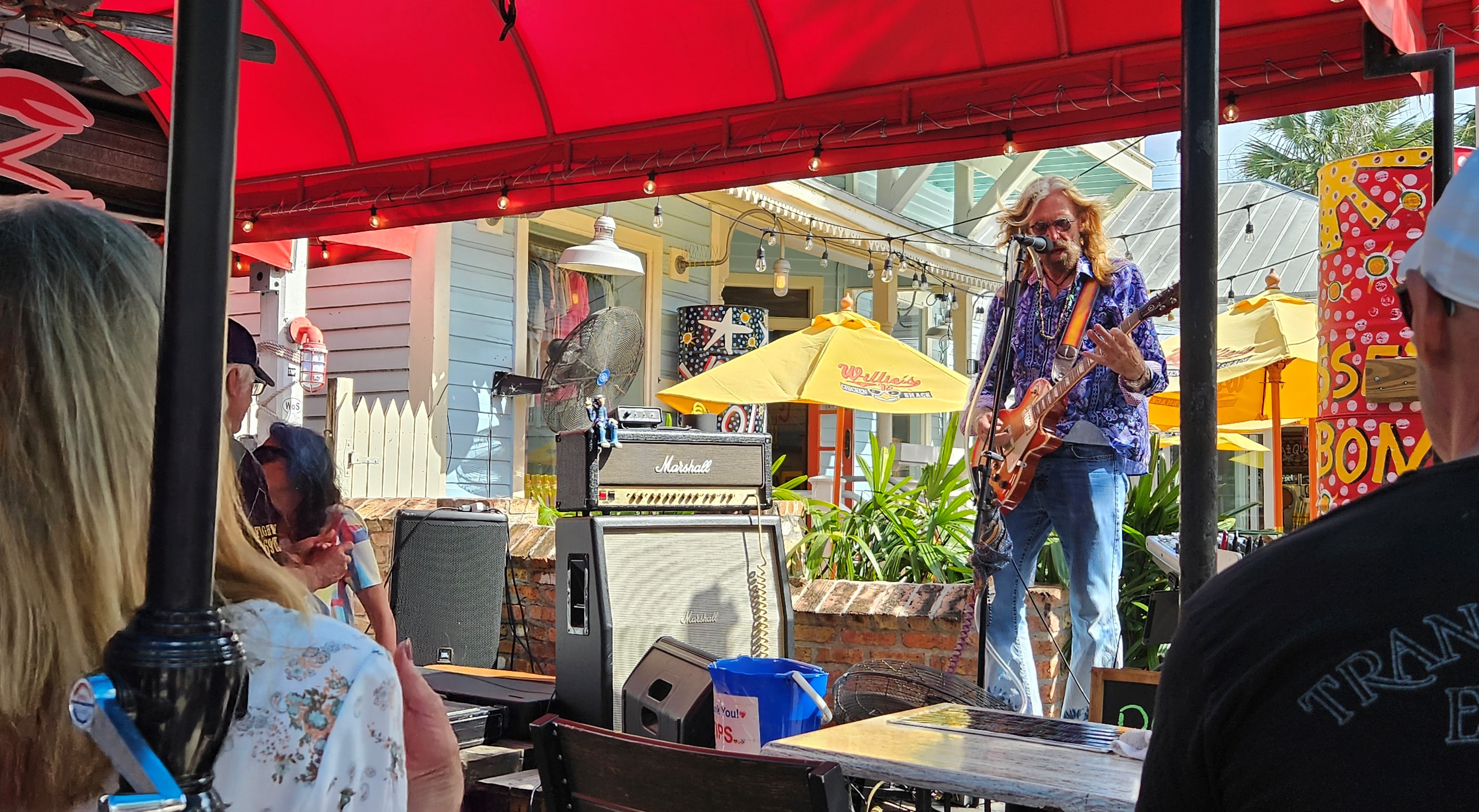
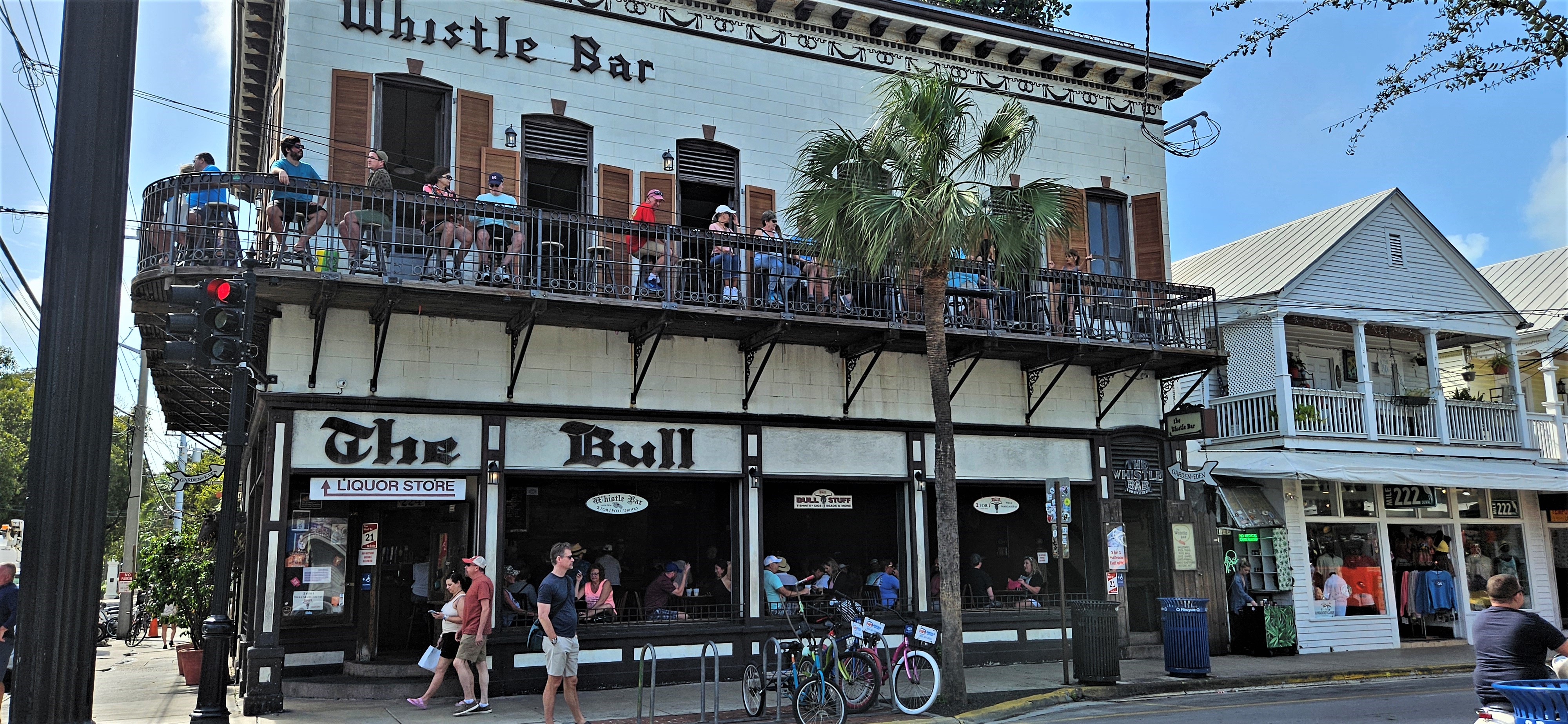
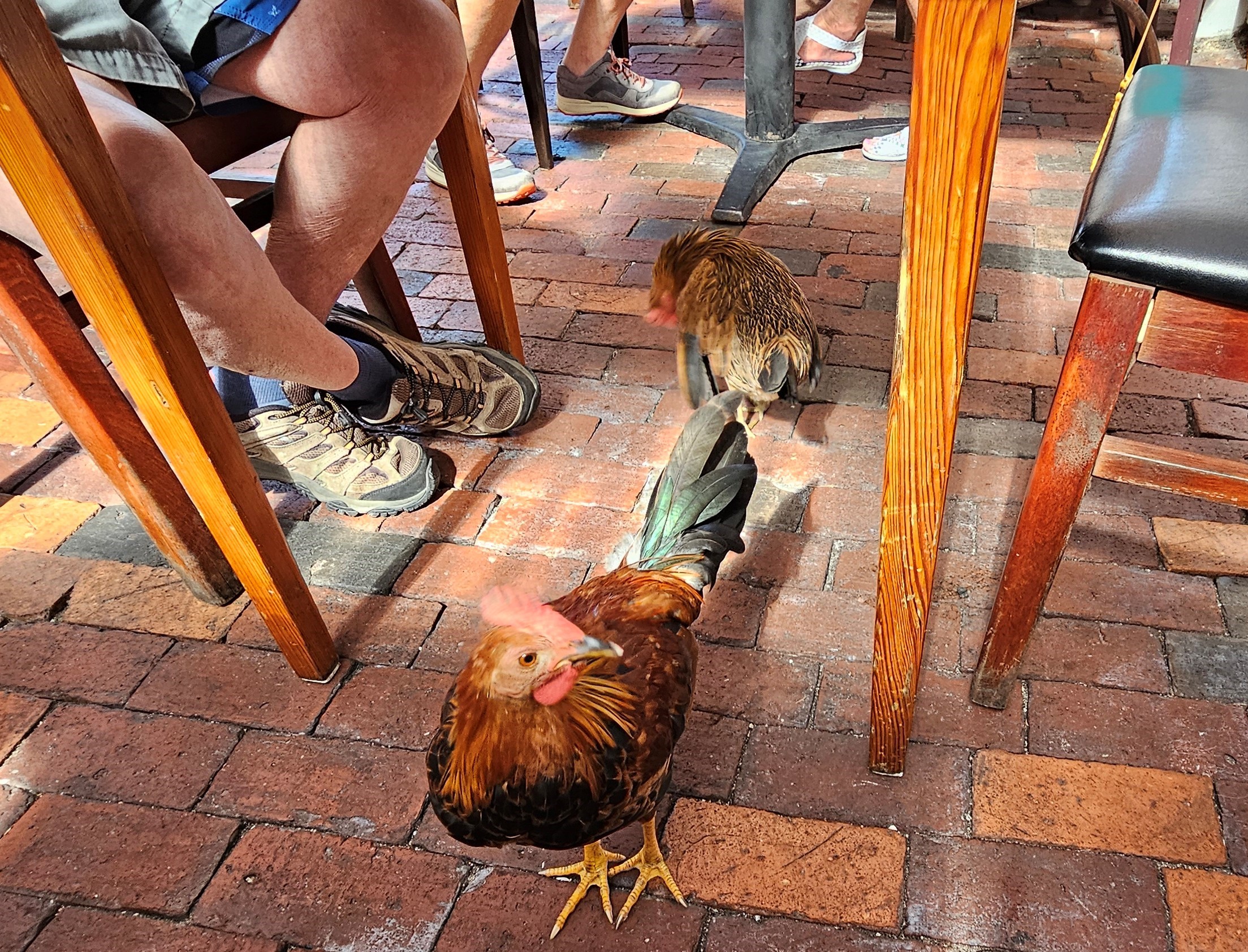
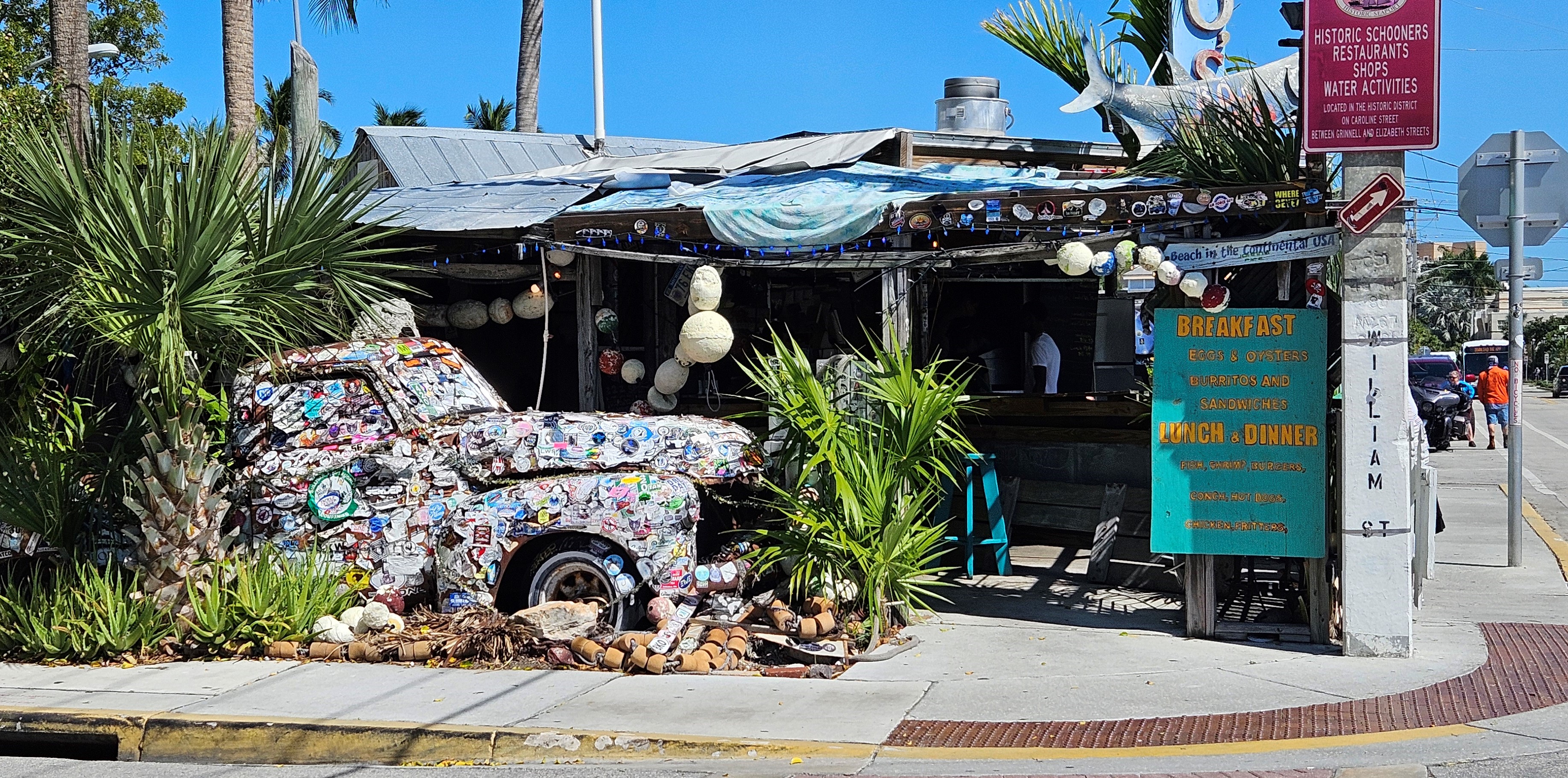
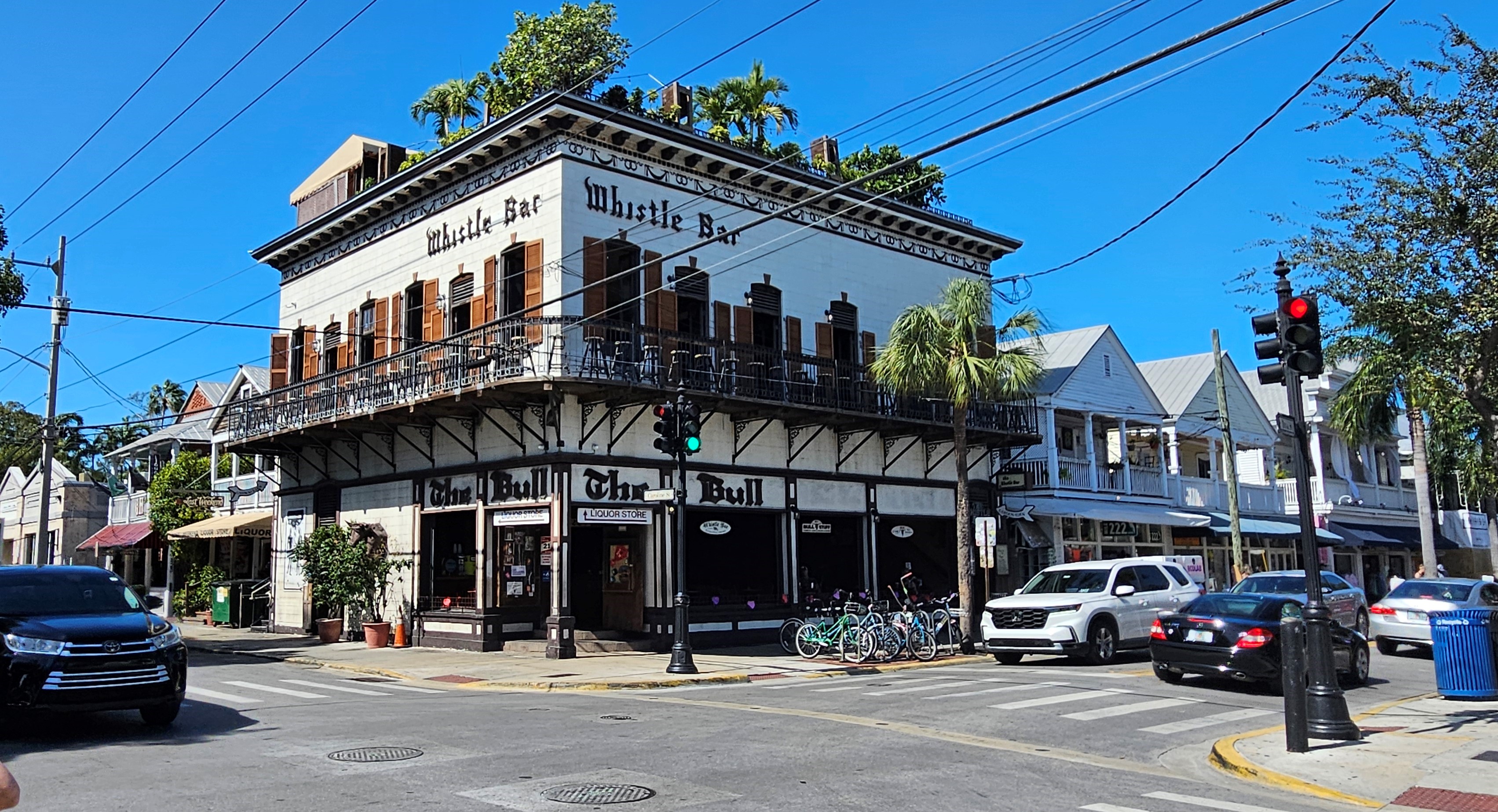
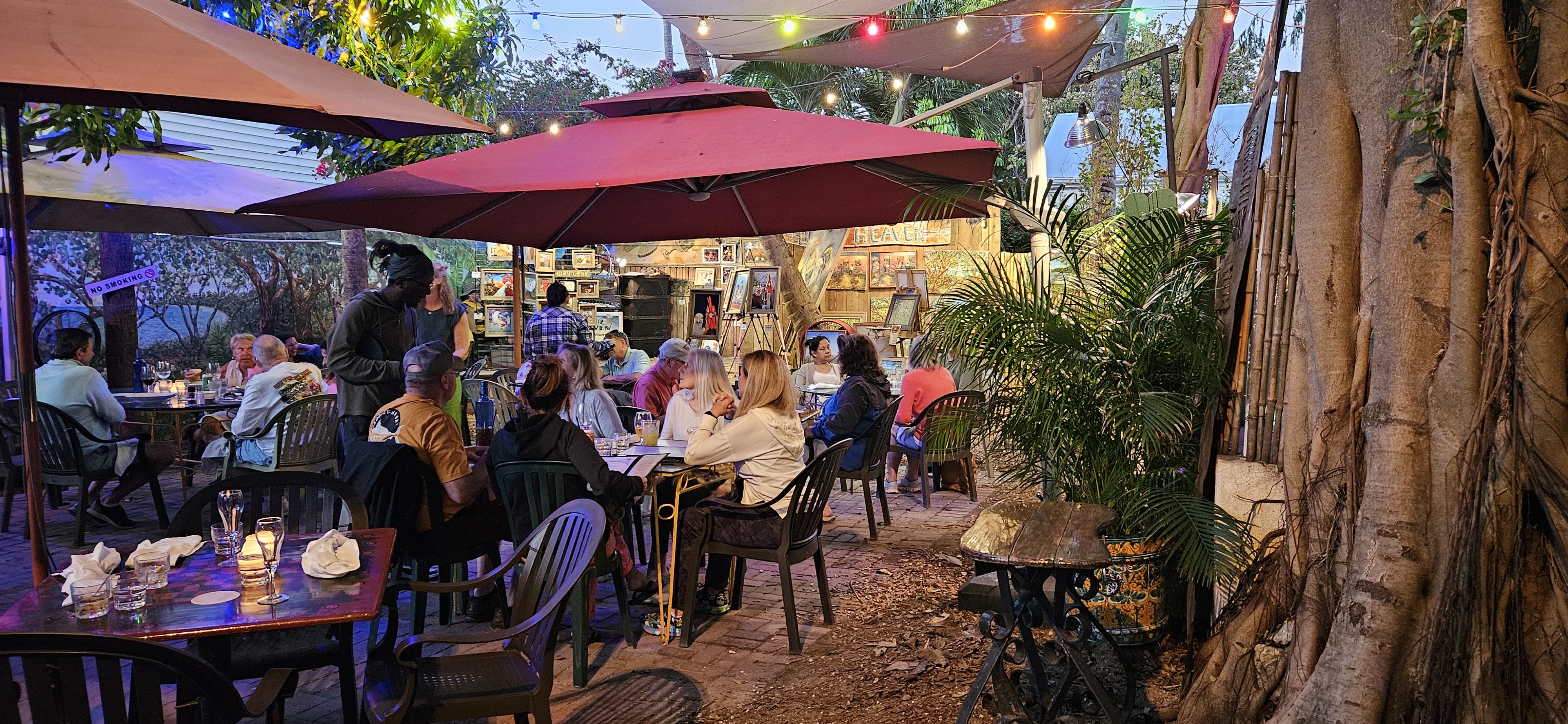
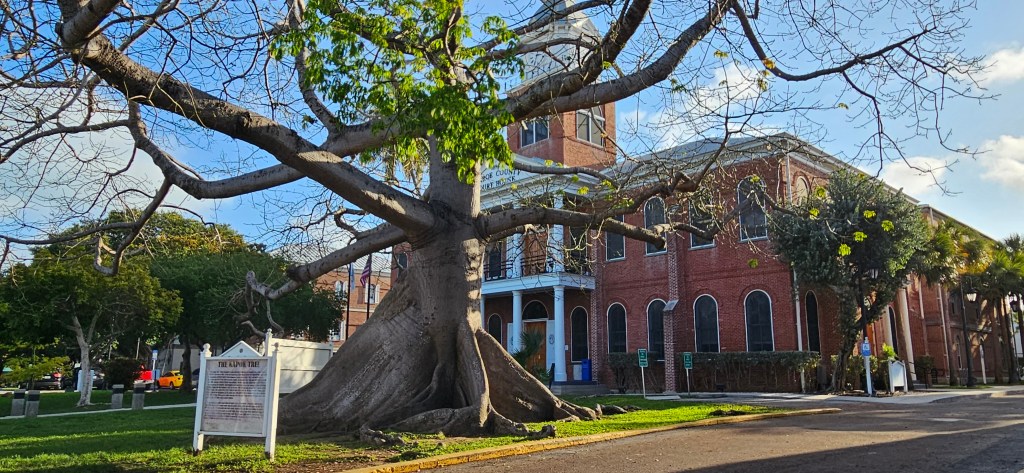
FOR AN ISLAND MEASURING 4 MILES LONG/ 6 KM and 1 MILE/2 KM WIDE, THE KEY EMBRACES A WEALTH OF HISTORY:
Surrounded by a bounty of ocean life and situated on a shipping lane connecting the Gulf of Mexico to the Atlantic Ocean, early century businessmen recognized the island’s potential in natural resources.
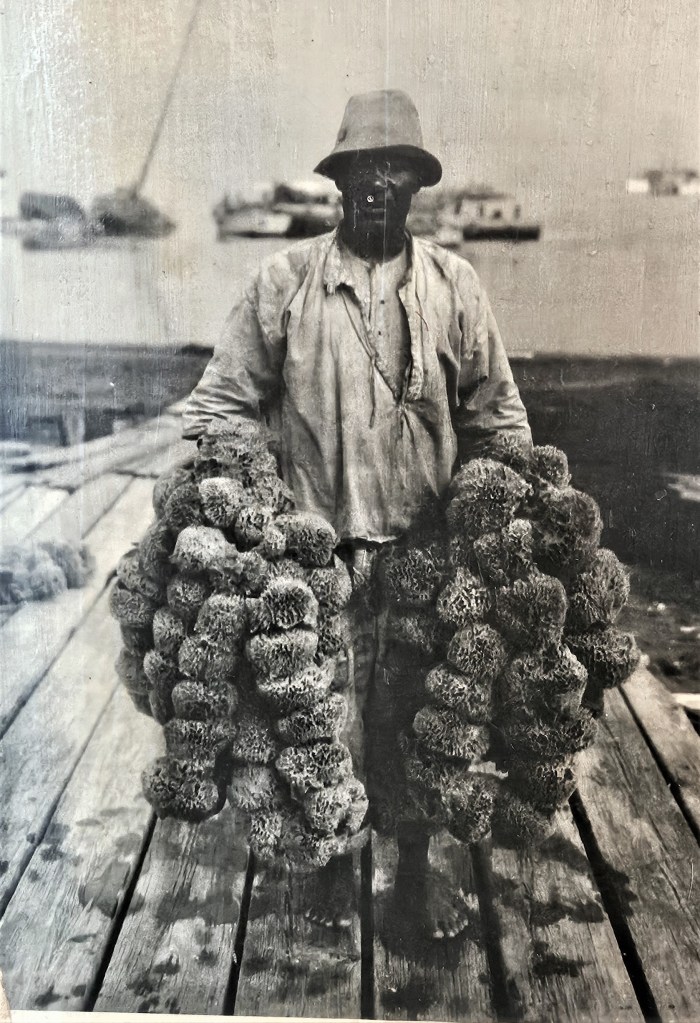
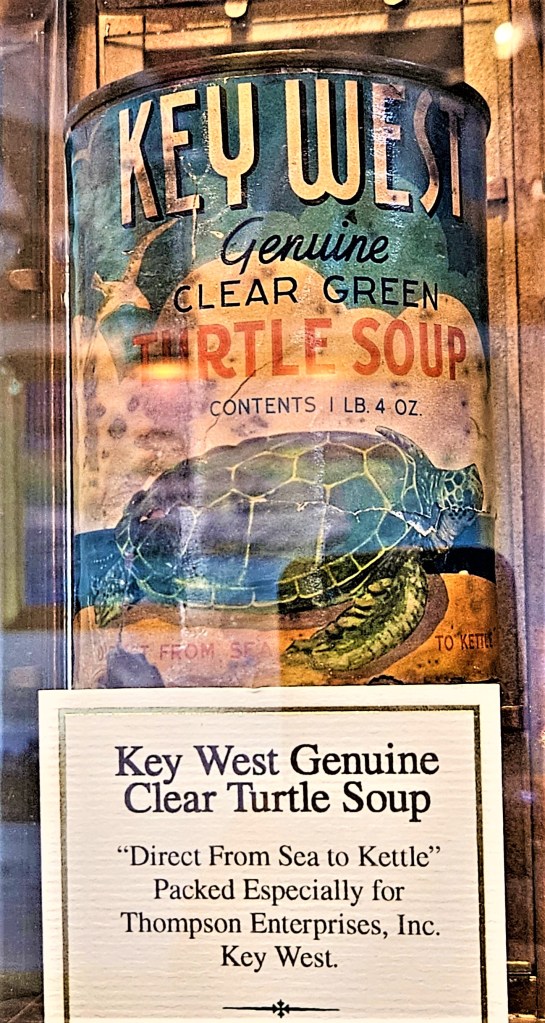
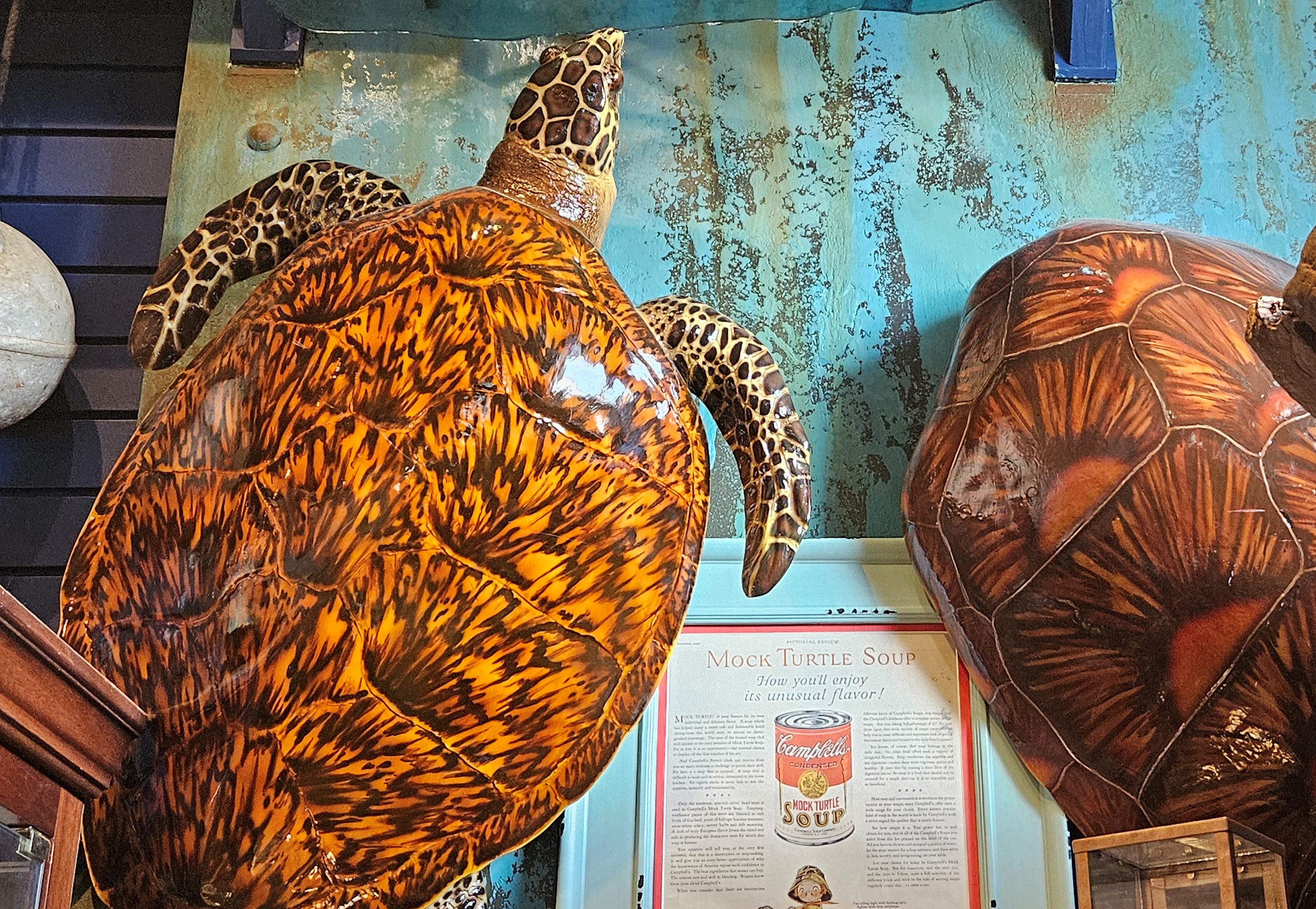
By early to the mid-1800s, several industries were contributing to the Key West economy: sponging: (2000 tons of sponges harvested annually); lobstering; turtle meat including shells for furniture inlays and handles; shark fishing for meat, leather, oil, including the teeth for the manufacturing of beads and buttons. And wrecking.
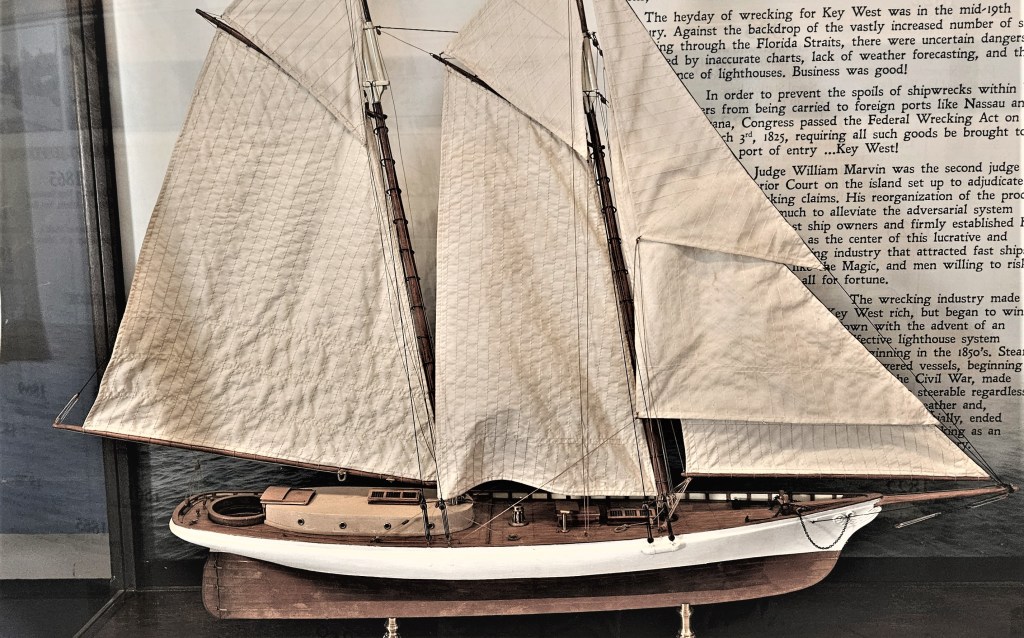
Wrecking was in fact the islands’ first economy and the industry that made Key West rich. Originally, an occupation focussed on saving lives and salvaging cargo after ships ran aground in the shallows of the Dry Tortugas, (70 miles/ 113km west of Key West), the lucrative business grew into a sort of lawless free-for-all whereby certain captains lit fires to mimic lighthouses causing ships to run aground. It was the salvage fees that resulted in Key West becoming the richest city per capita in the U.S. in the 1830s.
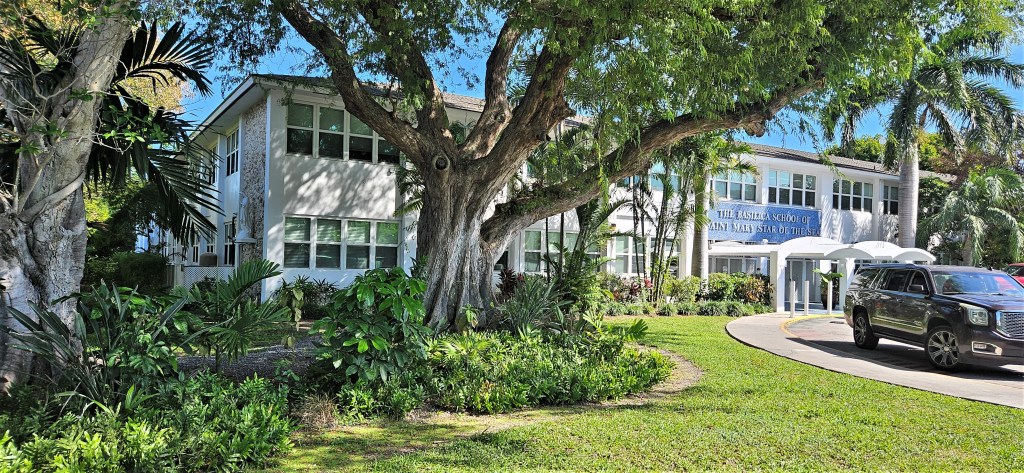
The Convent of Mary Immaculate was built by the Canadian Order, Soeurs des Saints Jésus et de Marie, (The Holy Names of Jesus and Mary). The order had established a school there 10 years earlier.* The Sisters acted as nurses during the Spanish American War, and offered the Convent to the Navy as a hospital where they nursed the wounded and cared for yellow fever victims. Three epidemics of yellow fever took place between 1847 & 1876.
The first use of X-Ray, (known then as Rontgen Ray), to locate bullets and shrapnel in wounded soldiers, was used in this convent hospital. Before this method was available, probing blindly for foreign materials could cause extensive damage and often resulted in death.
*The Sisters of the Holy Names of Jesus and Mary, was, and still is today, a provider of teaching institutes for young women in several U.S. states, and are leaders in education in Lesotho, South Africa and South America.
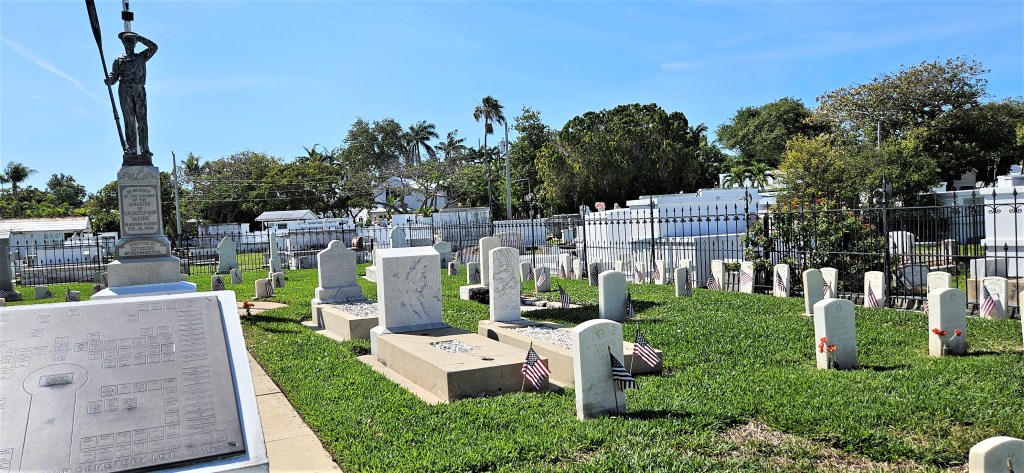
Captains of ships, Cuban Revolutionaries, (1868), soldiers of the Spanish American War, (1898) and those who fought in World War I (1914-1918), are buried here. Others include: D. Cameron, a Scotsman who acted as foreman during the build of the Key West Lighthouse, (1847); the lighthouse helped bring an end to the ‘wrecking’ industry. Ellen Mallory, one of the first women settlers in Key West and whose son became a U.S, Senator and Secretary of the Confederate Navy; and de Ayala, the granddaughter of the man who wrote the Cuban national anthem. These are some of the pioneers whose history enhances a walk-through the cemetery while entertained by amusing headstone engravings: “I’m just resting my eyes”, and “I told you I was sick”.
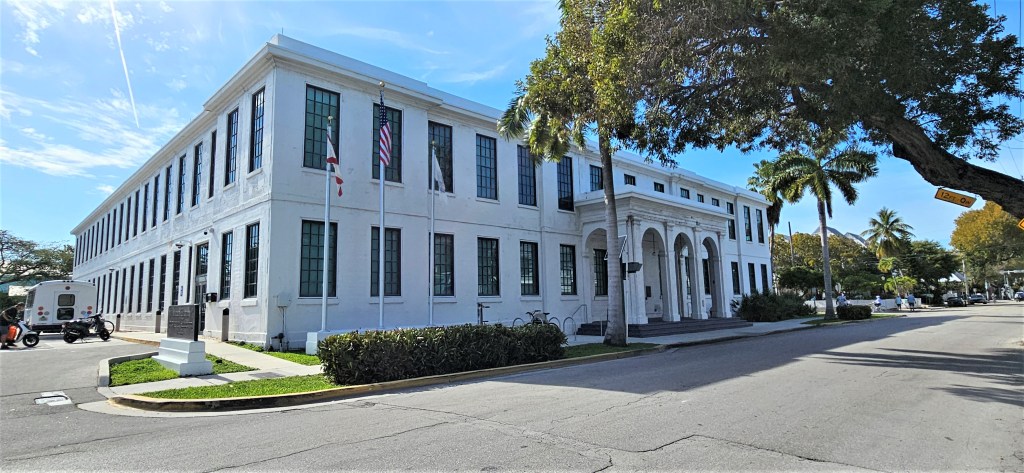
In 1878, when Cuba’s Ten-Year War failed to free Cuba from Spanish rule, 20,000 Cubans crossed the Florida Straits to migrate to Key West. Thousands were skilled cigar workers who were fleeing the harsh treatment of Spanish rule. Originally built in 1884, and destroyed by fire 30 years later, the cigar factory was replaced with a structure that would withstand fire and hurricanes. The factory employed 500 cigar makers who, in 1890, produced 60,000 hand rolled cigars. From 1895 to 1900, Key West’s annual cigar export was valued at $2,300,000. The specialized tobacco leaf was imported from Cuba. (Courtesy of the Gato Cigar Museum).
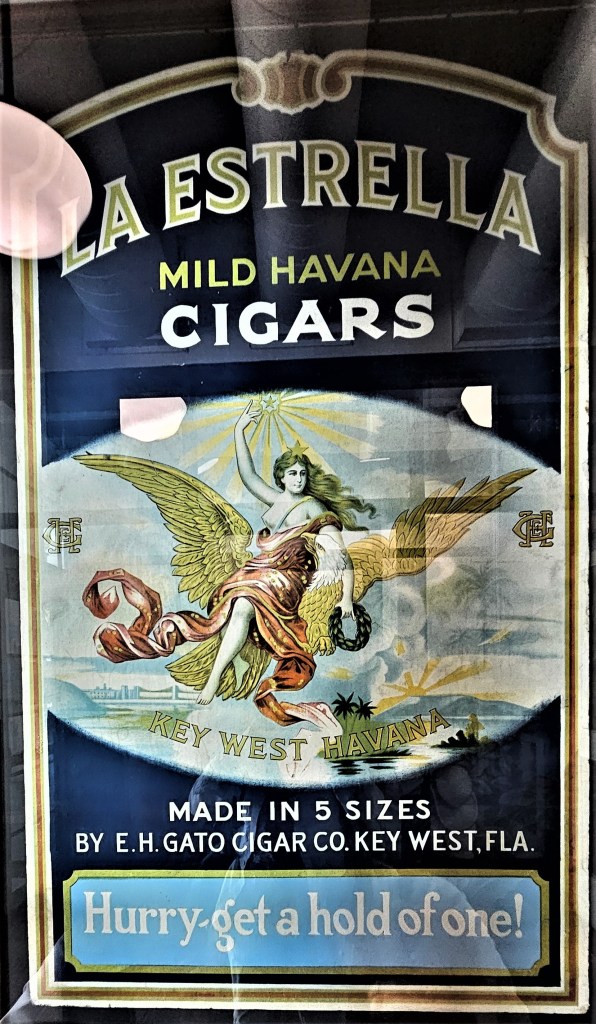
As many as 18 cigar factories contributed to the export of 62 million cigars a year. Key West was the largest producer of cigars in the world. (Last Train to Paradise, Standiford).
DURING THIS TIME, THE ONLY WAY TO REACH KEY WEST WAS BY BOAT. With the local industries shipping to out-of-state markets and to foreign countries, Henry Flagler, one of the founders of Standard Oil, envisioned Key West as a hub for ocean going freighters, a supplemental freighter rail service business and a luxury hotel destination.
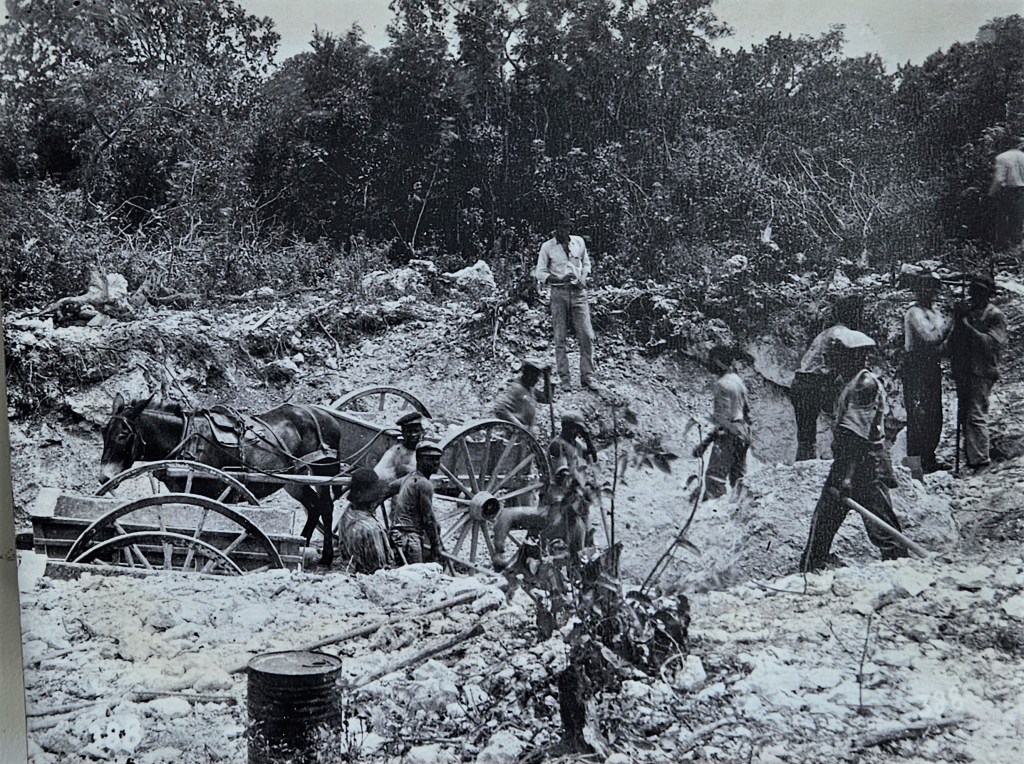
To bring this idea to fruition, the current railroad, which ended in Homestead, needed extending to the Keys. The extension would be 153 mi/264km long and include forty-two bridges to span 28 miles/45km of open Atlantic Ocean, the Gulf of Mexico, swamplands and small islands. It was the most ambitious American engineering project in Central America.
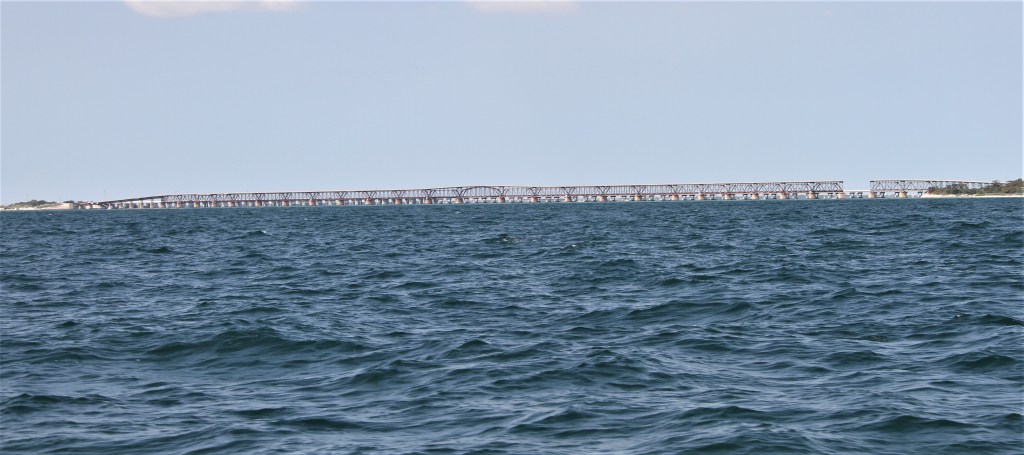
The biggest challenge was to construct a bridge 7 miles long, something that had never been done.
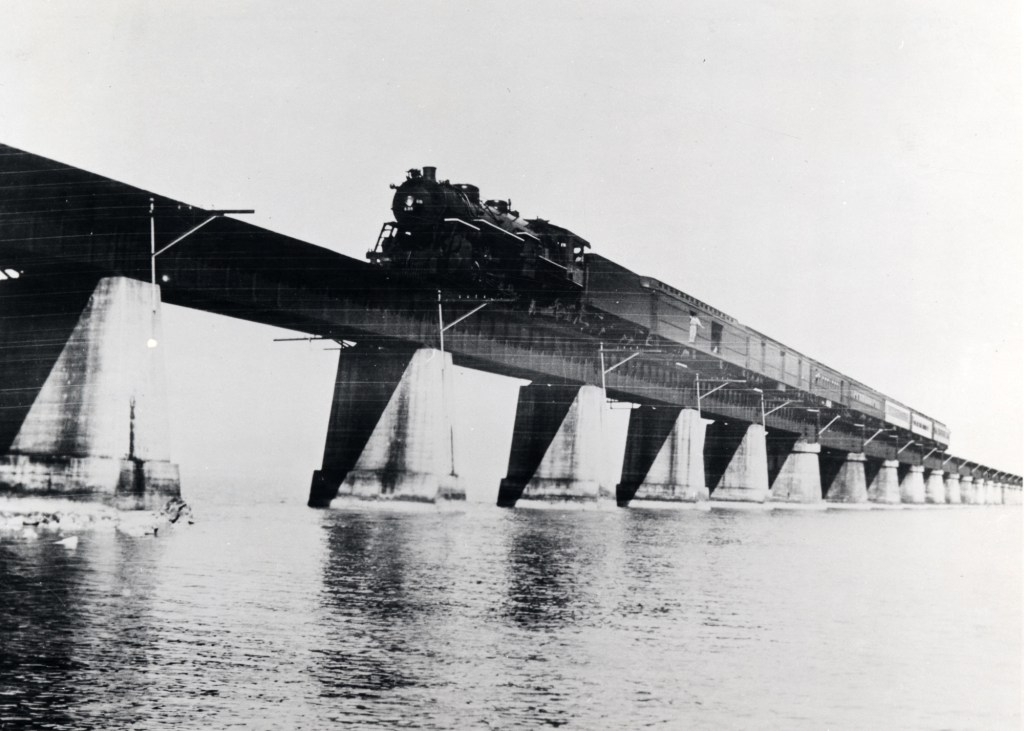
During the 7 years it took to build the railway, (1905-1912), 20,000 men laboured on the project. Two hundred and fifty vessels supplied the workers with food, housing, hospital care and equipment; even fresh water needed to be transported by barge.
The first passenger train arrived in Key West in 1912.
Novelist, Ernest Hemingway ( Old Man and the Sea), and inventor, Thomas Edison (the electric light bulb), frequented the Keys.
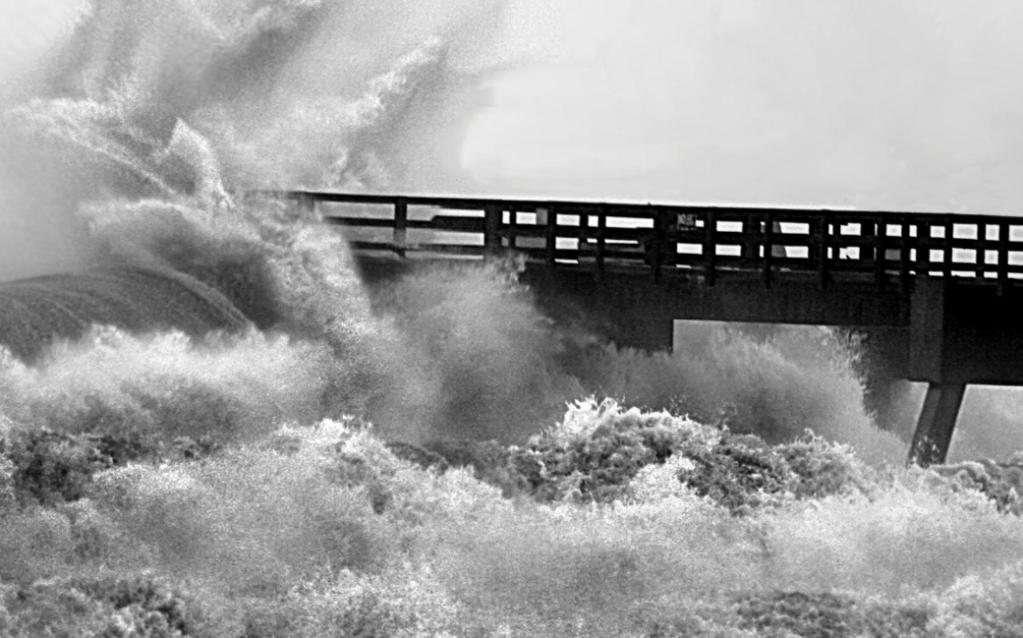
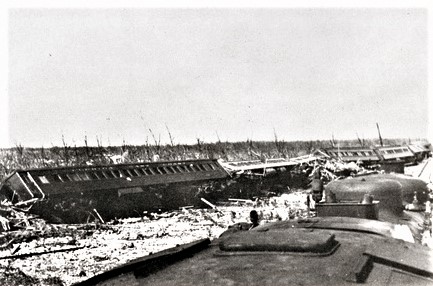
Unable to finance a rebuild, the Florida East Coast Railway sold the roadbed and the remaining bridges to the State of Florida. The viaducts and bridges were used to build the Overseas Highway to Key West.
To learn more, click here to watch a 55 minute film: Flagler’s Train, The Florida Keys Over Sea Railroad. https://www.youtube.com/watch?v=Kw7FGZrf7WA
WE ENJOYED KEY WEST…
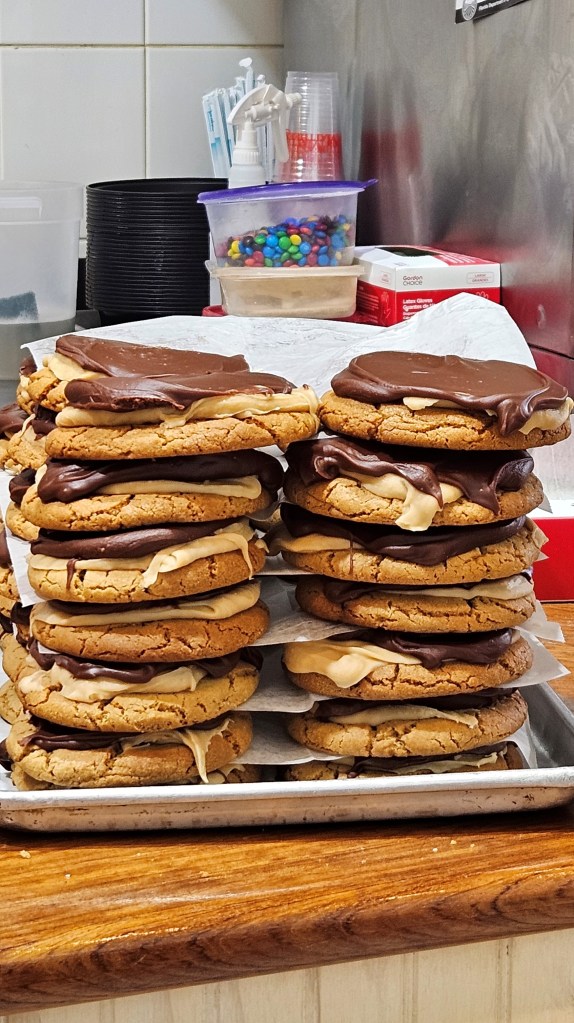
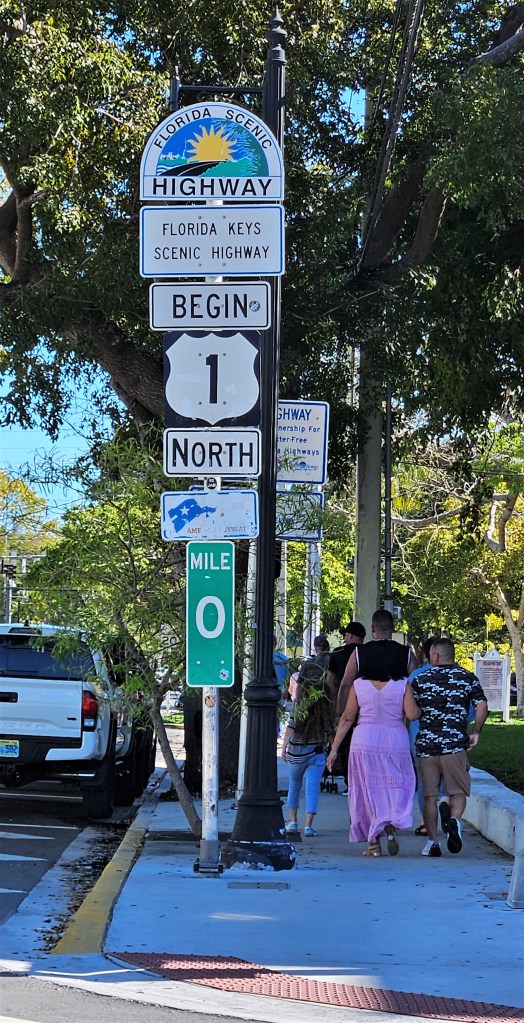
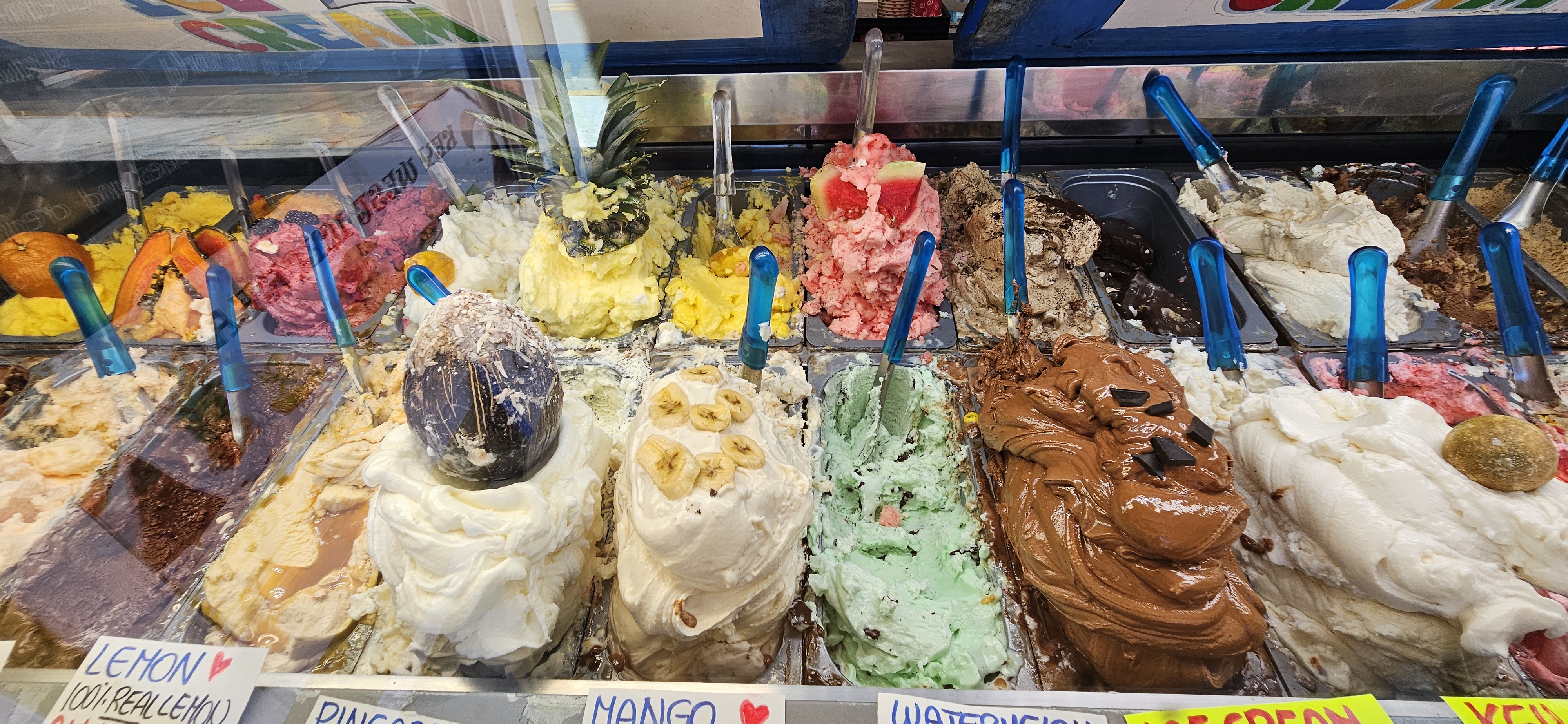
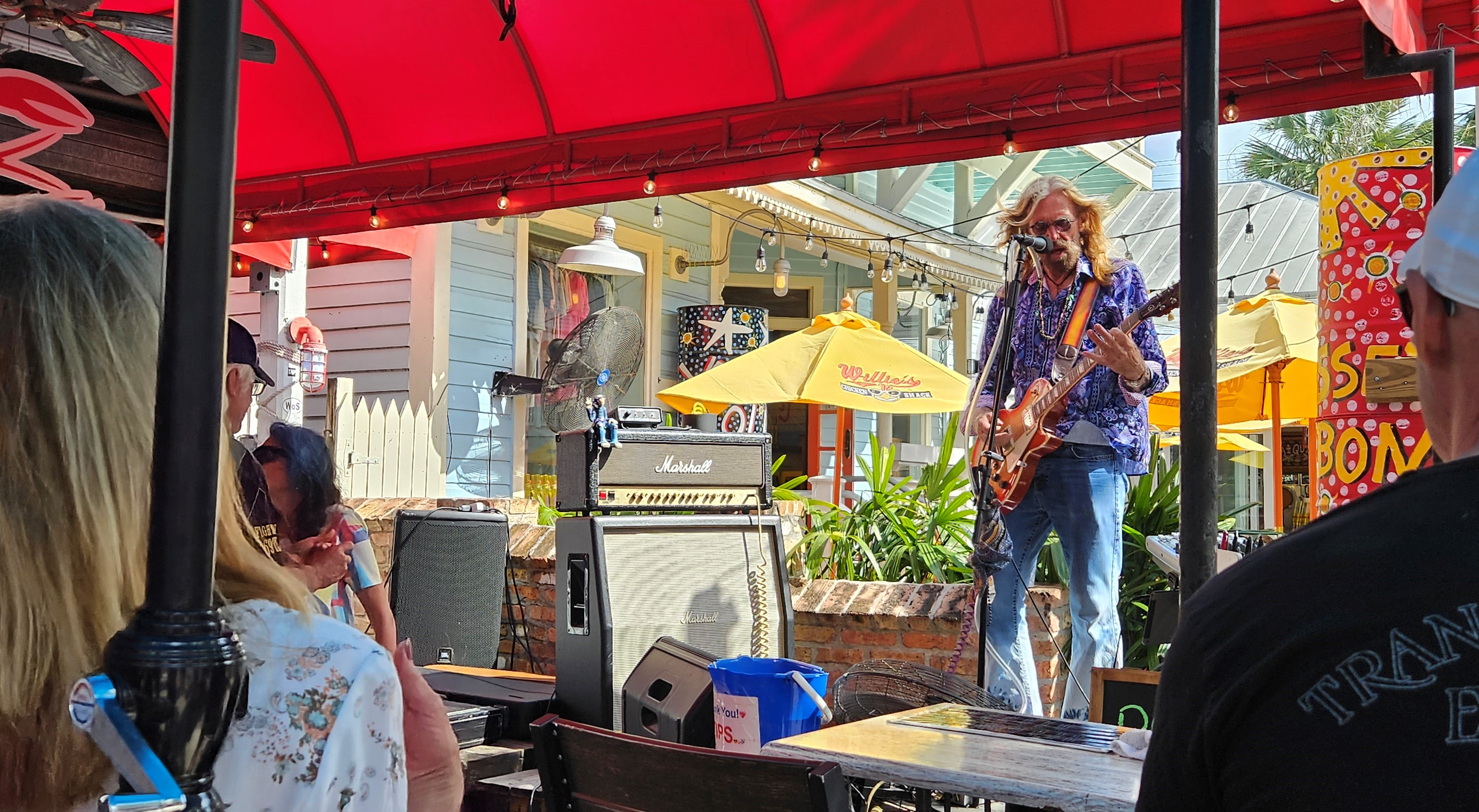
…the bars, outdoor restaurants, shops, walking the town, and visiting numerous historical homes and museums, like the Mel Fisher Maritime Museum featured below.
In 1985, Mel Fisher, an American treasure seeker, discovered the remains of the Spanish galleon, Nuestra Señora de Atocha, (pictured below). She had blown onto the Florida Reef in hurricane-strength winds while bound for Spain in September 1622.
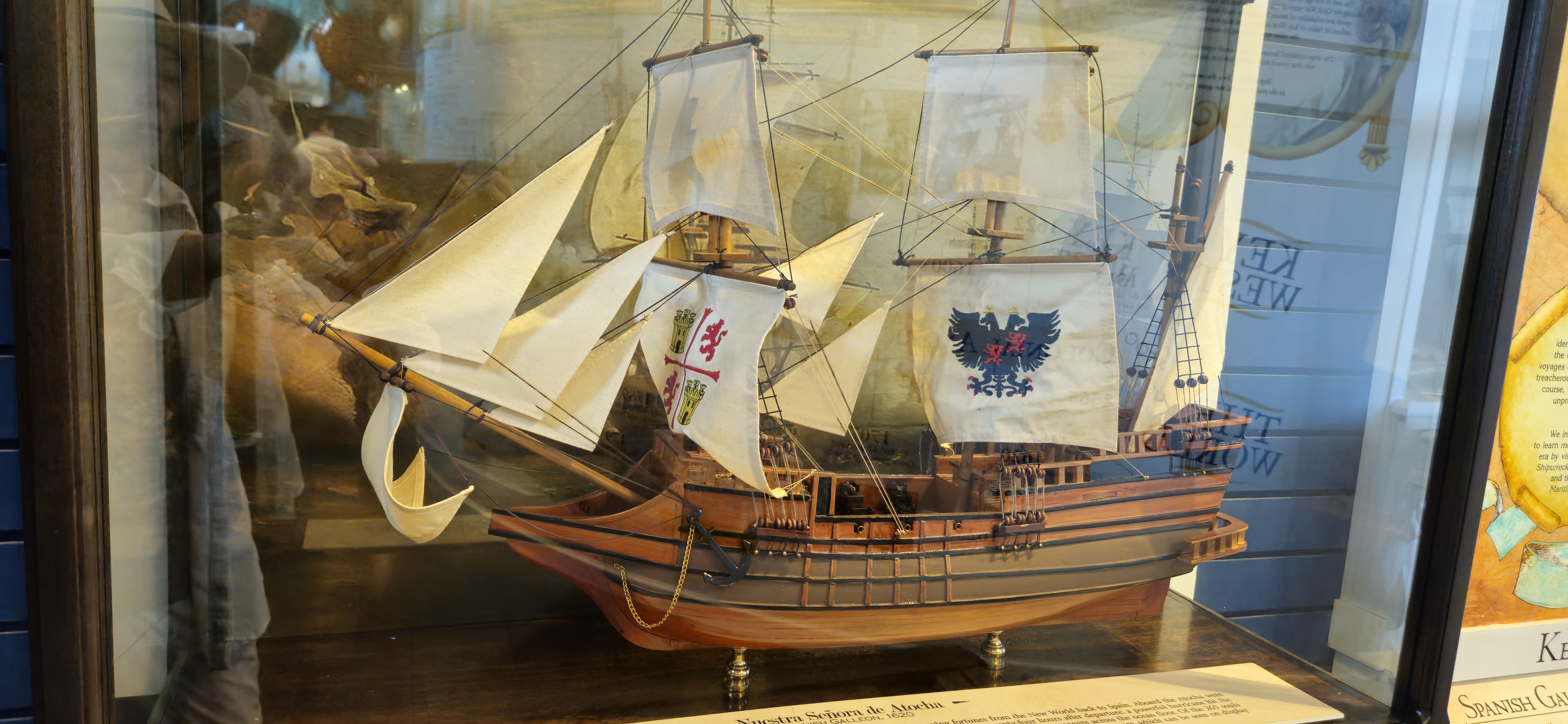
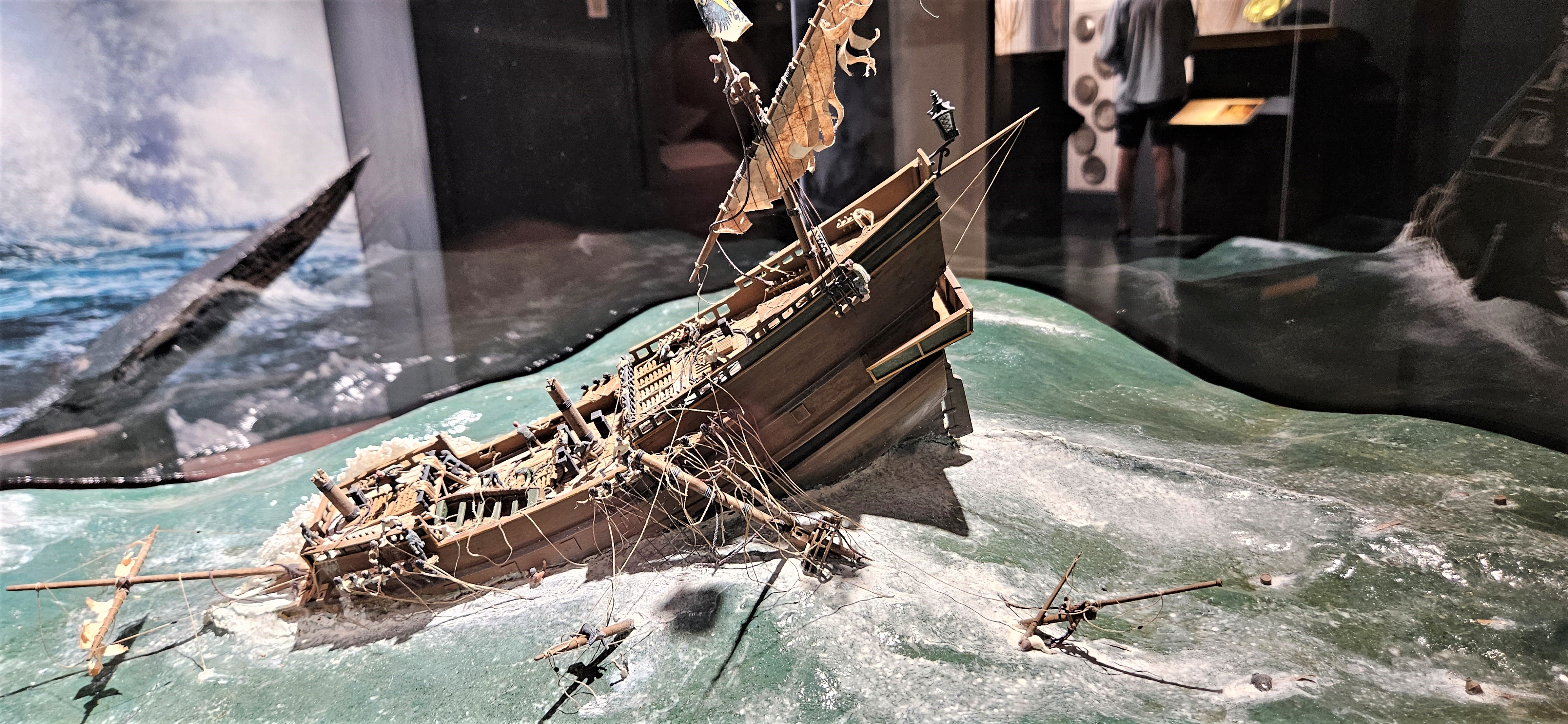
The Atocha had left Havana Harbor with a load of silver and gold she had taken-on in the Spanish town of Portobello,* Panama.
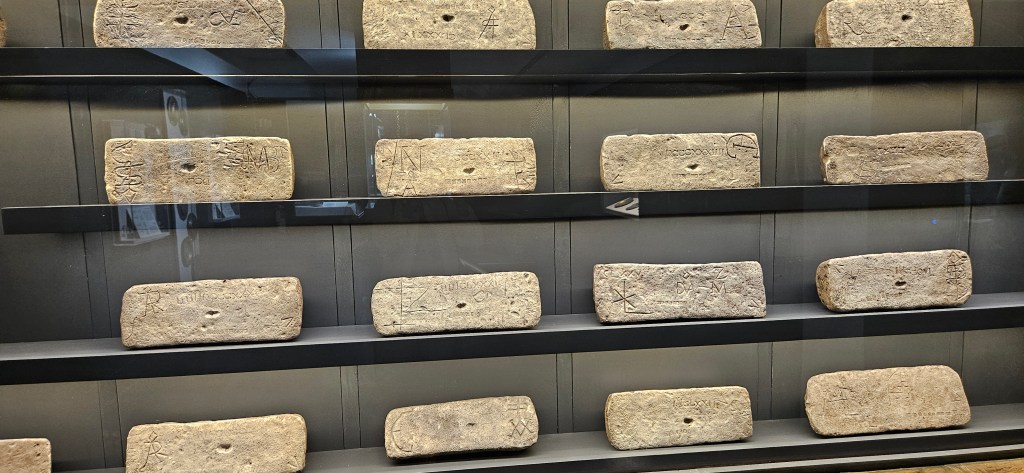
Using a vacuum system, Fisher’s team sucked up over 30 tons of silver bullion…
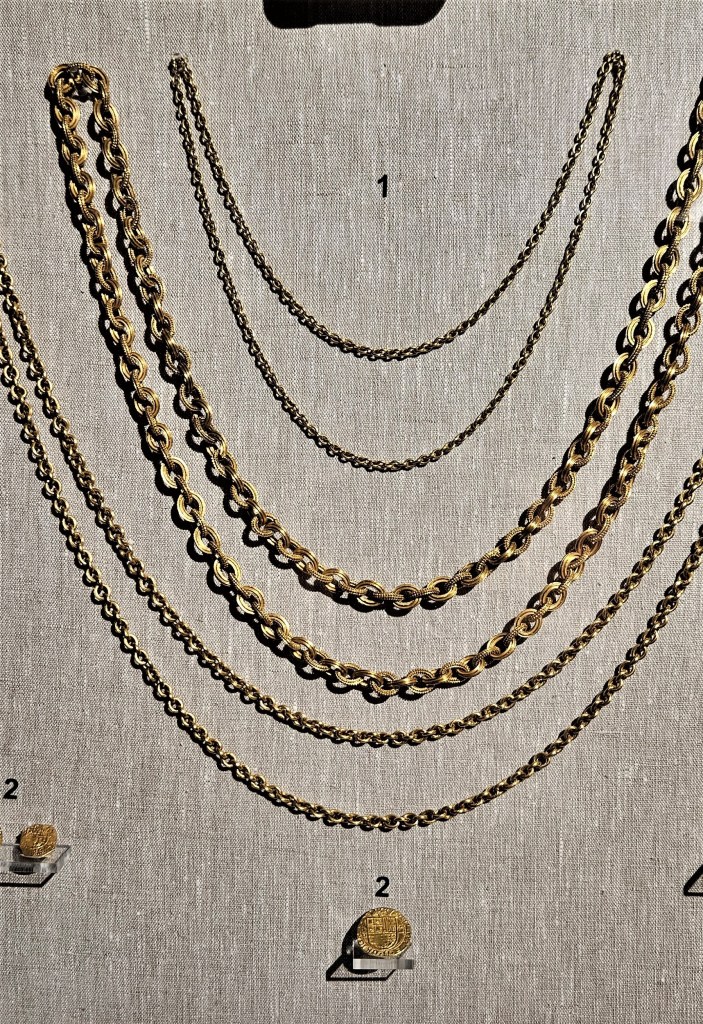
…objects of gold…
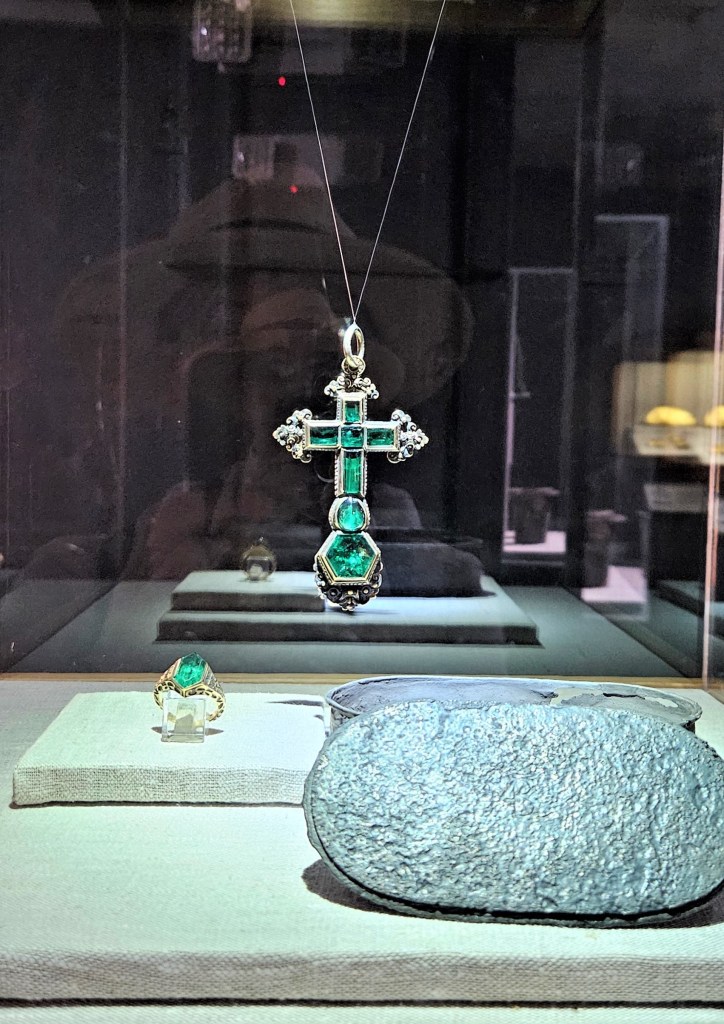
…and jewels.
It had taken Fisher 17 years to locate the ship. The Atocha had sunk in 55 feet of water.
To view some of the artifacts for sale, click here: https://store.melfisher.com/collections/high-other-artifacts
*Portobello: Christopher Columbus, Sir Francis Drake and HenryMorgan were only a few of the explorers, privateers and pirates that had walked the streets of the small town of Portobello during those early days of pilfering, exploitation and conquest. The deep, spacious bay surrounded by hills provided excellent protection from the elements, not only for today’s cruising boats, but for ships that had once transported gold, plundered from the Incas in South America to Spain.
The town sits not far from the Isthmus of Panama, the natural land bridge connecting the North American continent, (Central America) and the South American continent. The isthmus, an 80 kilometre (49 mile) stretch of jungle, once lead slaves bearing gold and silver to waiting ships on the Atlantic side. Pillaged from conquered Aztec and Inca Empires, the spoils were first stored in warehouses in the town of Portobello.
Portobello became the main port of trade for slaves and for merchandise and at one time, the storage buildings were so full of silver ingots, they lay in the streets waiting for transport aboard Spanish galleons. Now the town has little purpose, and its historic buildings sit neglected and crumbling; even the wooden seats on the ornate iron benches are rotting, some already missing seats. But a sort of gaiety visits the town when diablo rojos, the ‘red devils’, pull into the town to pick up or drop off passengers. These privately owned buses compete for passengers by painting their vehicles with unique scenes of she-devils, flame-throwing superheroes and voluptuous women spilling out of undersized halter tops onto bus-sized engine hoods. (excerpt from Yes, The World Is Round, Part I).
DURING OUR STAY:
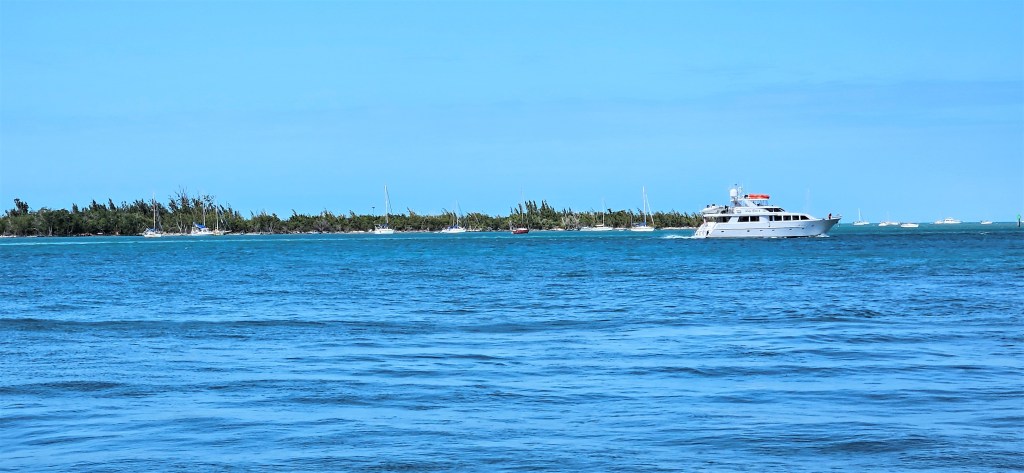
Ownership of the island is in dispute; is it government owned or privately owned? For now, the island is populated with the homeless. According to Keys Weekly, there are people who live there by choice and others who have lost their homes to hurricanes. Approximately 20-30 live on the island in tents, jerry-rigged tarps and lean-tos, some furnished with couches and flat screen TVs run by generators. Others live onboard their boats and use the island as a ‘backyard’, a place where they can walk and meet others in their ‘neighbourhood’.
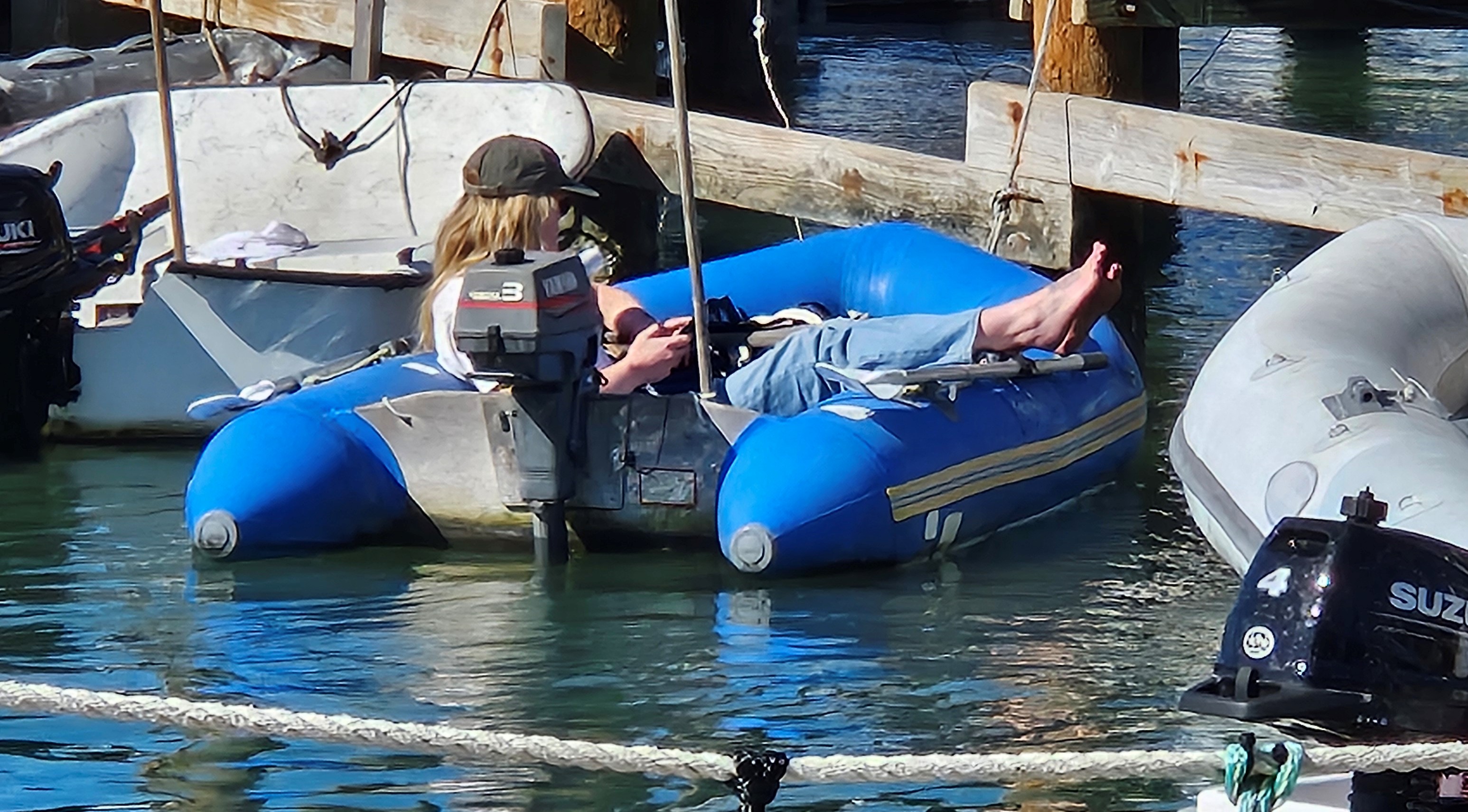
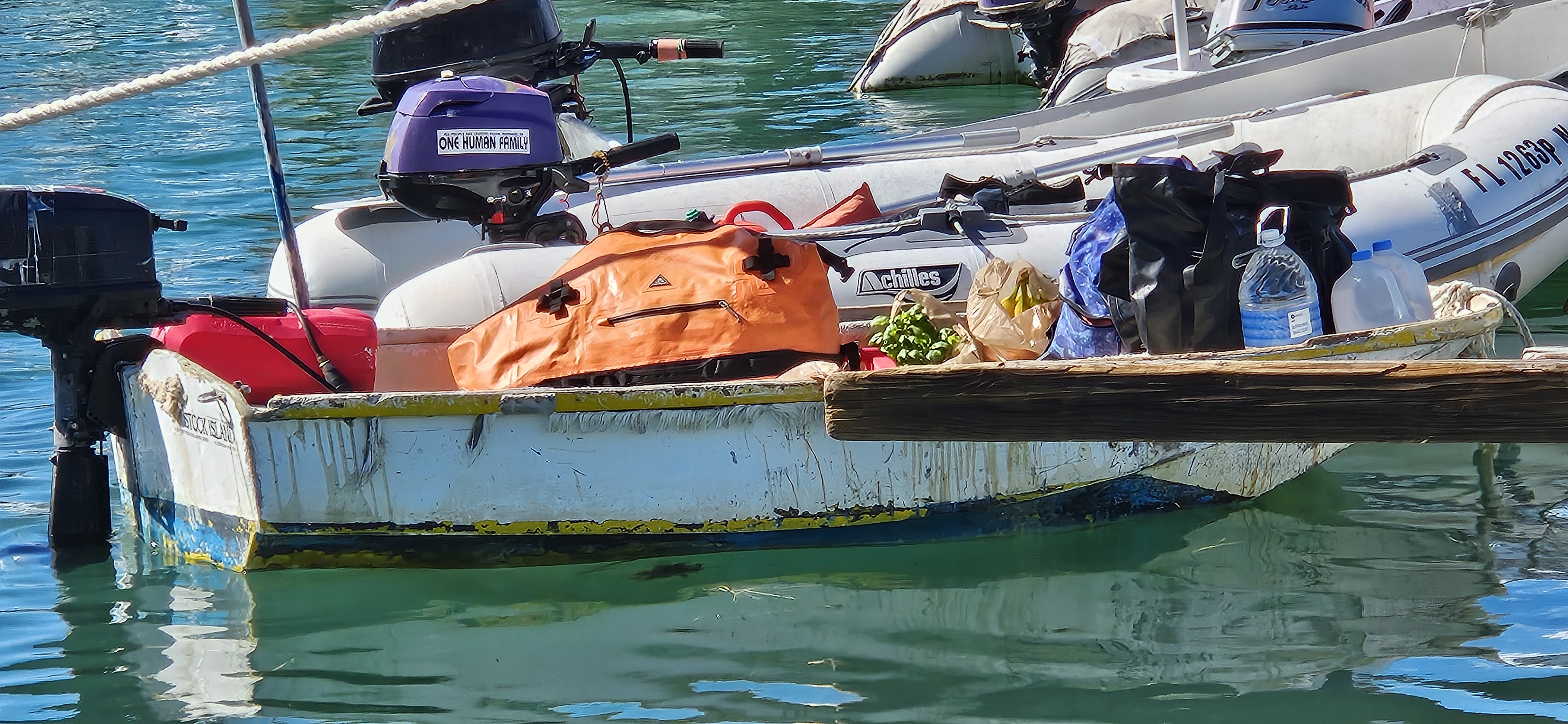
Some residents work in shops and restaurants in town, but all of them need to come to Key West for supplies. They arrive in their dinghies and tie to the dock alongside the boardwalk.
It was the morning of the 9th day of our stay in Key West when I woke and noticed a masthead light where there shouldn’t be one. It was dark, and looking through binoculars, I saw what I interpreted as the upper half of a sailboat on the far side of a nearby break-wall.
Curious, I stepped off Baccalieu and walked around to the end of the break-wall.
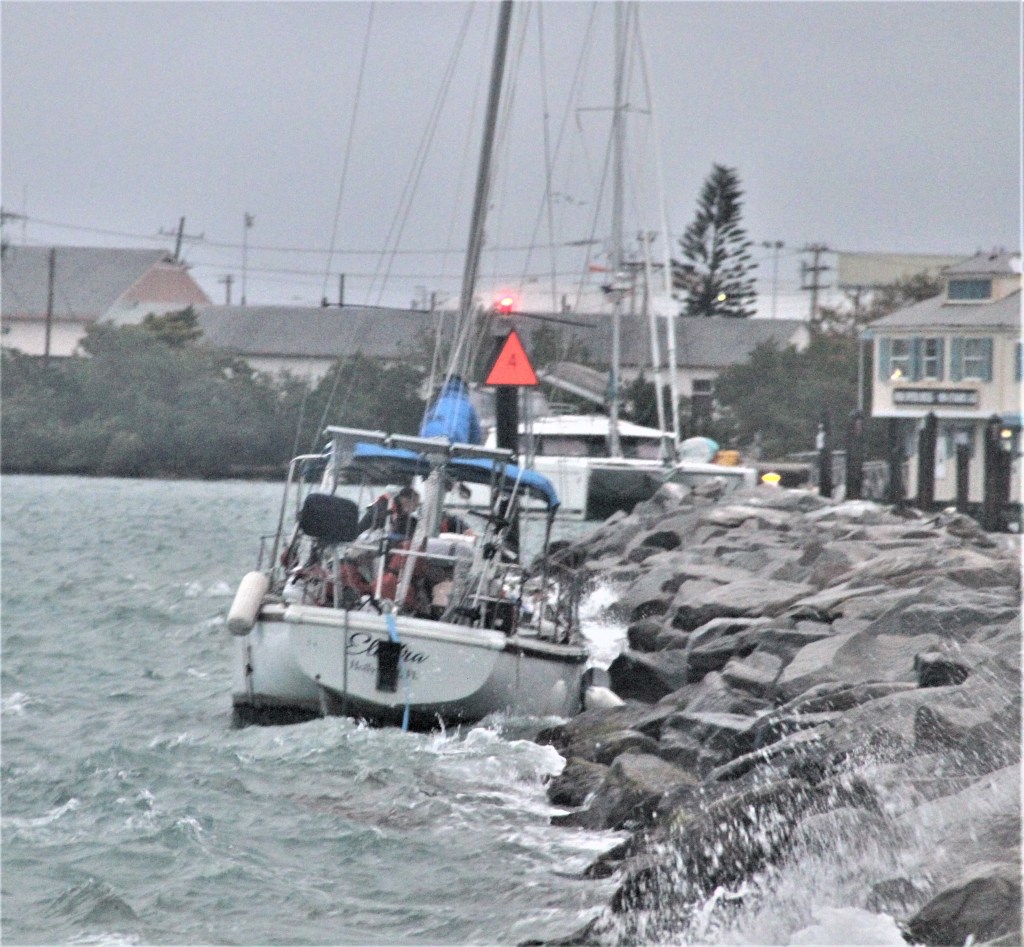
A sailboat had broken away from its holding at Wisteria Island and was rocking side to side in the lumpy surge; her hull scraping repeatedly against jagged rocks. I quickly returned to Baccalieu , and radioed the boat to ask if they thought their life was in danger. A woman, perhaps in shock, responded calmly, too calmly for the danger she was in; “No”, she said, I don’t think we are in danger.”
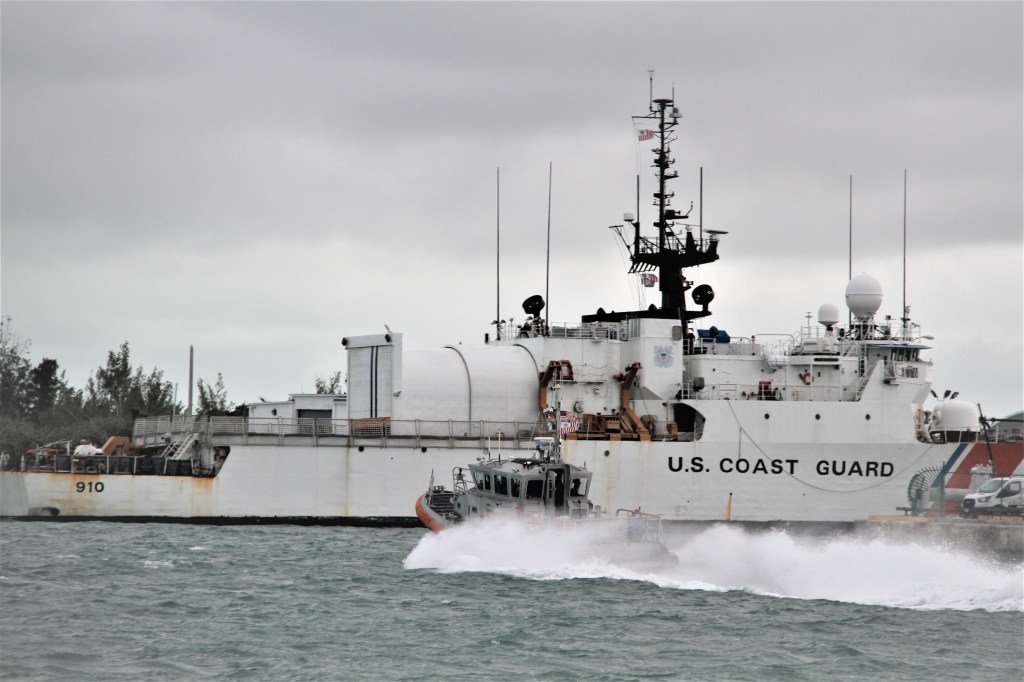
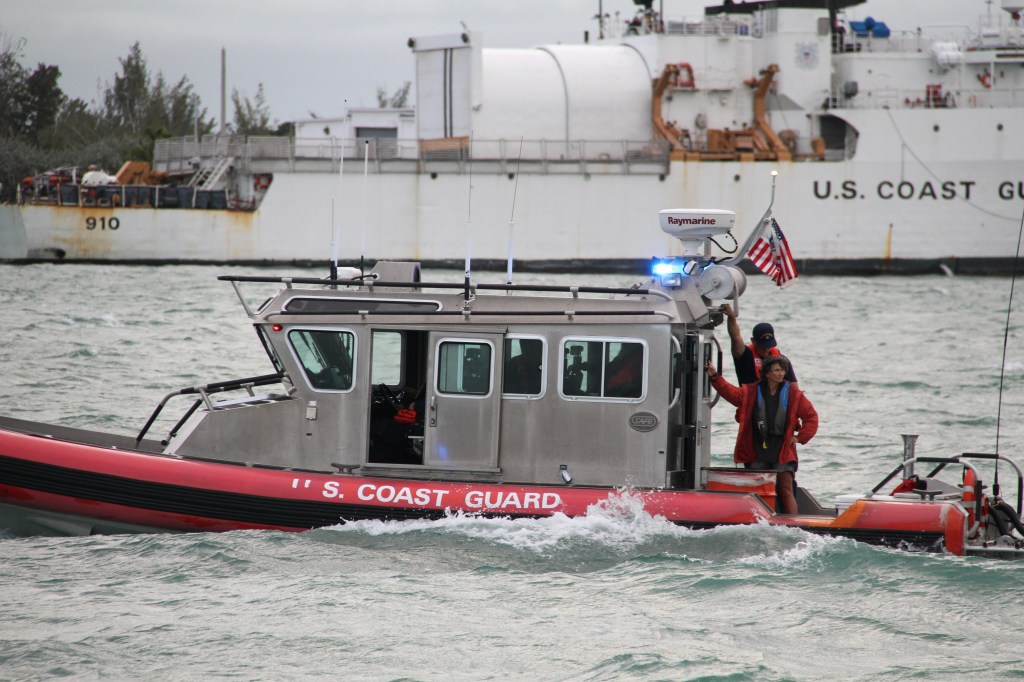
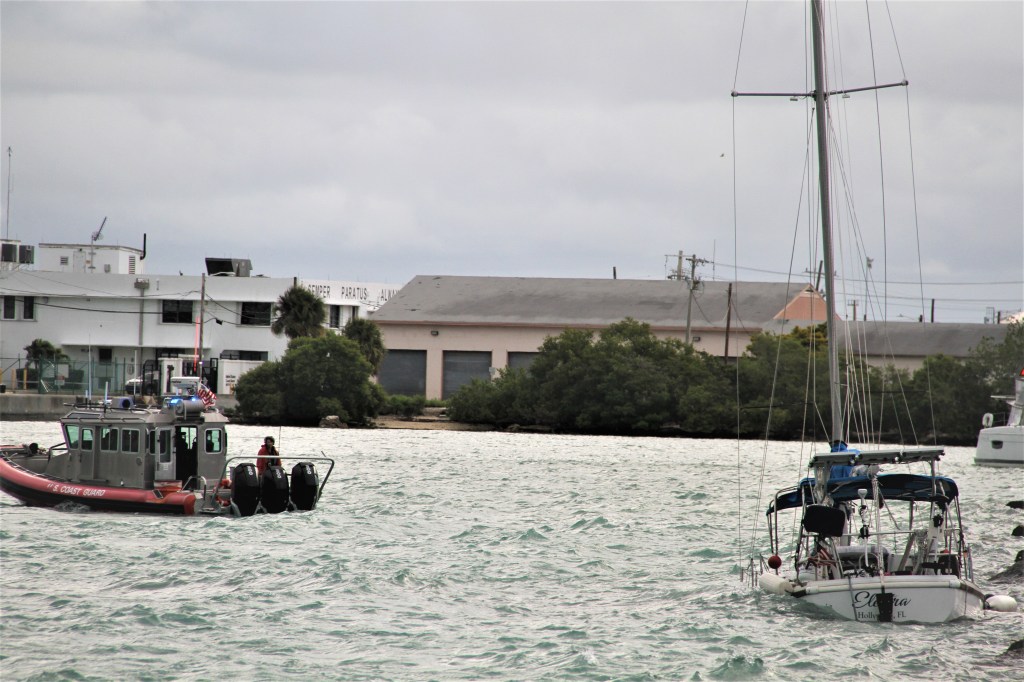
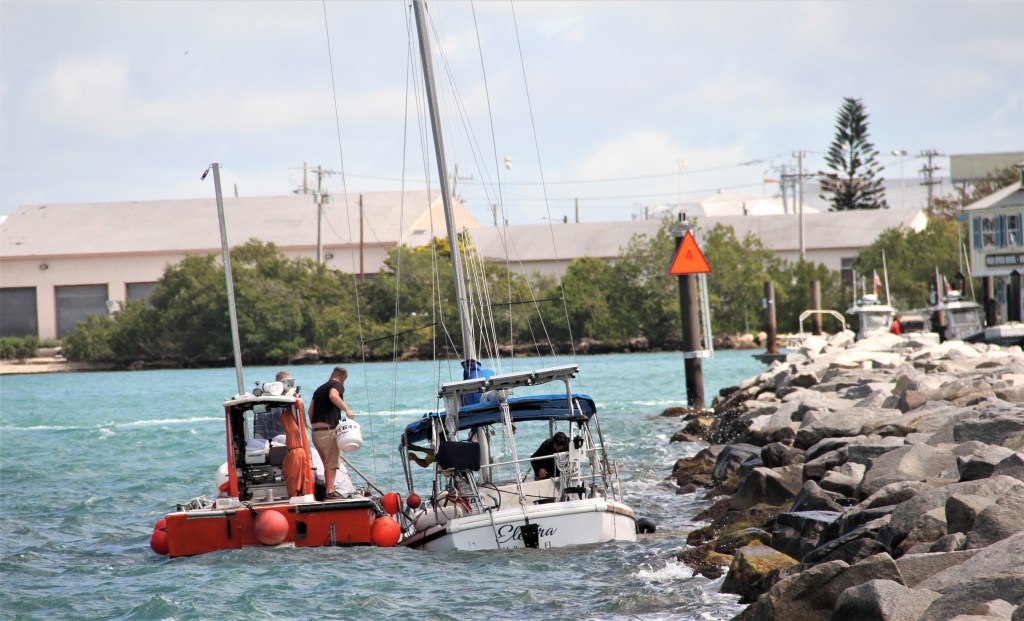
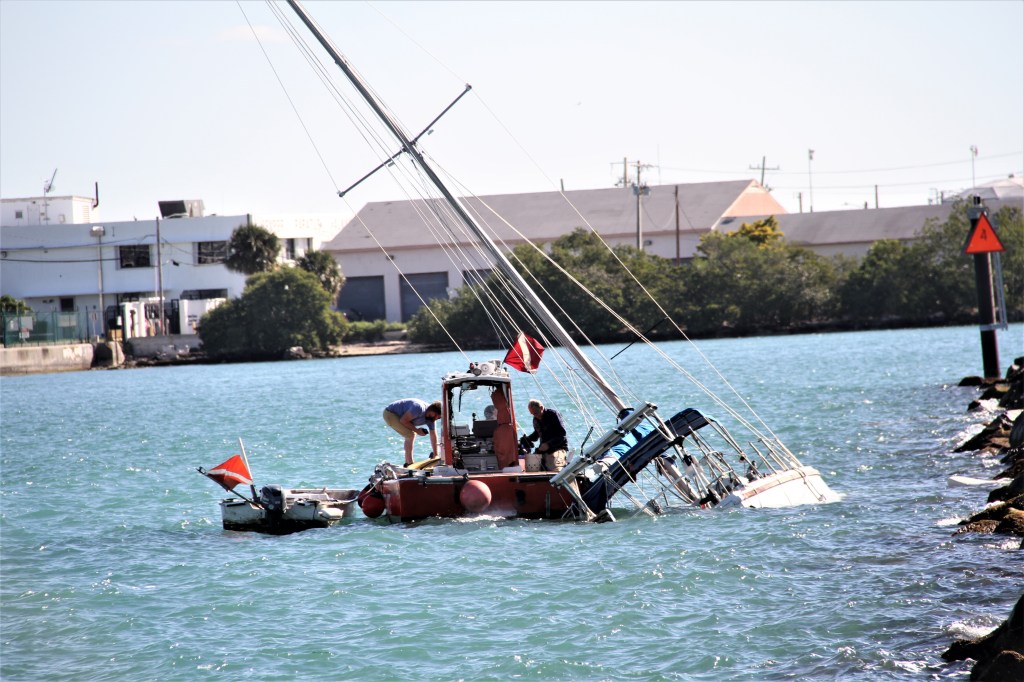
A few hours later, I met the owner of the sailboat. Her name was Mary. She had retired three years earlier from working as a farrier. That’s when she bought a used boat and brought it to the Keys. The boat had been her home; everything she owned was on that boat, she said, including her cat which she hadn’t seen since drifting against the wall.
I gave her a pair of pants and a sweatshirt and offered her a bath towel. She said she couldn’t handle anything more than the clothing. “I’m my own pack mule”, she said; a duffle bag filled with a few possessions she had grabbed from the boat lay on the dock.
It wasn’t long before a law enforcement officer came walking down the dock. Delivering a message as considerate as possible, he revealed that she had two choices: accompany him to police quarters where she would spend the night in jail and then stand before a judge in the morning, or, he said, she had 21 days to remove the boat or go to jail.
Mary thought the cause of her drifting from the Wisteria Island anchorage, was that her anchor rode had broken during high winds the night before. She had no boat insurance. The cat was never found.


 Traveling the Great Loop
Leave a comment