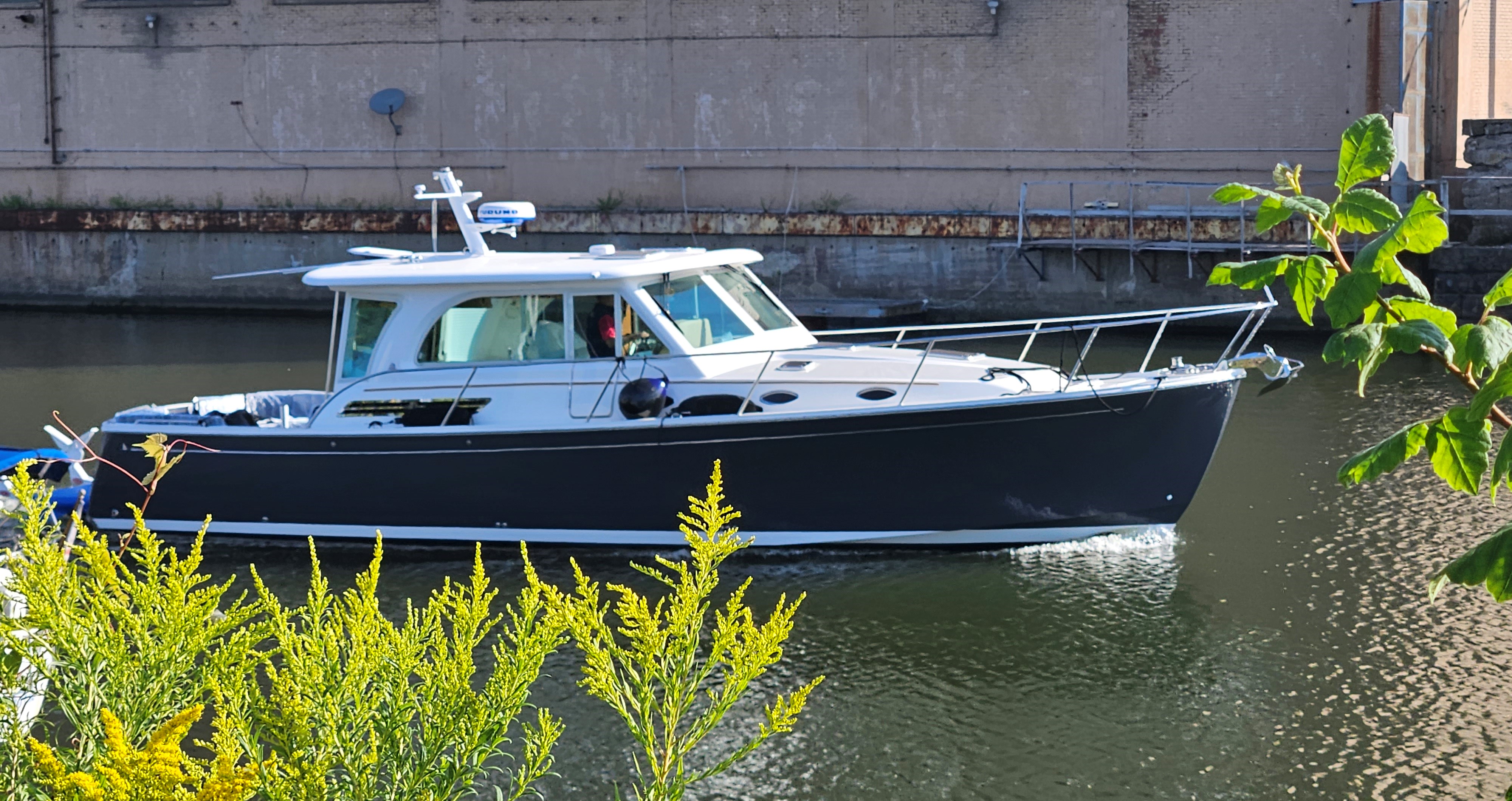
Nov. 29-Jan 8, 2025: Naples to Key West; Today’s run: 115 miles/ travel hours 6.5 hours
To revisit last season’s visit in Key West, (2024), featuring the region’s history of wrecking, early industries, Flagger’s Railroad, the Mel Fisher Maritime Museum, and the unfortunate sinking of a local sailboat, click here: https://117gbl.wordpress.com/wp-admin/post.php?post=4143&action=edit
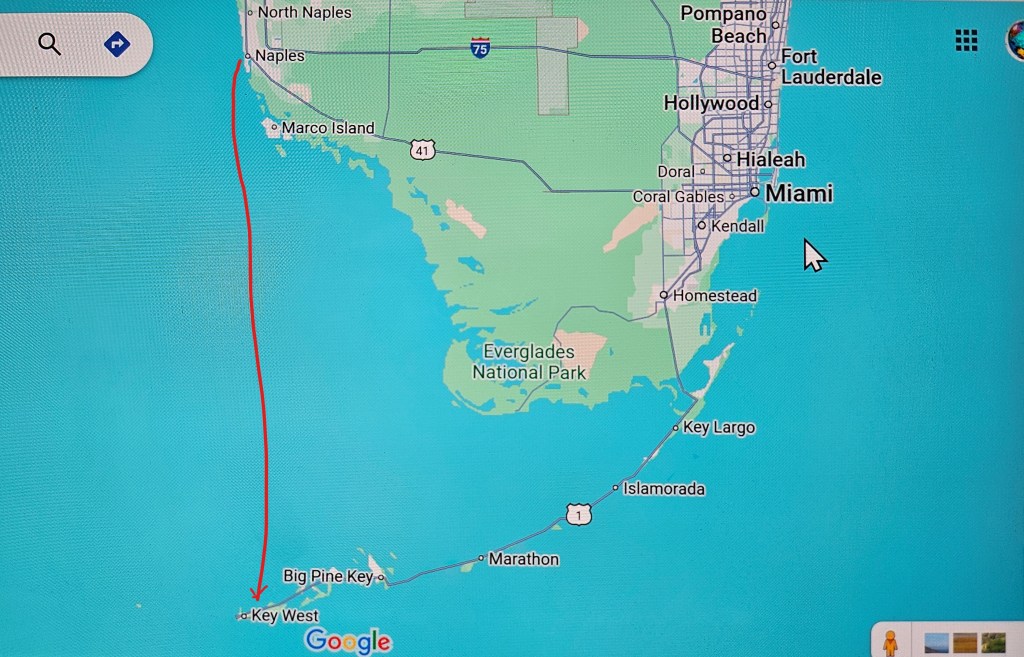
To ensure that we would have contact with the mainland in the case of an emergency, before leaving Naples, we upgraded our Starlink plan. Purchasing additional data would enable us to make phone calls while boating approximately 50 miles off shore.
The seas were flat and the sun shining, perfect for running down the Gulf.
A BIT OF AMUSING HISTORY:

In 1982, the U.S. Border Patrol set up a permanent roadblock on the main road into the Keys. Cars were searched for drugs and illegal immigrants. Traffic jams ensued. In time, tourism suffered. Protesters believed that as Americans, they had the right to move freely between mainland U.S. and the Keys.
Following no response to an injunction filed against the federal court in Miami, Key Westers decided to secede from the country.
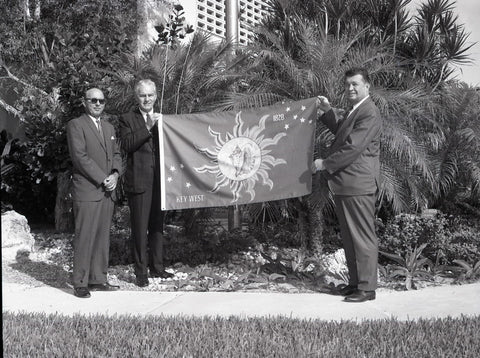
The American flag was taken down and a new flag, designed to represent the new Conch Republic, was raised. (Picture courtesy of Monroe County Library.)
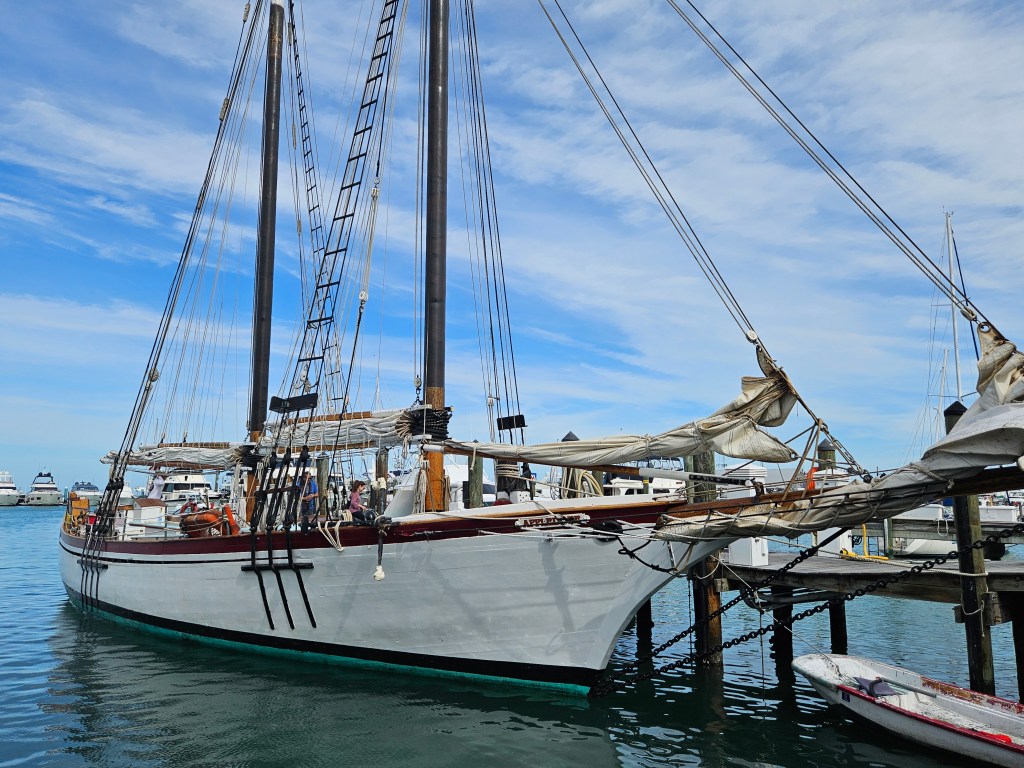
Documented history is sketchy, and folklore abounds, but it appears that after a month of highway blockades, there was a skirmish between two vessels, a Key West schooner and a U.S. Coastguard ship. In an attempt to draw attention to their plight, the Key West schooner shot water balloons at a local US Coastguard ship. The Coastguard retaliated with fire hoses. Hence the Great Battle of the Conch Republic.
This may seem like a lot of nonsense, and it was, but the self-proclaimed Key West Prime Minister had a plan. Following their surrender, the Minister demanded foreign aid from the United States.
No money ever changed hands, but the blockade was removed and that was the point of the fracas. Today, members of the Conch Republic, (no more than a mindful remembrance of events), celebrate how only a few people, united and determined, succeeded in getting the United States of America to respect their little village. The 10-day celebration takes place each April.
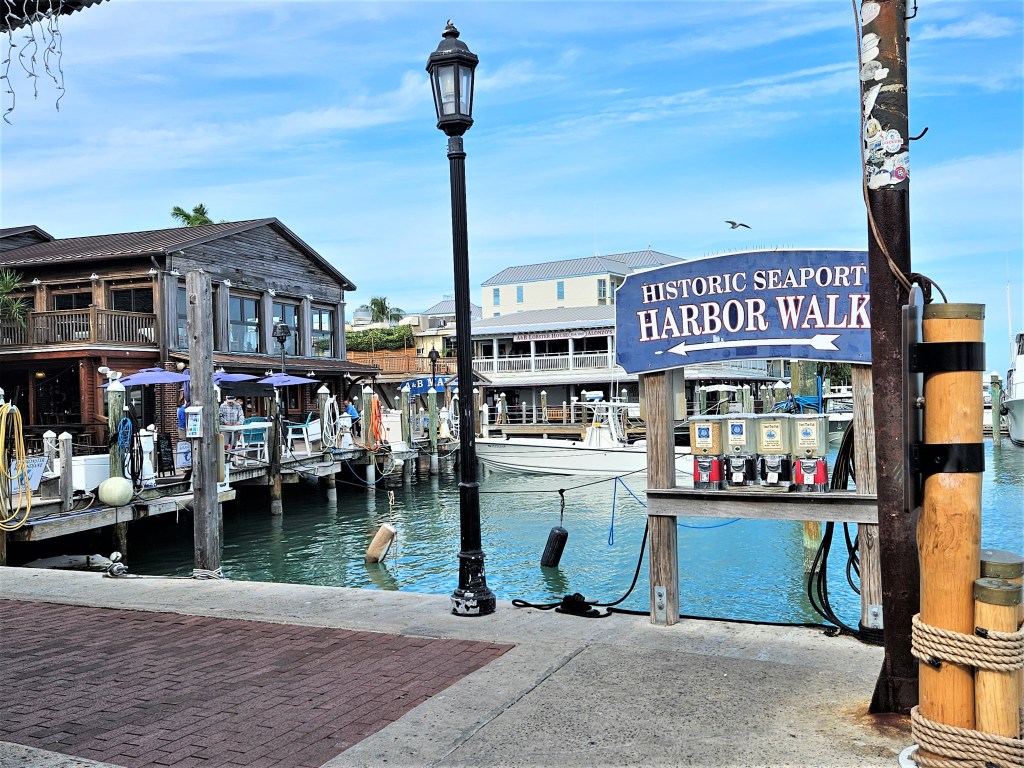
Leaving the boardwalk to head uptown, coffee shops, diners, breakfast joints, bars with live music, numerous restaurants, and what appears like hundreds of t-shirt boutiques line the streets.
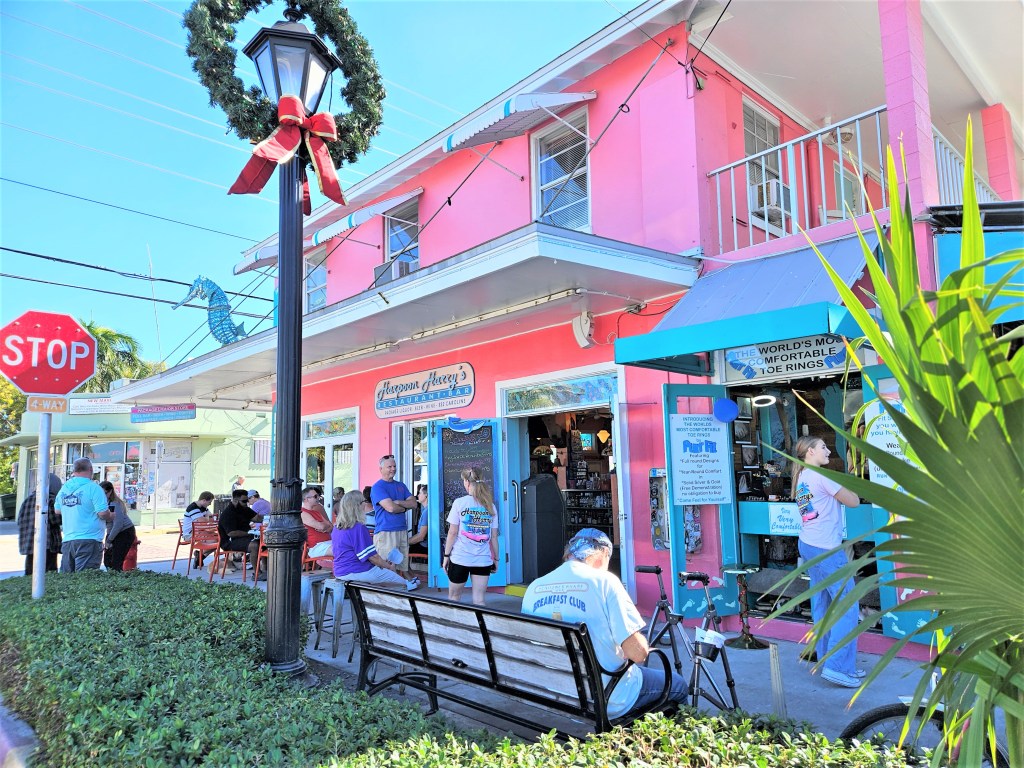
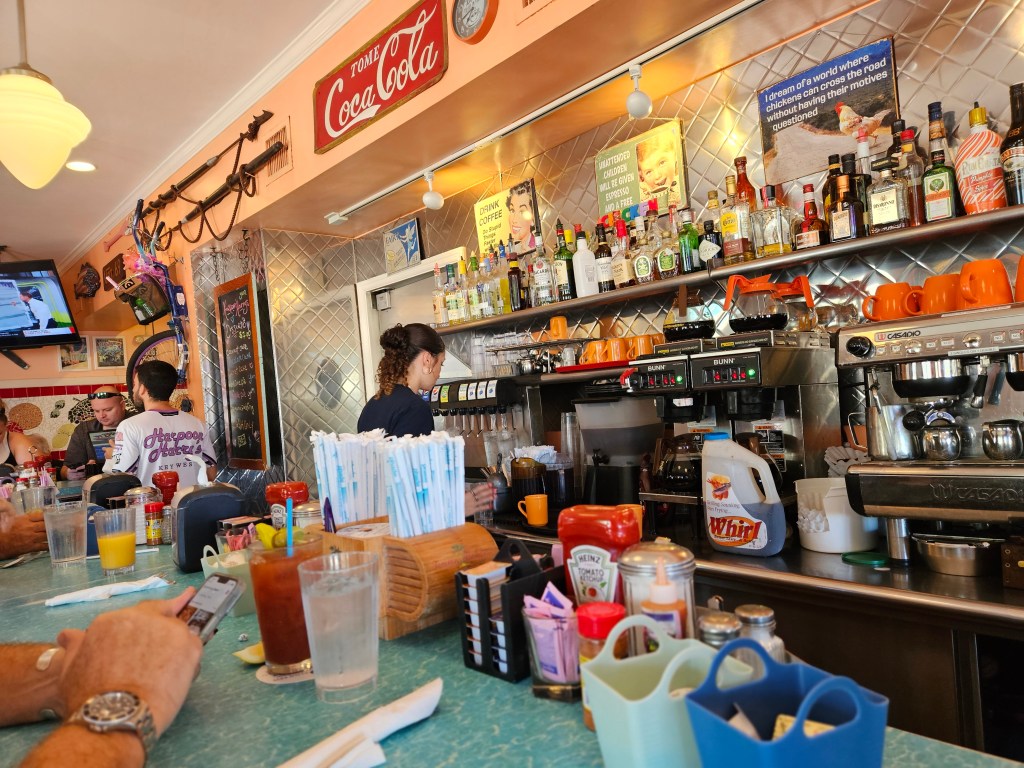

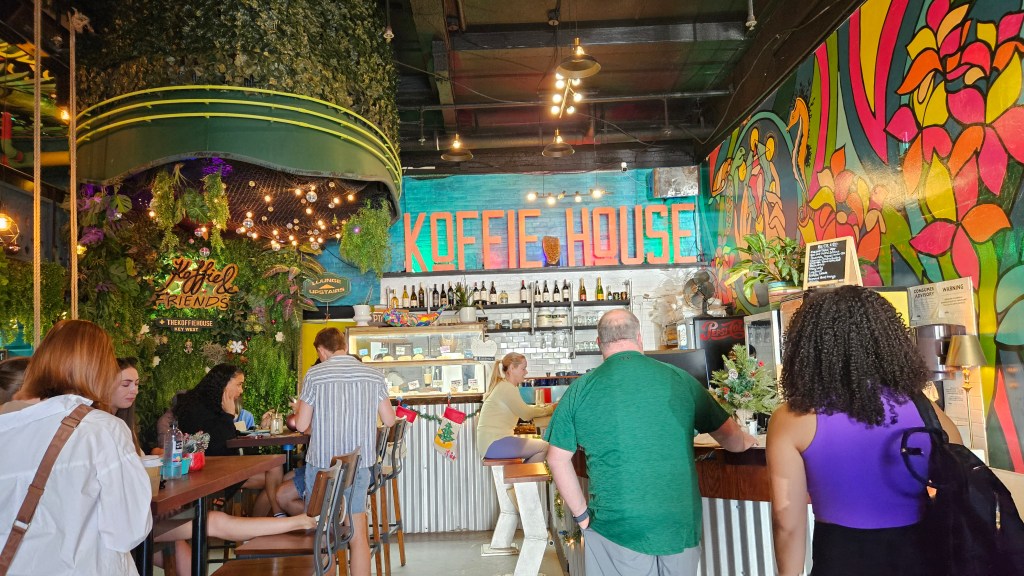
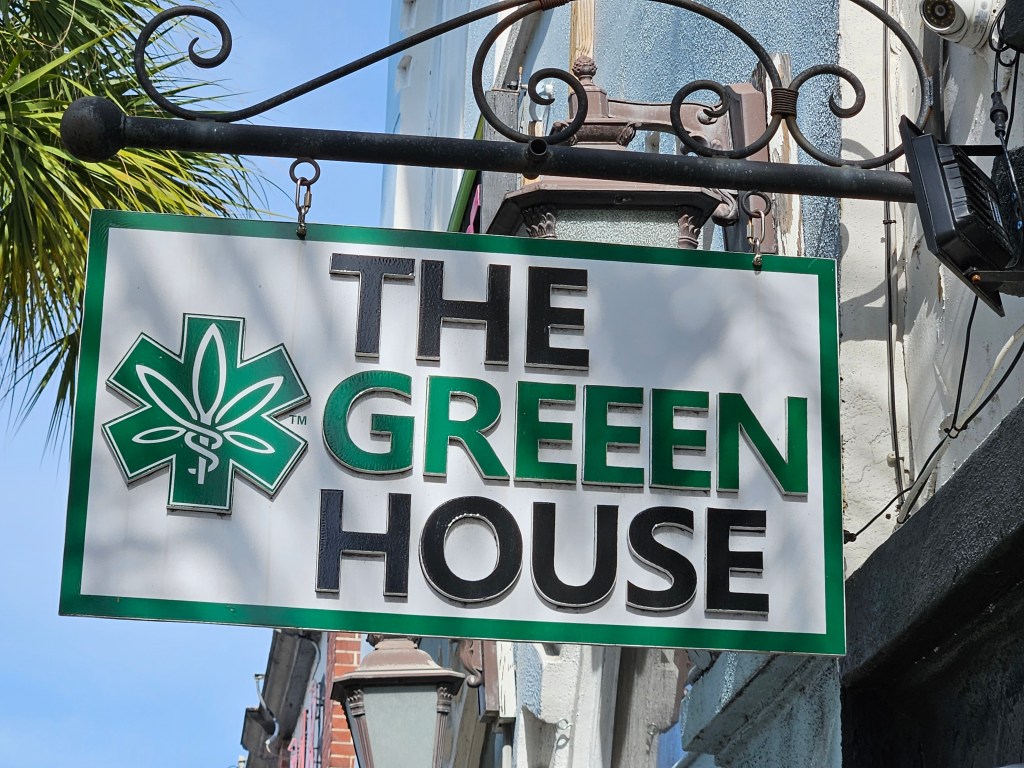
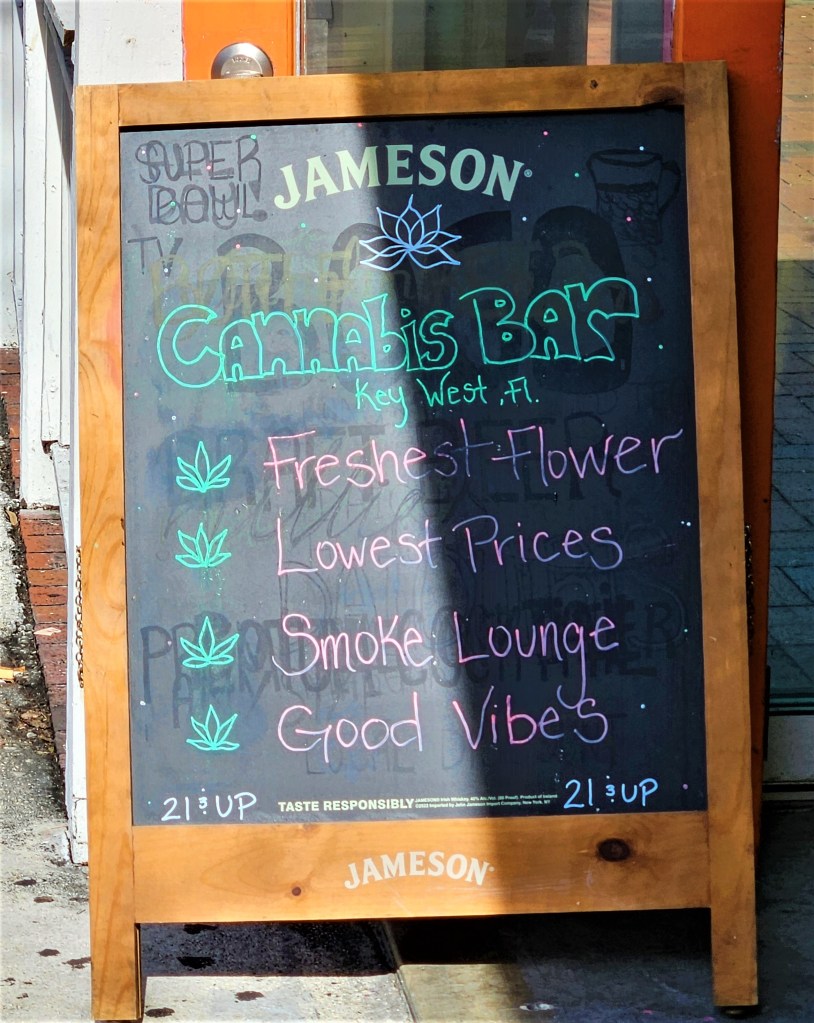
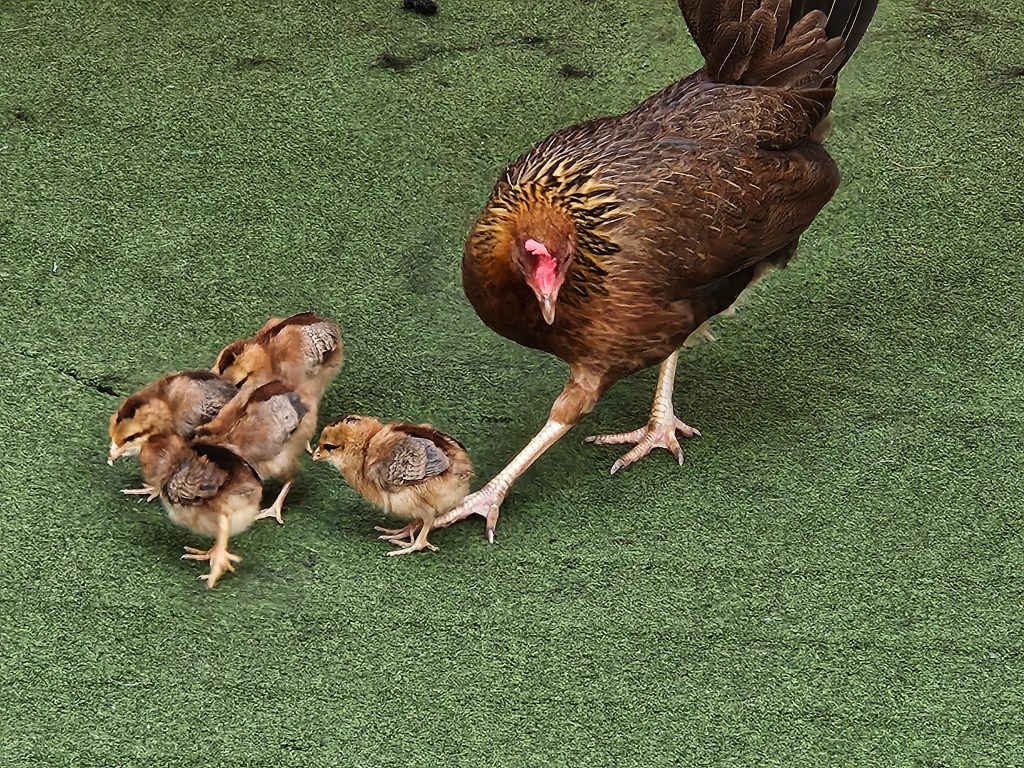

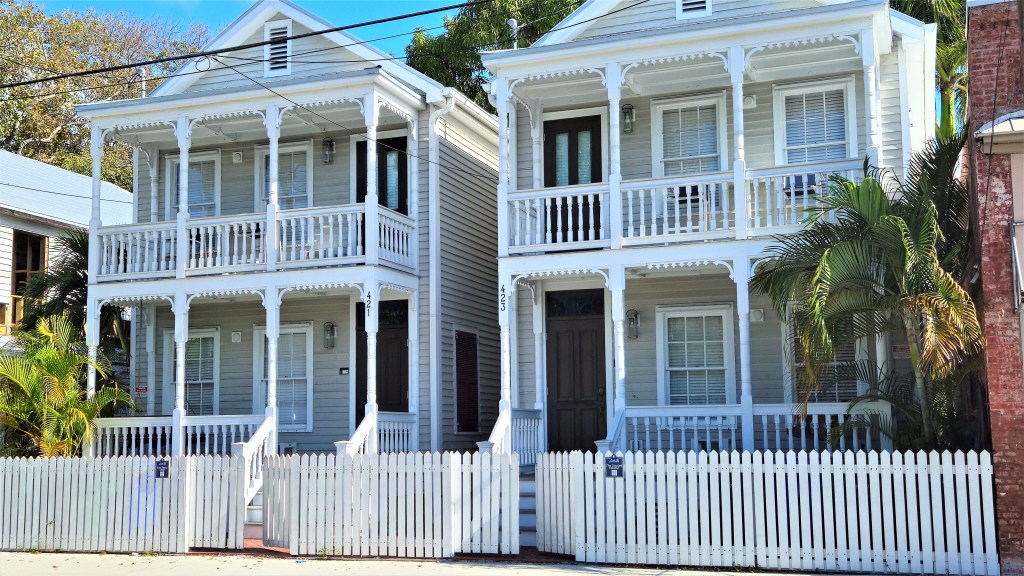
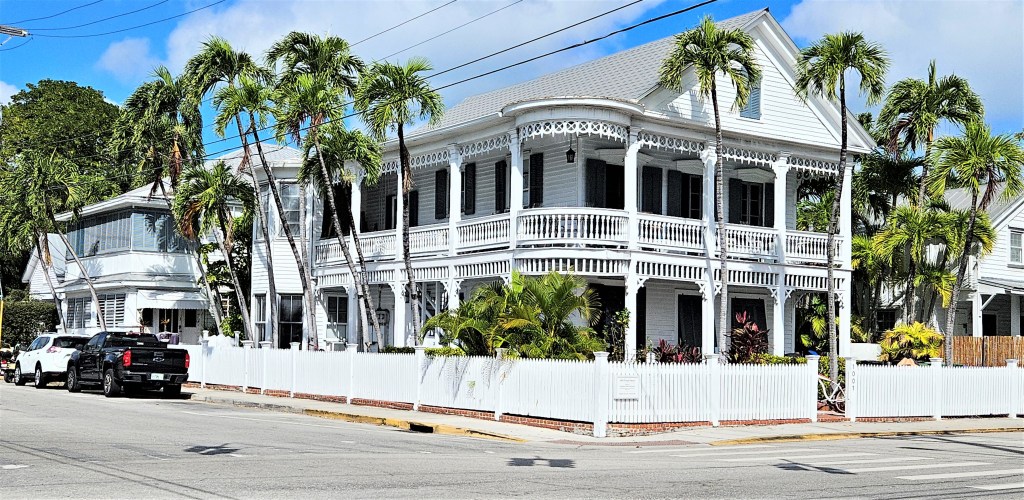
I never got tired of walking the town, exploring neighbourhoods while stopping to read historical plaques, visiting weekly farmer’s markets – there are 2 held on opposite sides of the island on different days. Bahama Village, located on the west side of the island, offers additional shopping plus restaurants serving Bahamian flavours of jerk and curry. And you can walk to all of it, from one side to the other.
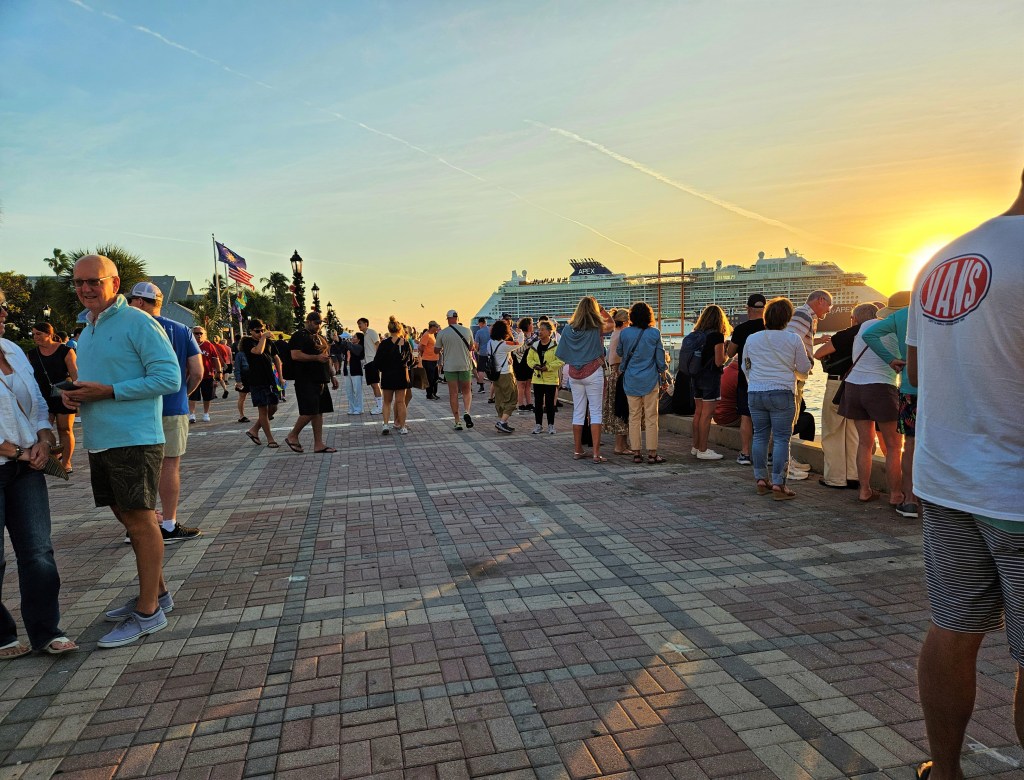
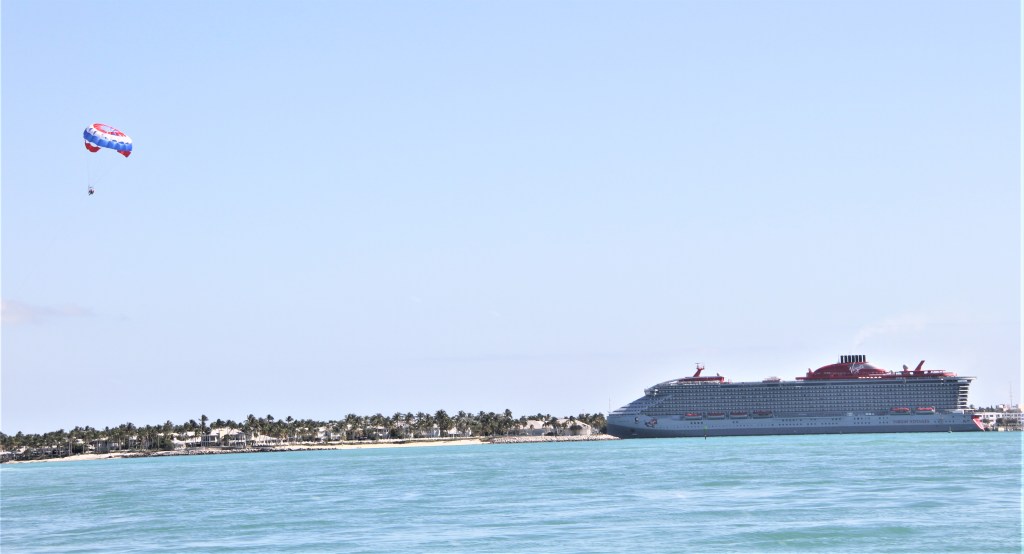
Throughout the week, cruise ships dock at Mallory Square. According to city rules, ships are required to leave before sunset. (The ship above, has just pulled away from the dock.)
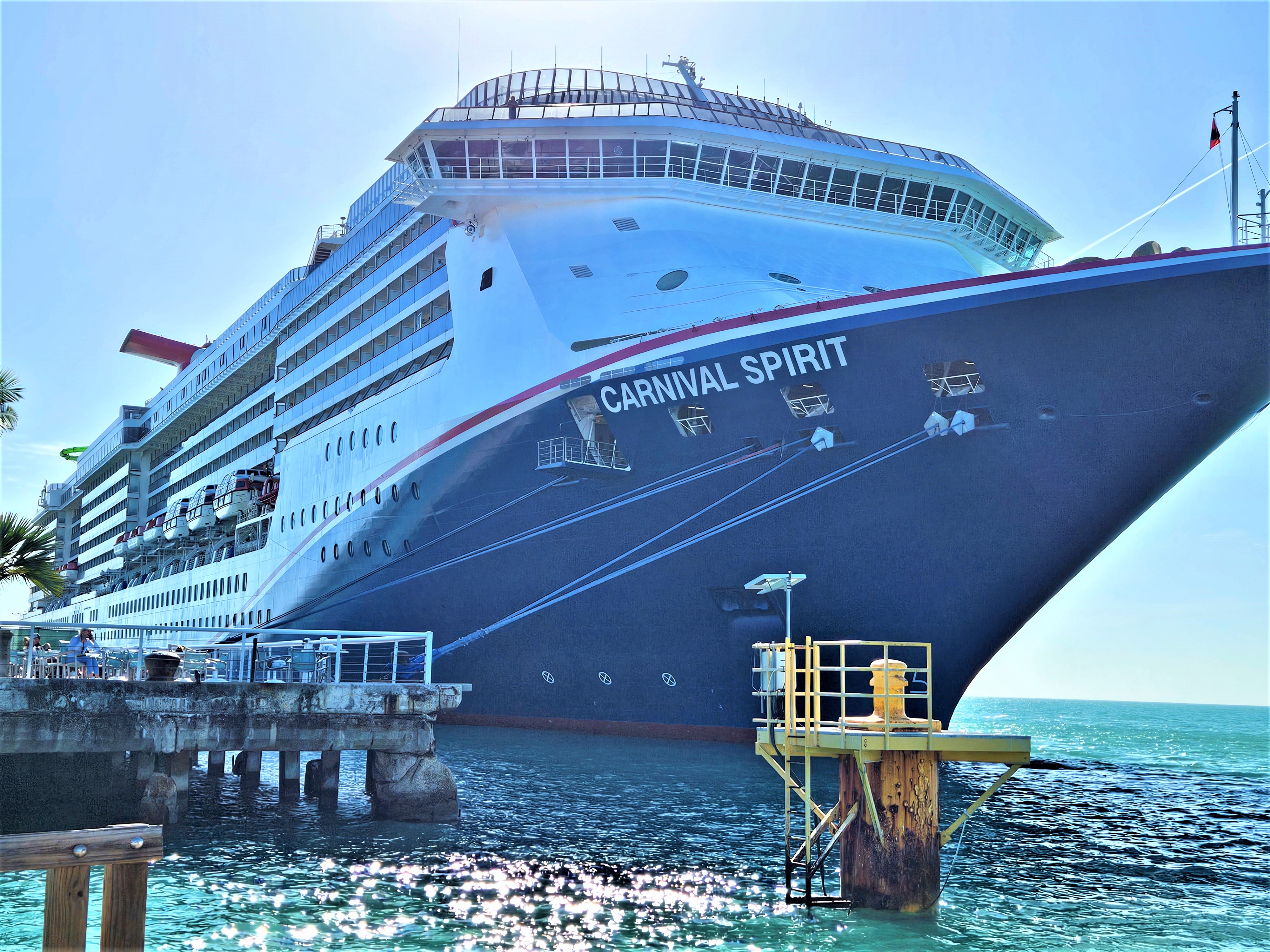
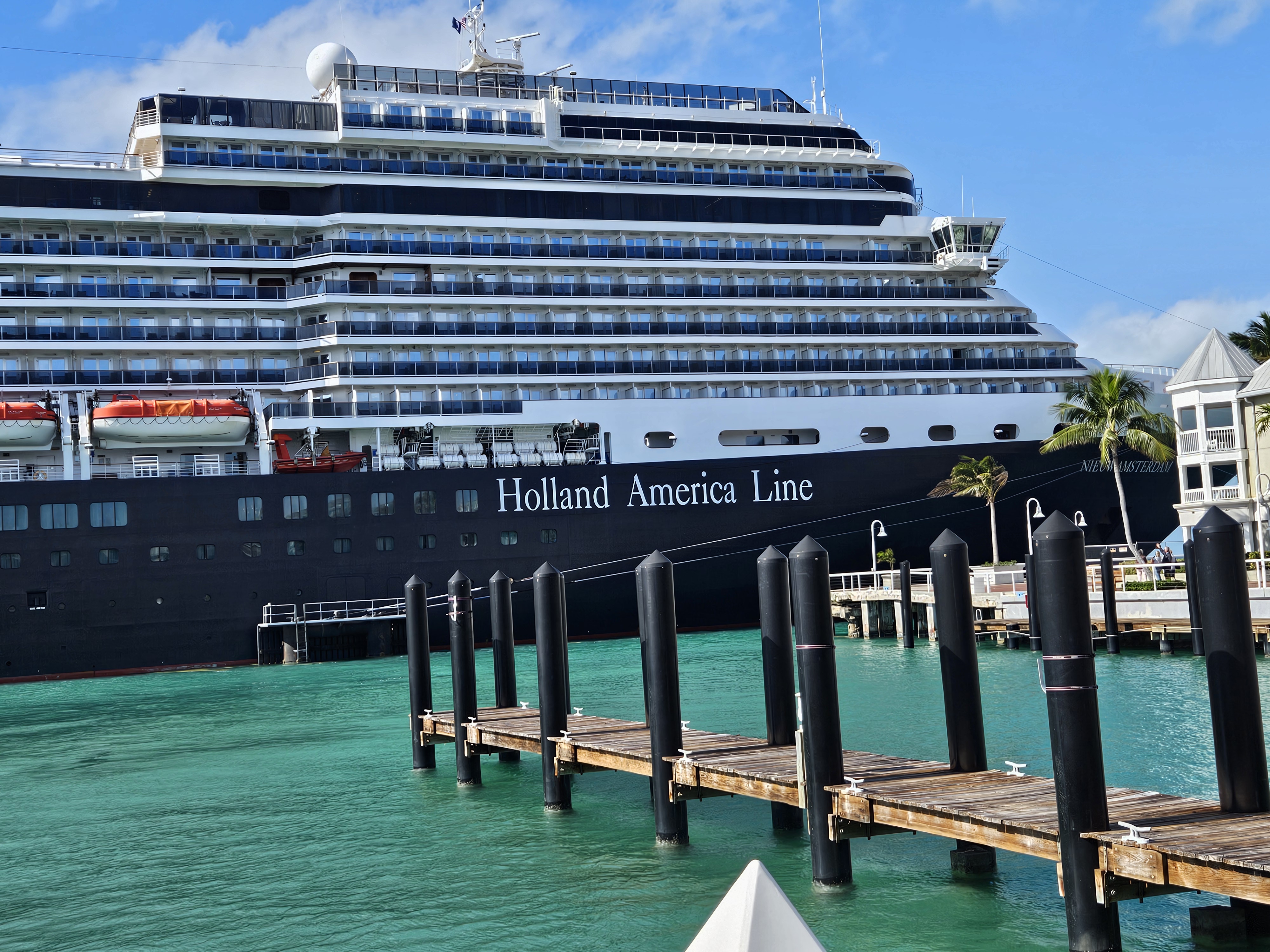
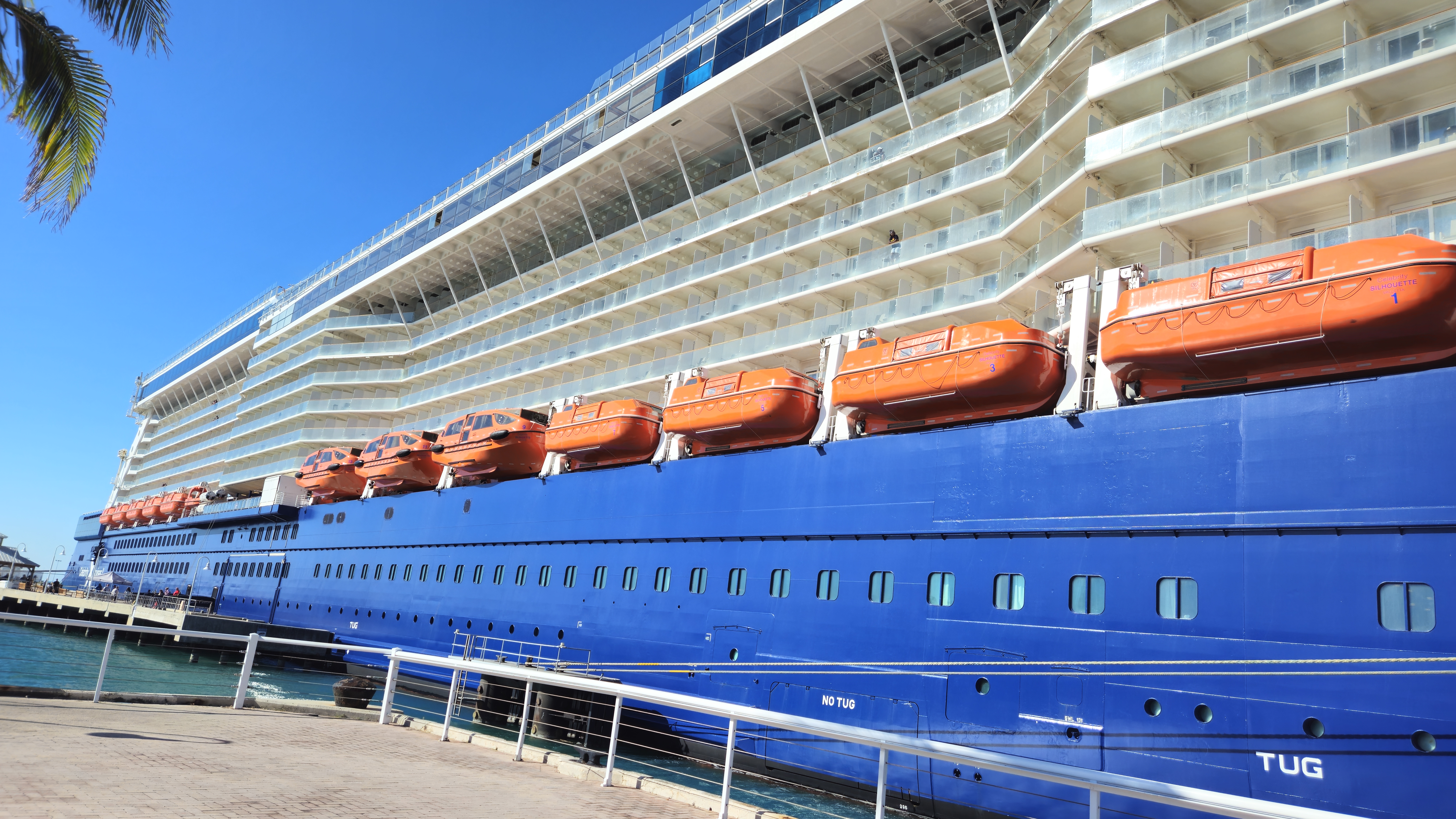
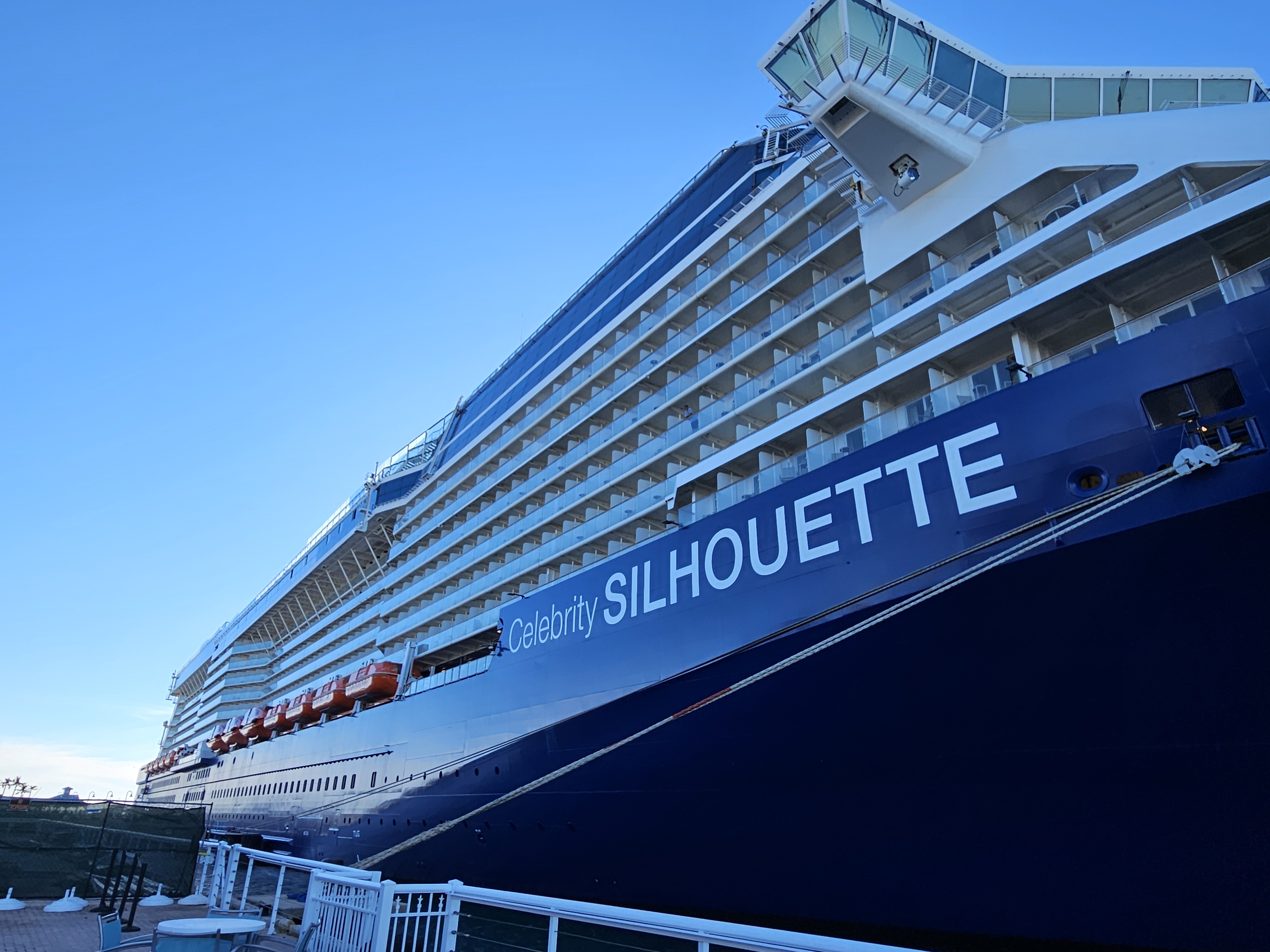

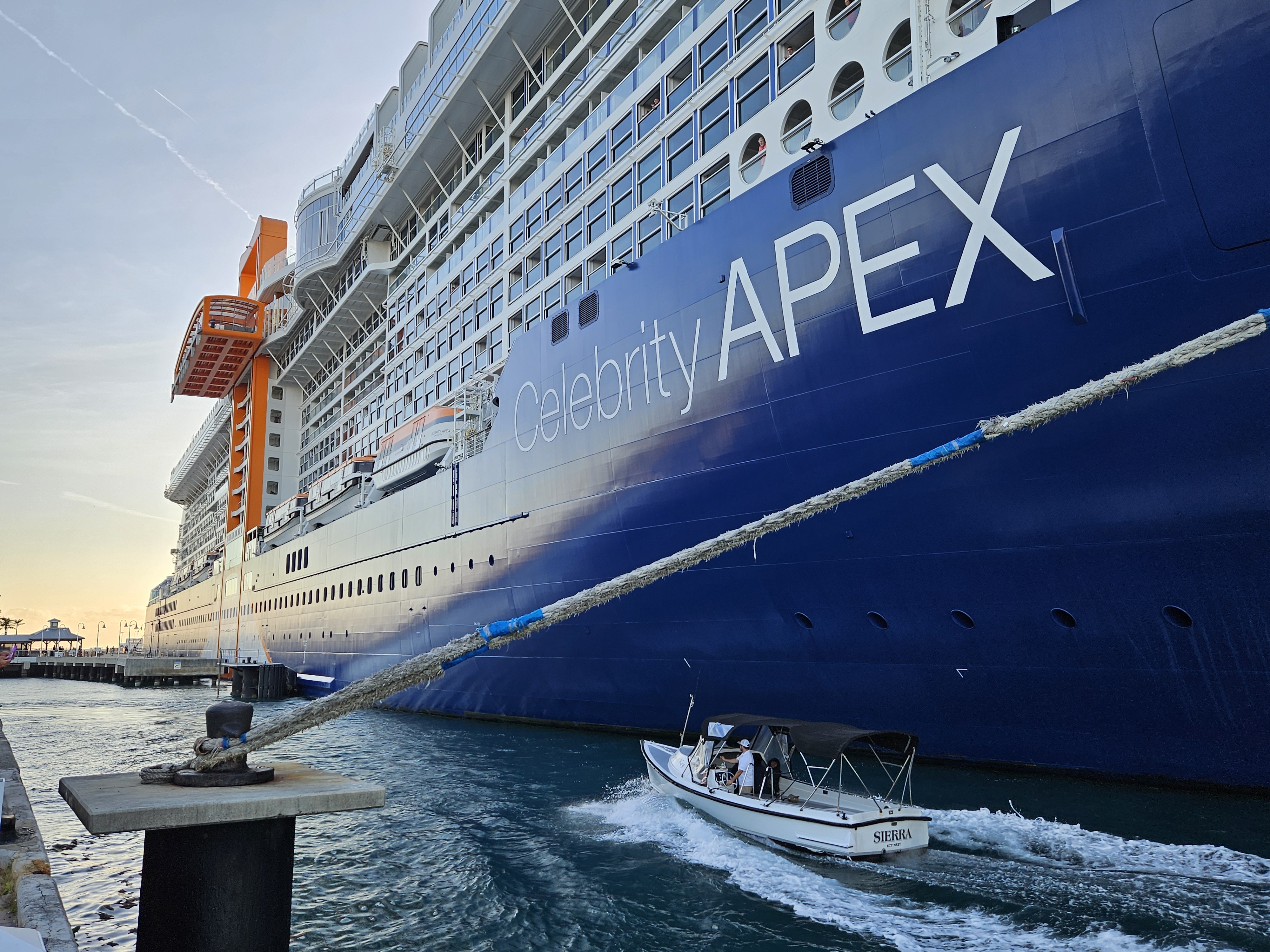
During the busiest month of 2019, nearly 965,000 tourists arrived via the Key West port. Then COVID struck resulting in cruise ships being banned from entering U.S. ports. Although a significant loss in revenue, in 2020, Key Westers voted to have fewer ships visit in the future; they liked the ambience of their town without the daily, intense rush of tourists. (Mega cruise ships visiting Key West, might carry over 3,900 passengers.) The voters decided to limit cruise-ship traffic to the smallest ships, and those with the cleanest environmental records.
At the time, limiting cruise ship visits was happening around the world. The Italian government banned large cruise ships from entering Venice’s fragile lagoon, and in French Polynesia, the governing body announced cruise ships carrying more than 3,500 passengers, would no longer be allowed at its ports, including Bora Bora and Tahiti.
But in June 2021, Florida’s state governor, Ron DeSantis, signed a bill with a controversial amendment that effectively overturned the city’s voter-approved measures, preventing ballot initiatives from regulating commerce in ports.
In response, the city of Key West closed two city-controlled docks, Mallory and Outer Mole piers, to nearly all cruise ships.

Today, one mega cruise ship is permitted to visit per day, (must be gone by sunset). A second, smaller cruise ship with not more than 1,300 person -capacity, is allowed at a nearby pier.
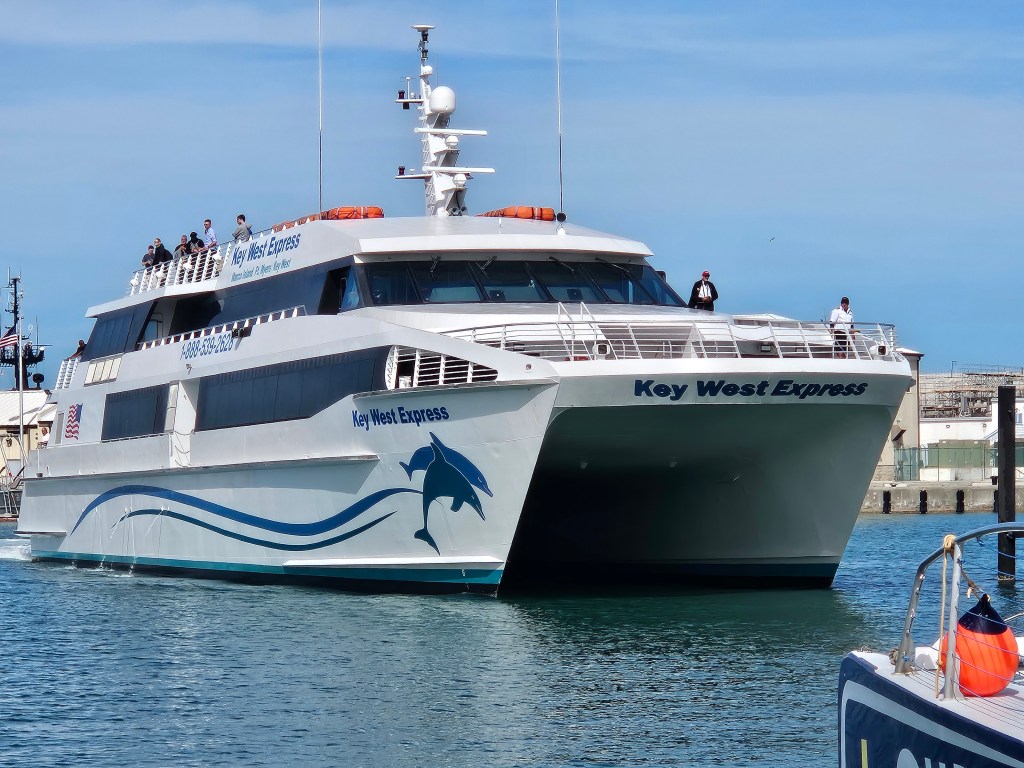
Ferries leave Ft. Myers and Marco Island making daily runs to Key West. Each way takes approximately 3.5 hours. Since COVID, ferry passenger numbers have dropped. In March 2019, the busiest month, the Key West Express carried 15,348 passengers. In 2023, her numbers for the same month were 11,470; by far, most visitors using the ferry in that month, were from Canada.
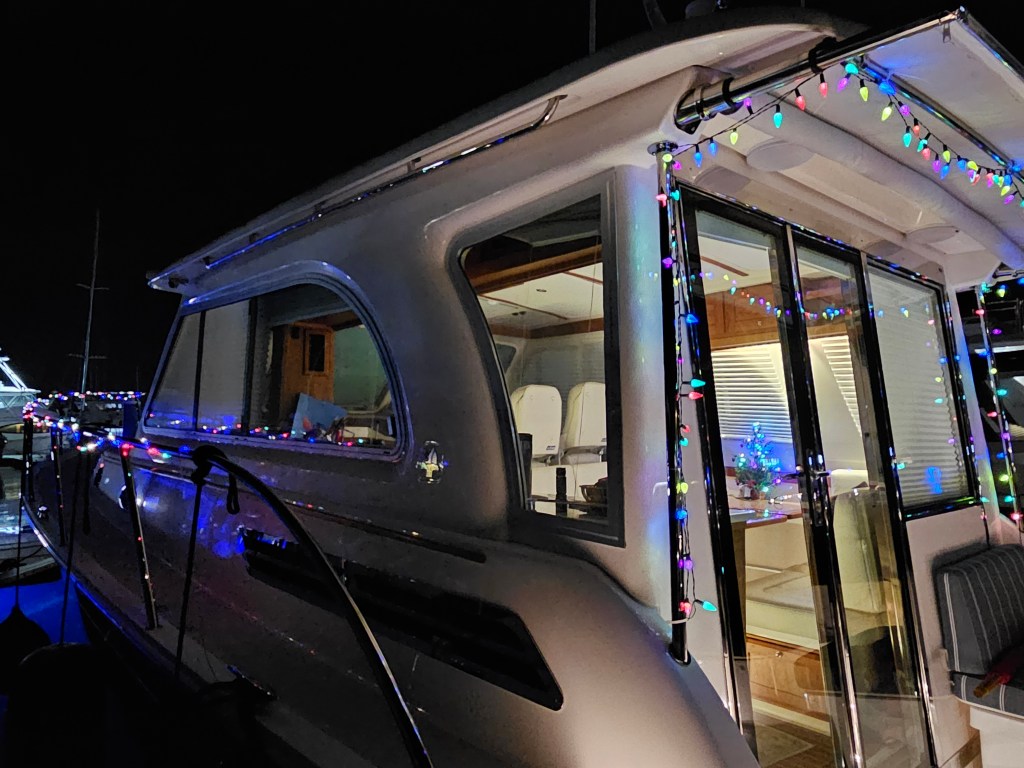
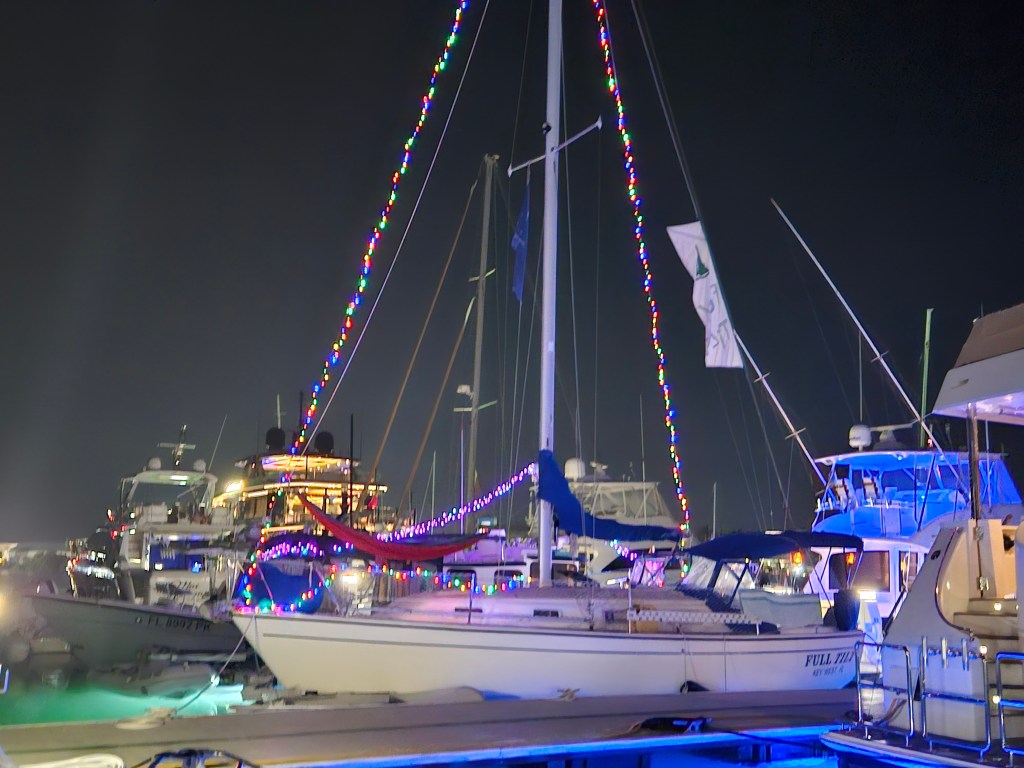
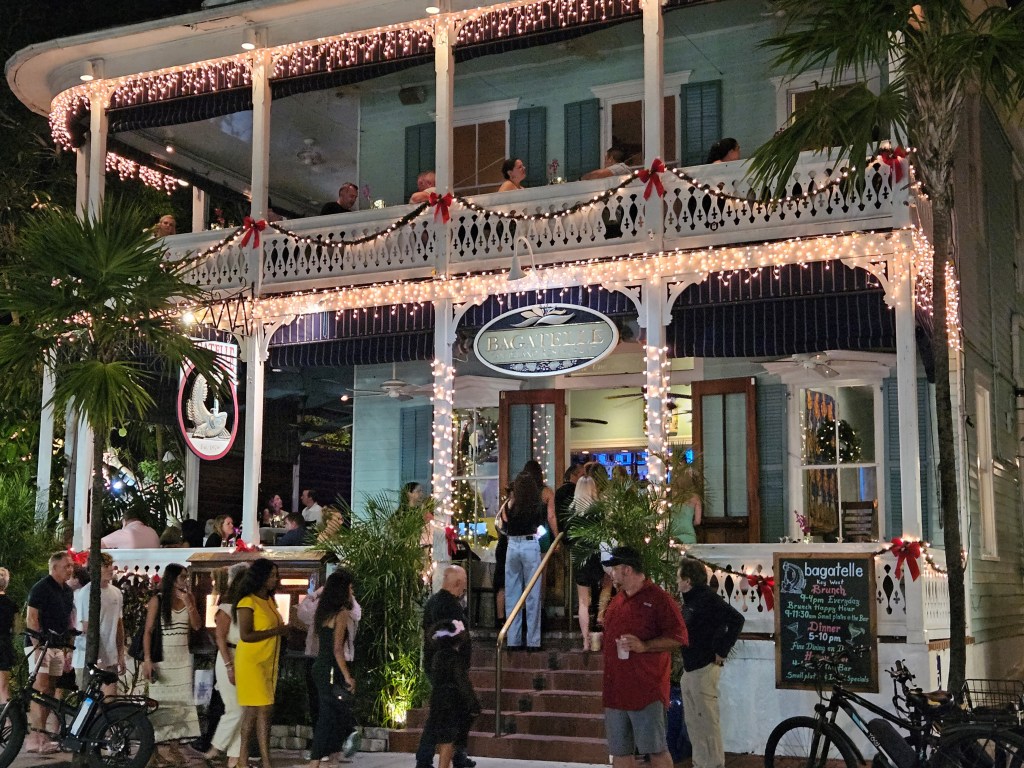
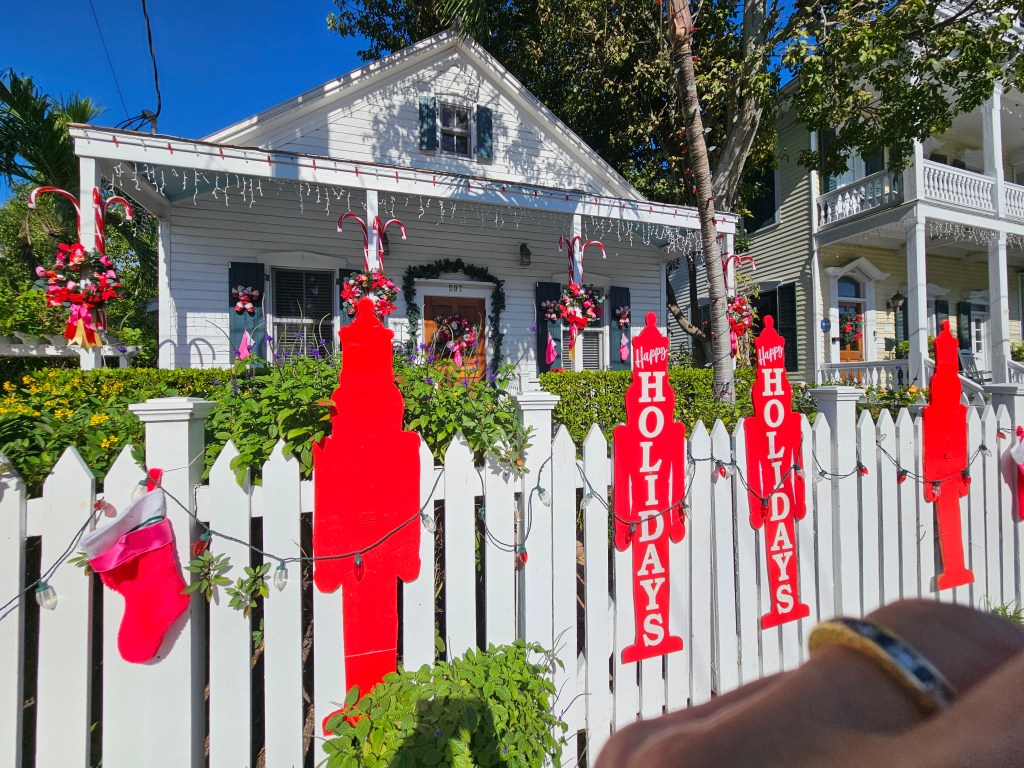
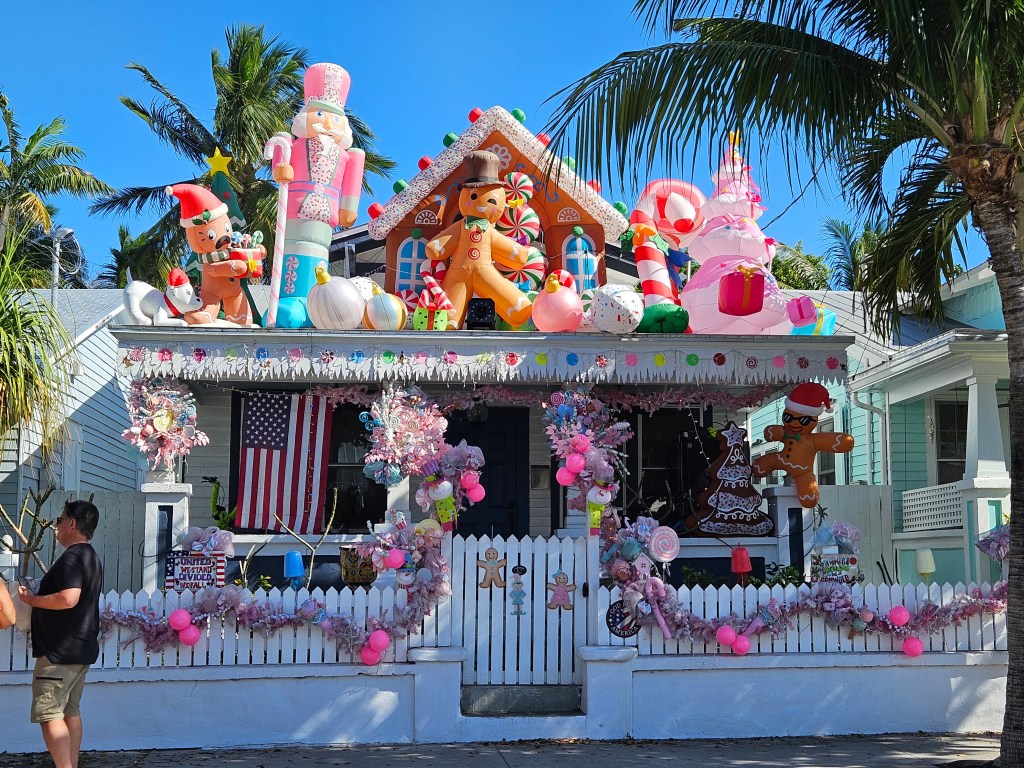
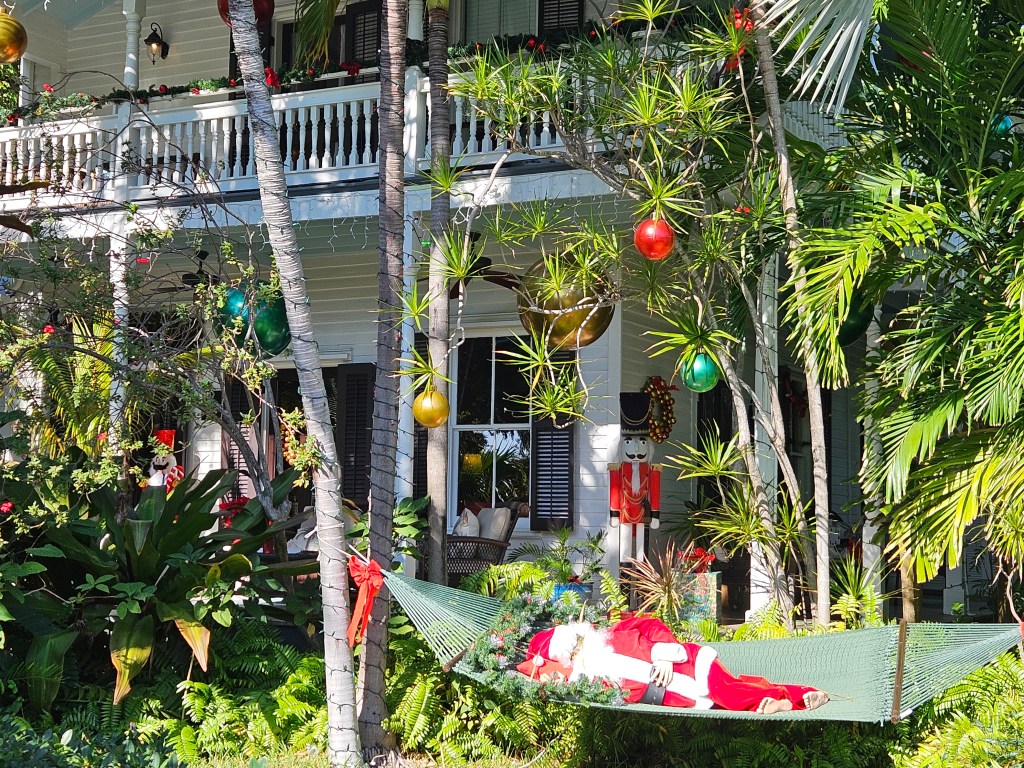
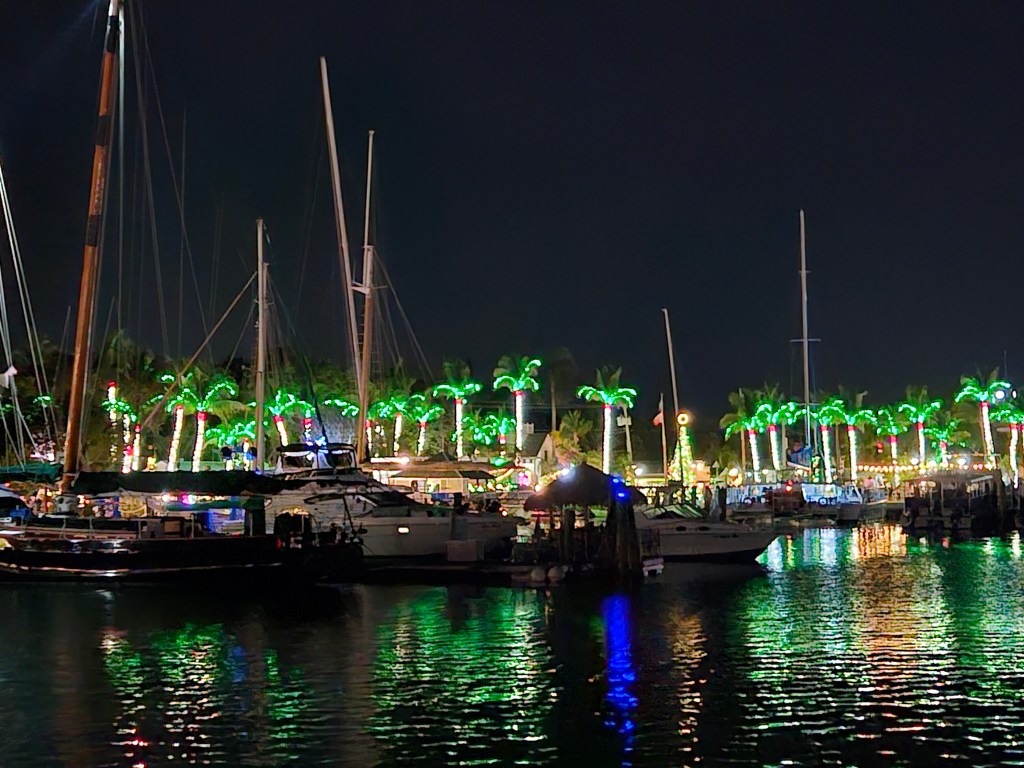
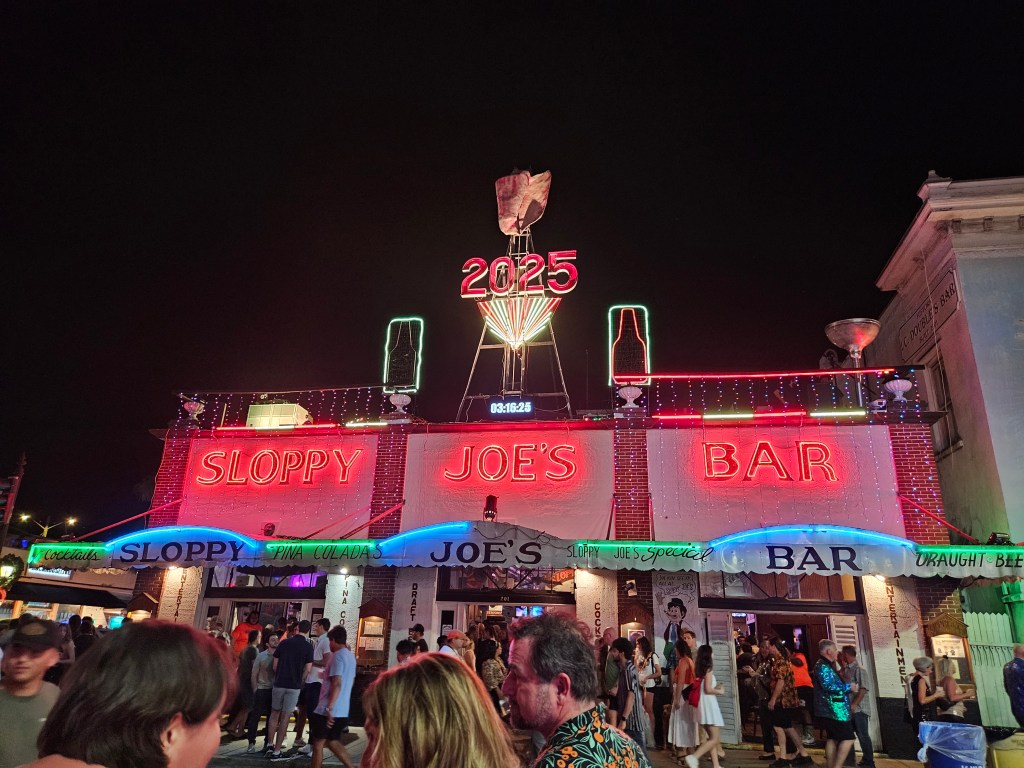
CHRISTMAS IN THE KEYS:

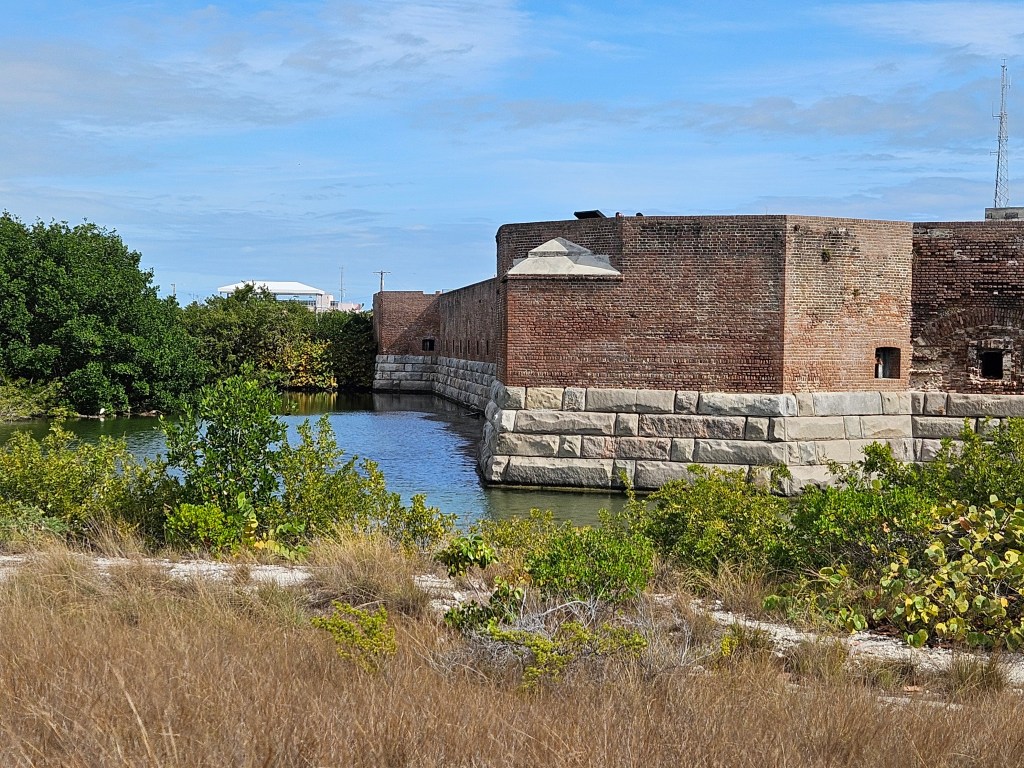
Constructed between 1846-1875, it is the largest masonry fort in the U.S.; 16 million handmade bricks were used in the building. The ‘decorative’, arched finishing bricks at the top, were shipped from Maine, nearly 2000 miles away. The design helped prevent rain from running down the side of the building.
Totten Shutters, a new invention, (yellow dots); (General J.G. Totten, inventor): upon firing a cannon, 2 hinged iron shuttered-doors instantly swung open, then automatically slammed shut protecting guns and soldiers from return-fire while preparing their next round of ammunition.
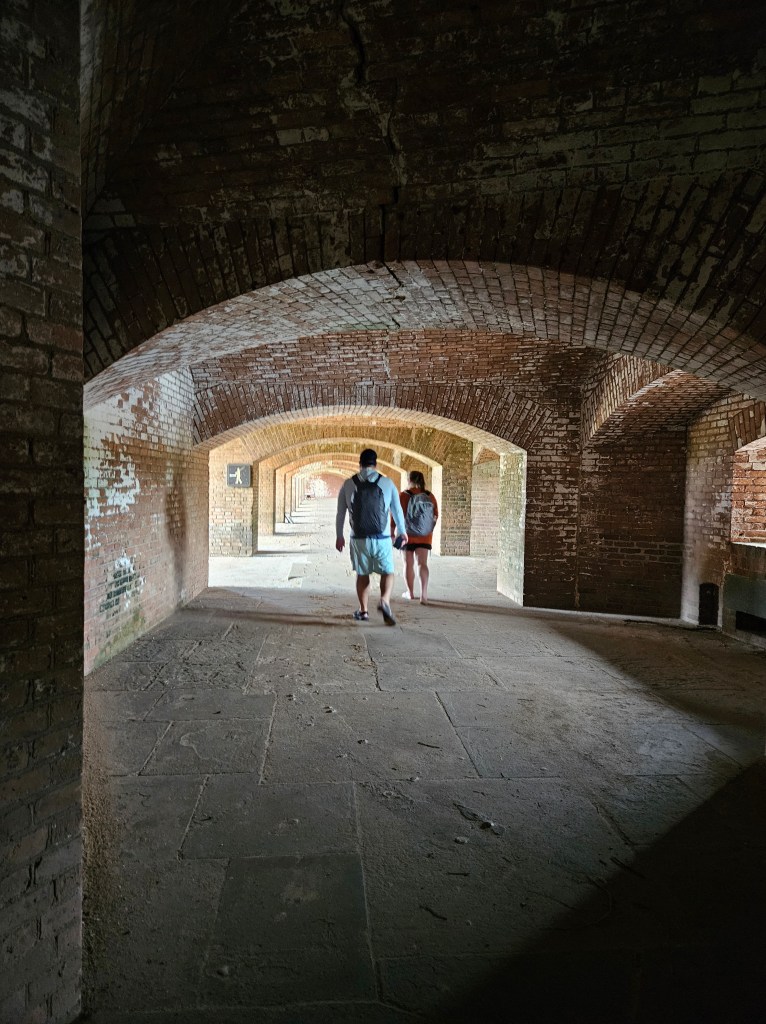
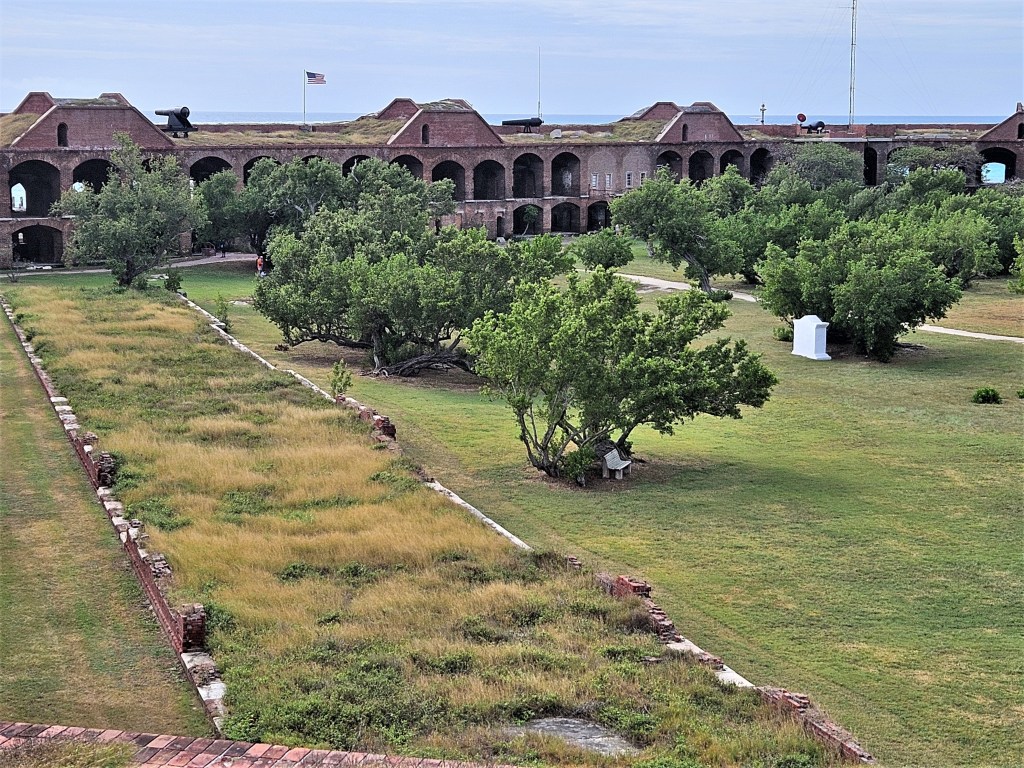
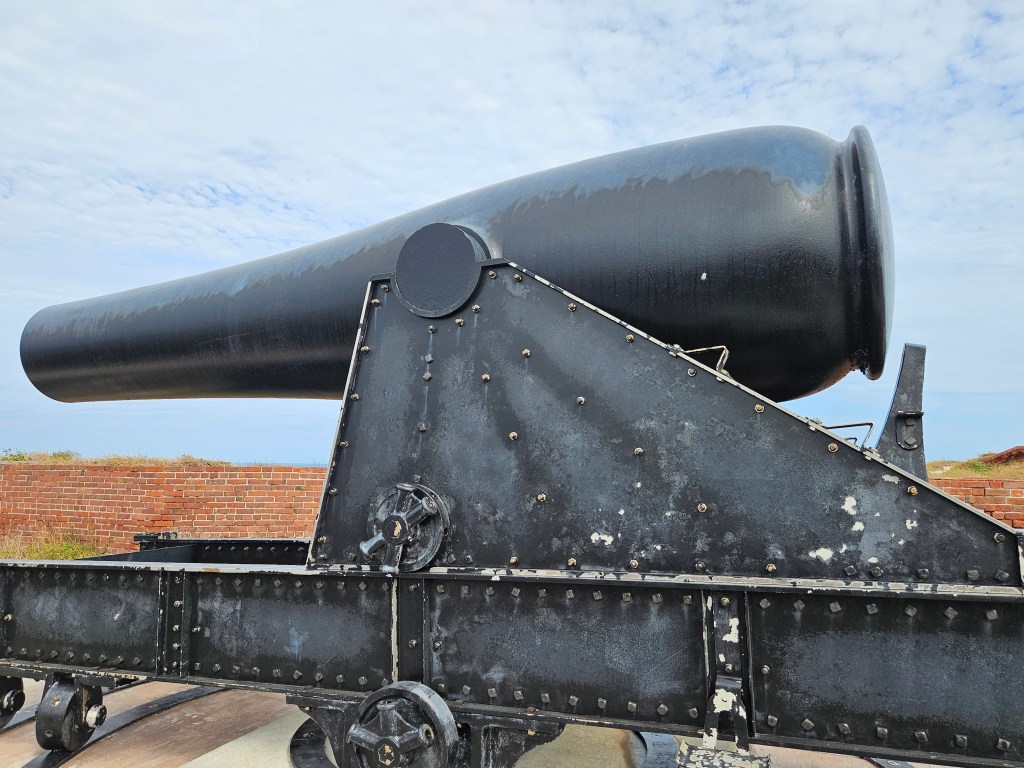
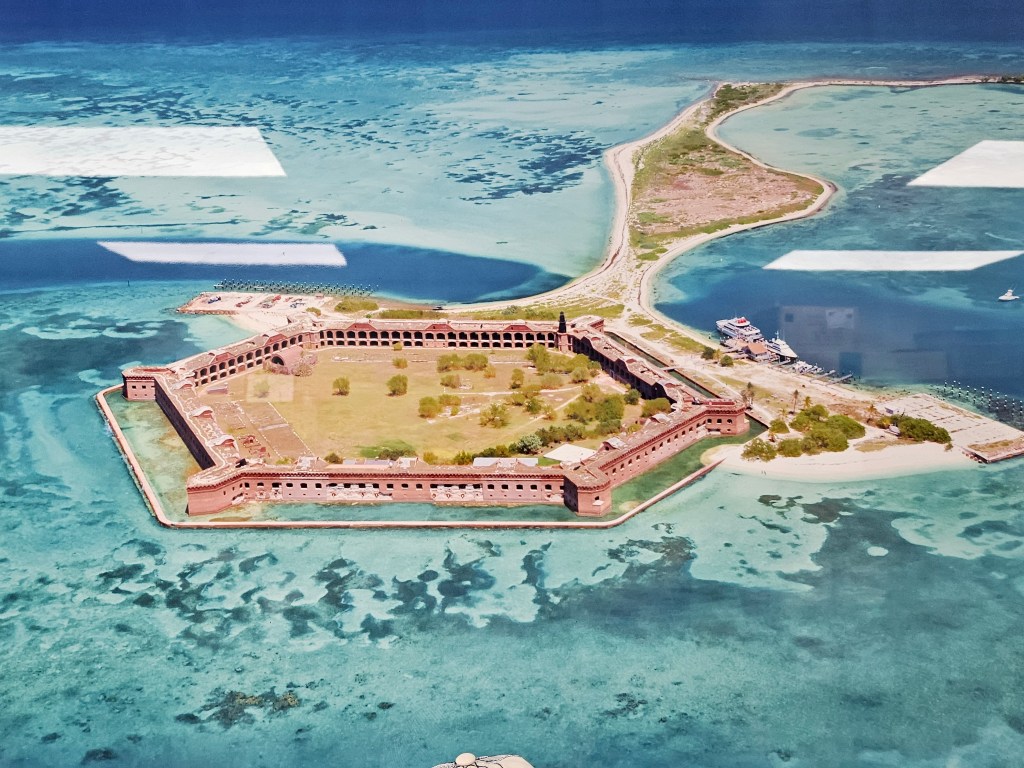
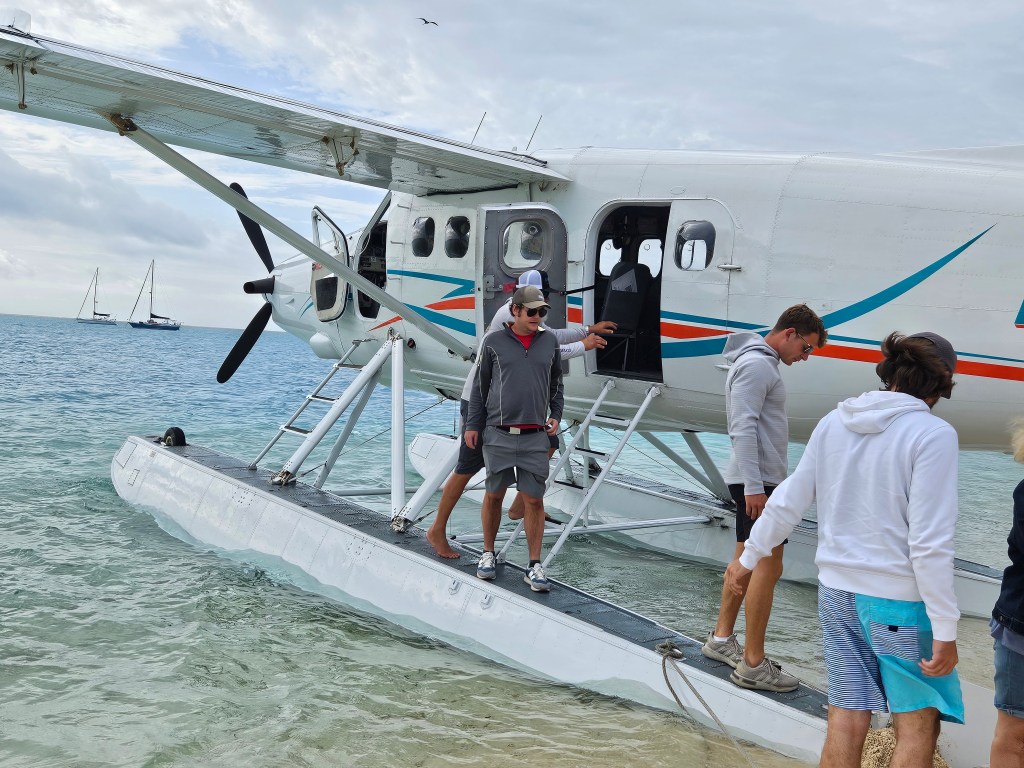
Why was the fort built here? It appears to be in the middle of nowhere.

Throughout its history, Fort Jefferson never fired a shot, nor was it ever fired upon.
Stabilization and reconstruction of the fort continues. Plans include restoring the Totem Shutters.
History Highlights: ( The Keys have witnessed pages of history, most of them not mentioned here. )
By the 1820s, piracy in the Caribbean was occurring in pandemic portions. In 1 year, 27 U.S. vessels had been attacked and their crews murdered. A special naval force consisting of several shoal draft, fast sailing Chesapeake Bay schooners, 5 -25-oared gun barges, plus a steam vessel were put into operation. These unique naval vessels were capable of chasing pirates up rivers to their shallow hiding holes. Within 2 years, the special unit, along with the aid of British naval forces, had nearly eliminated pirate attacks. (During this time, yellow fever was their worst enemy. )
1914-1918: During World War I, Key West was the largest training centre for seaplane pilots in the US. By the end of the war, there were over 1000 men located there.
Oct. 1952, Cuban Missile Crisis: After the discovery of Russian nuclear missile installations in Cuba, the U.S military population in Key West grew from approximately 3000 personnel to 12,000. Preparing for defense, shorelines were strung with barbed-wire, machinegun-barricades erected and six Hawk missile antiaircraft readied for action.
1980: After receiving permission to emigrate, approximately 125, 000 Cubans sought transport on unseaworthy boats to the U.S. During this time and within a 2-week period, the Key West Coastguard grew from 140 to 600 personnel. The Coastguard conducted search and rescue operations to 30 miles off shore.
1970s: Key West has played a vital role in the war on drugs in the Strait of Florida. When the problem became recognized as a national security problem, the U.S. Coastguard was given the role of anti-drug smuggling operations to the U.S.

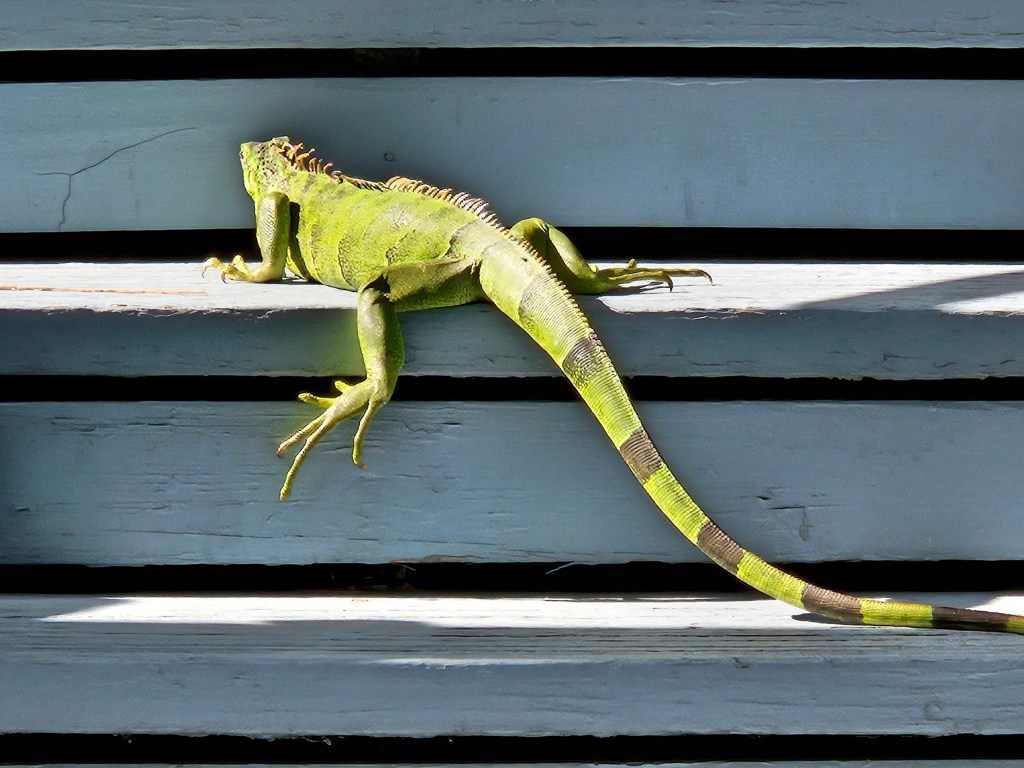
An attractive brilliant green, but with the ability to turn colour to match the surrounding environment, the Green Iguana is an invasive specie that takes its toll on native vegetation, tree snails, insects, seabird and turtle eggs. Their droppings leave deadly bacteria on surfaces that only needs to be touched for a person to become seriously ill. In an attempt to eradicate the specie, exterminators set traps, and the company Hunting Iguanas, offers guided air rifle hunts! In addition, Hunting Iguanas are attempting to develop marketable items such as using the skin for wrapping koozies around glasses, claws for earrings, and back scratchers! Creating recipes to use the meat, is another venture they have undertook; they say the low-fat meat is delicious.
BEFORE I GO: A conversation with a hired diver to remove the marine growth on the bottom of the hull:

The boat had been sitting in the marina for almost 5 weeks. Algae and other marine growth has the potential to slow a boat’s performance.
It was a cool morning when the diver arrived. He was grateful to have a hot cup of coffee before getting into the water. “We drink way too much coffee”, he confessed, “But it helps us stay warm. It keeps our core temperature up. We spend a lot of hours in the water. “
How long have you been doing this type of work? “Gosh, I want to say about 4 or 5 years now. I started in Tampa. Boy! That was challenging; Tampa is tough. It has some of the most aggressive [underwater] growth in the world; the water quality and temperature, is just a growth factory up there. The work here is so much easier with the water quality and temperature ranging in the low 70s this time of year. I’m in a 5 millimetre [dive]-suit, and I’ll get cold by the end of day. The other day I was underneath a boat for 6.5 hours, I was really getting cold.”
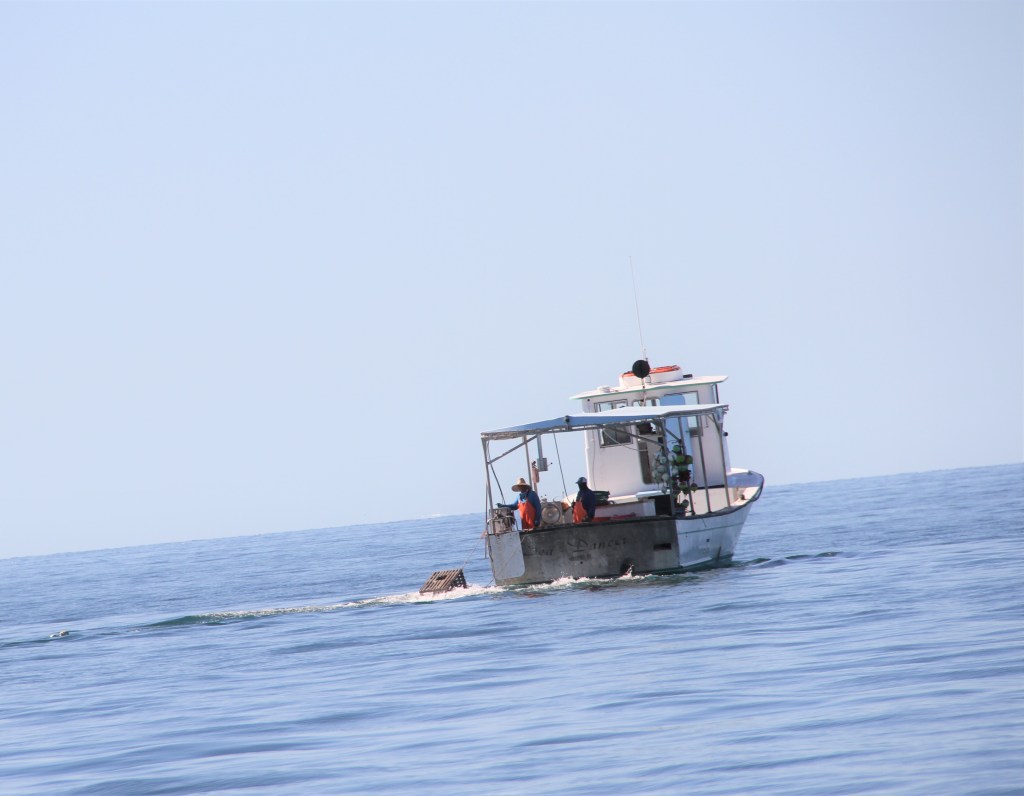
Do many boaters pick up crab pot lines on their propellers? “Ya, I just took a line off the fishing boat behind you. Sometimes the polypropylene lines get so hot [after wrapping around the prop], the line will melt and form this plasticky mass which edges up into the strut and then gets wedged in there. Even a filament line, (fishing line), wound around a shaft can cause a lot of problems. Once it gets into the strut-and-cutlass bearing area, we see a lot of problems. We use knives to chip away at it and cut it away.”
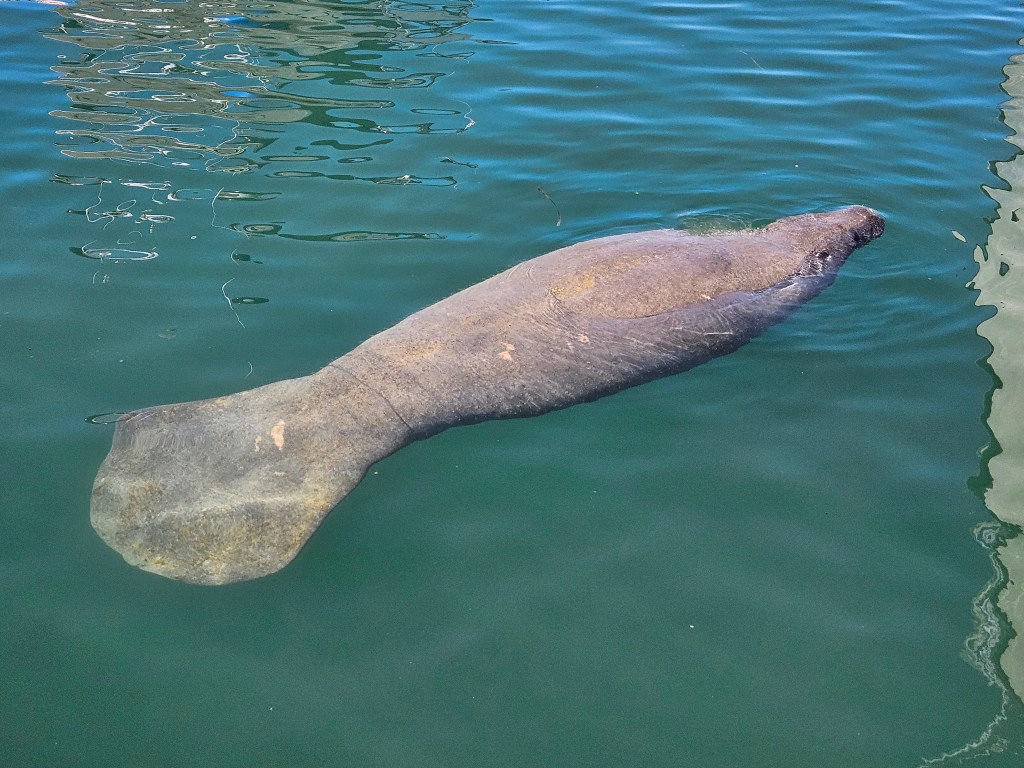
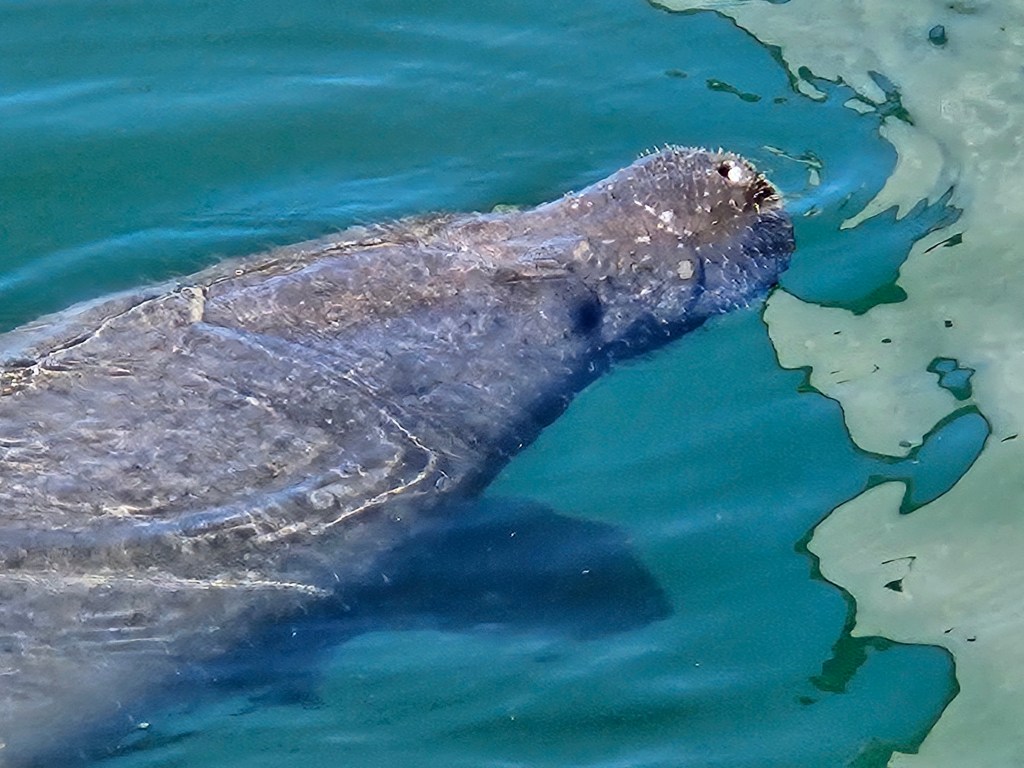
Do manatees swim close to you while you work? “Sometimes they will, they get a little flirtatious sometimes. They’ll nibble on the hose we use.* We shoo them away but they’re so protected [by federal and state law], you’re not suppose to do much to them. When I worked in Tampa, sometimes dolphins would be curious and check us out. They worried me a little because some of the males can get aggressive, but other than that, all the sea life is really cool.”
*Hull-cleaners do not use deep-sea dive regulators. Working within inches of the surface, they use a hookah system – a hose connected to an air compressor that sits on a dock while supplying air to the diver.
Does the silt cause you a problem? “In some places where I work, especially if I’m looking for a lost item on the bottom for a customer, if I just graze the bottom with my fins, there goes my visibility. Occasionally, we have seen clouds of silt spew up from the bottom when the super yachts come to dock here. I read an article about a study that was attempting to determine how much silt is stirred up from all the cruise ship traffic [coming into Key West]. They said that annually, it’s about equivalent to what 32 hurricanes would pick up and throw around.” (End of conversation.)
Our diver hadn’t remembered his numbers exactly the way he had read them. A year-long study carried out by Key West College found that the sediment stirred up by cruise ships arriving and leaving, “often reached levels above what hurricanes like Helene and Milton generate when they pass by.” This took place 32 times during the study and therefore, was similar to having 32 hurricanes visit the harbour in that year.
The channels leading into the harbour are approximately 34 feet deep. Cruise ships with drafts of approximately 27 feet, can damage sea life including coral and seagrass, block the sunlight from underwater growth, and then after settling, cause damage to coral. It can also undermine break- walls and harbour foundations.. (WLRN’s Public Media; Nov. 2024)
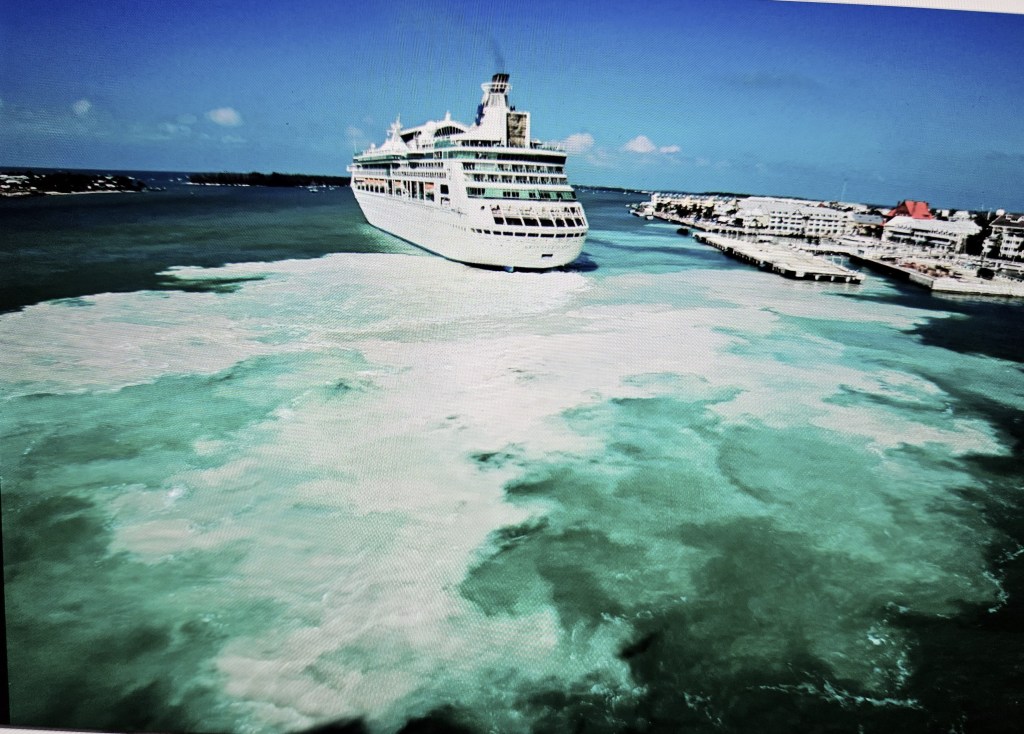
Sediment stirred up by a cruise ship.
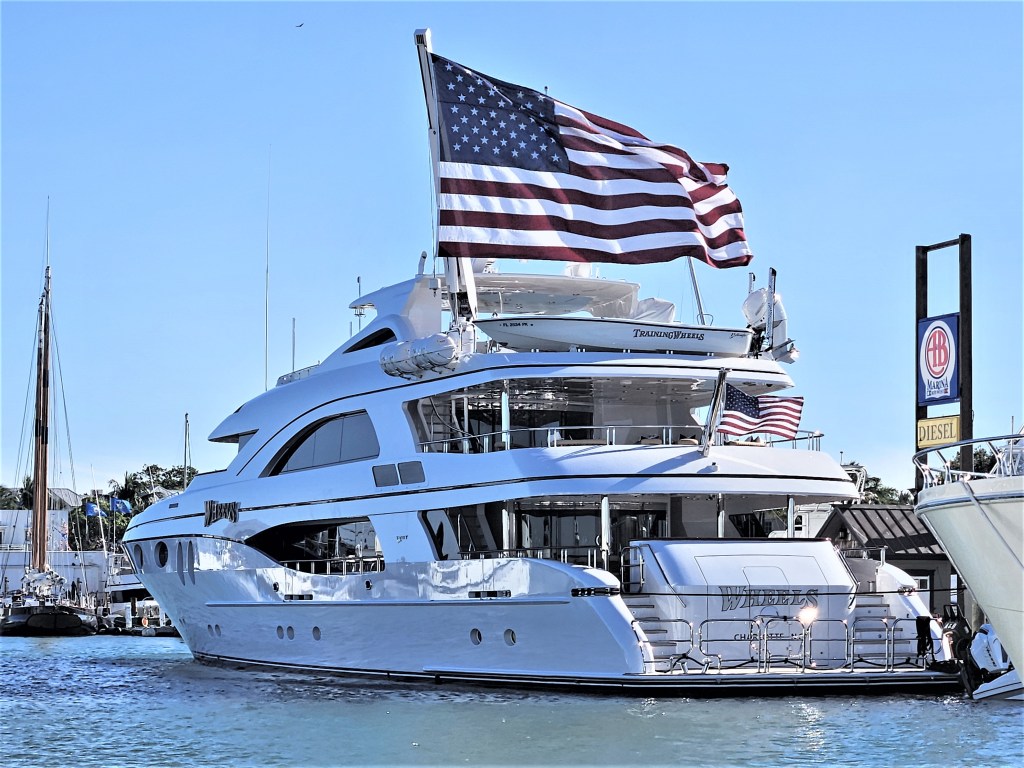
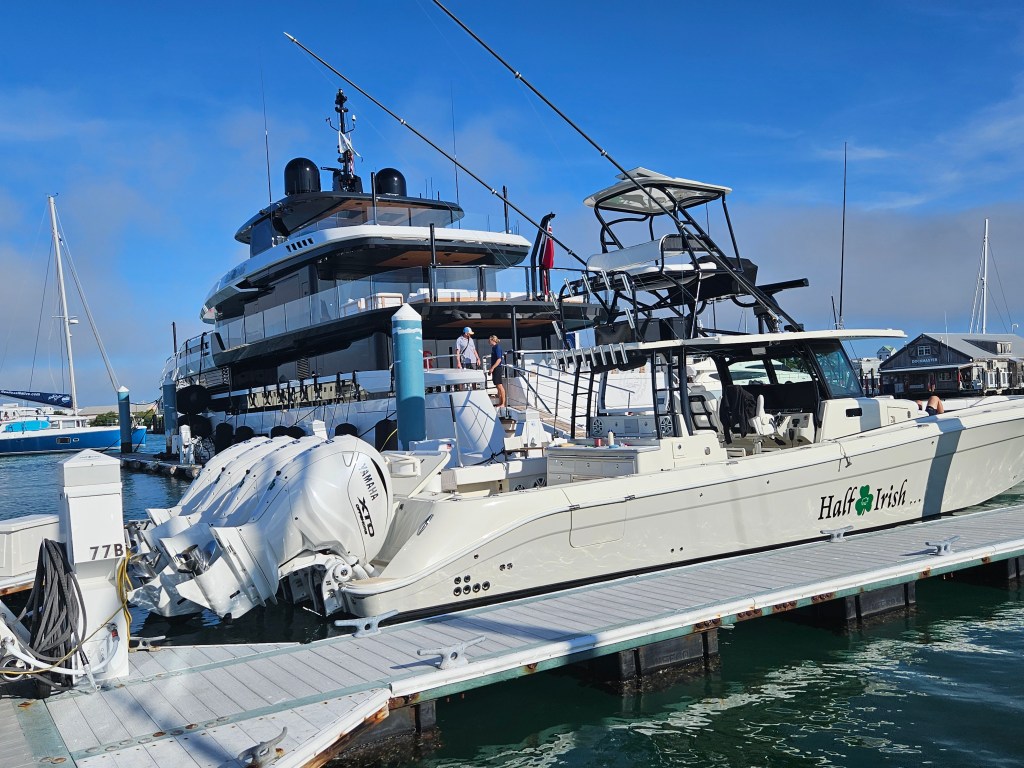
YACHTS AT DOCK


 Traveling the Great Loop
Leave a comment