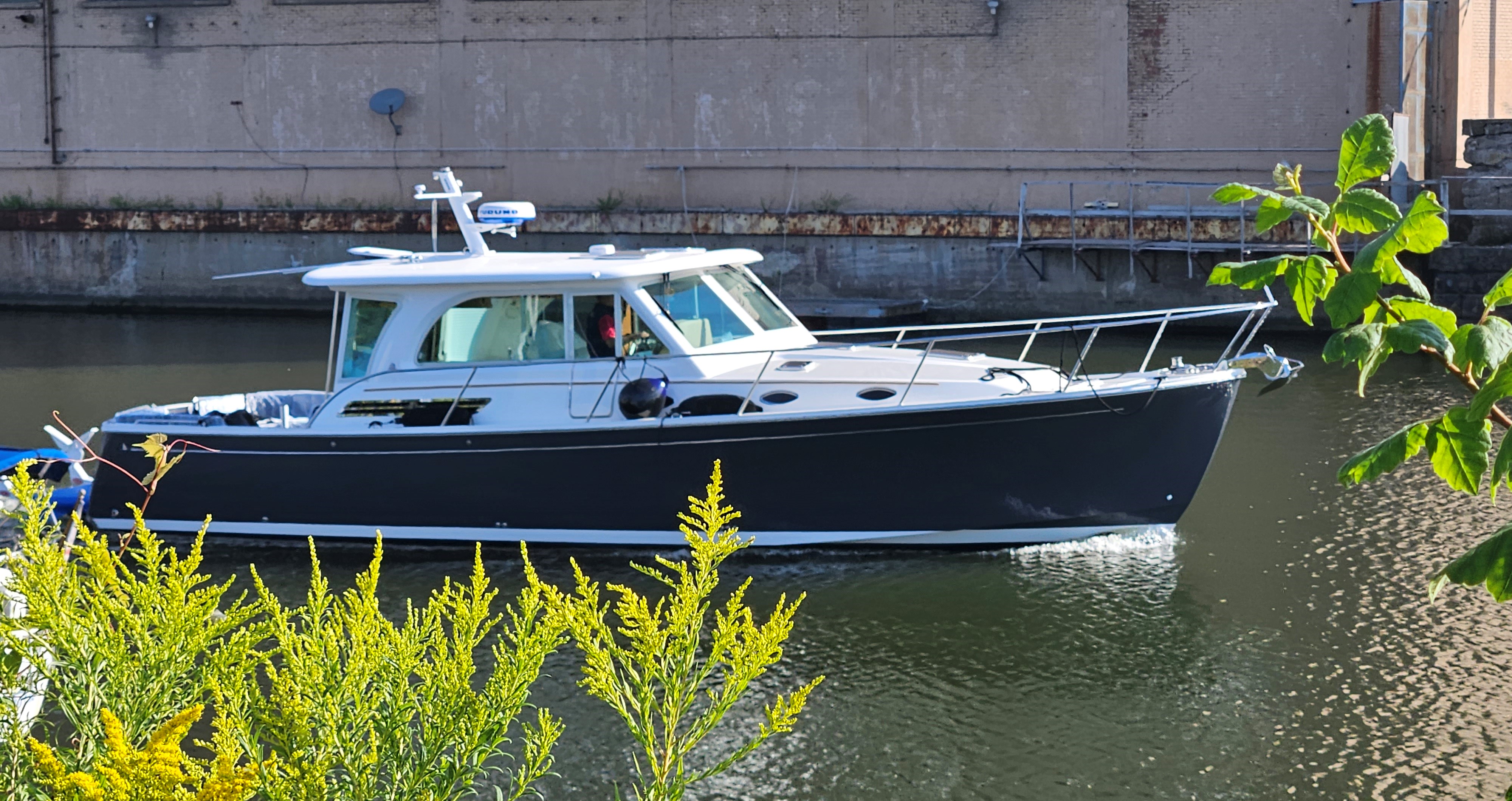
Sept. 22; mile 599; today's run: 28 miles
We experienced our first Ohio River lock today. Although we have lock experience, (Welland and Erie canals, Trent Severn, Rideau and the Panama Canal), this was our first Ohio commercial lock. Lock rules require that everyone wear a lifejacket, and boaters are to call the lockmaster prior to arrival to request a lock-through. You wait a few metres from the lock gates until a horn sounds, announcing the opening of the gates. Then you may proceed into the lock. If a boat is not equipped with a VHF radio, there is a pull chain near the first ladder that is to be pulled to announce their presence.
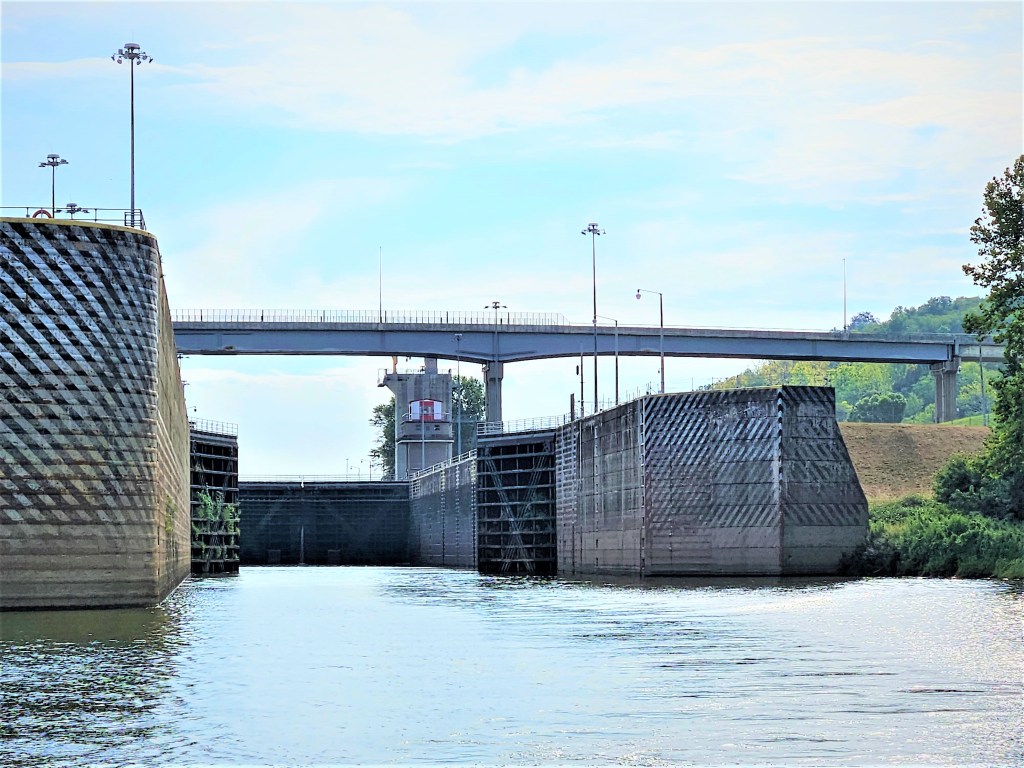
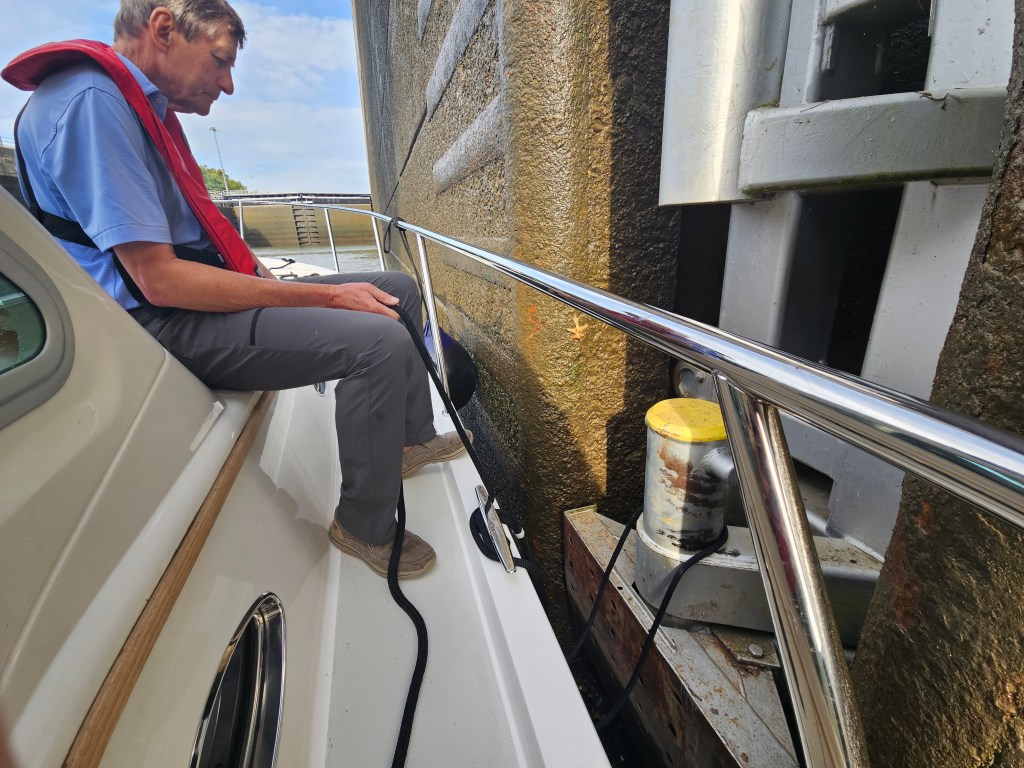
Unlike most Ohio River locks, Markland Lock had smooth concrete walls; less likely to chew up your fenders.
Calling the lockmaster, we asked, “Should we tie to port or to starboard?” “It’s your boat”, he replied.
After bringing our boat alongside the wall, we looped a line around a bollard, and played out the line as needed to keep the boat from drifting. The bollards move vertically while the lock fills and empties. We were the only boat in the Markland lock that day.
Arriving in Madison, we tied to the Madison Lighthouse Restaurant river dock, the only dock available in Madison. The other option is an out-of-town marina.
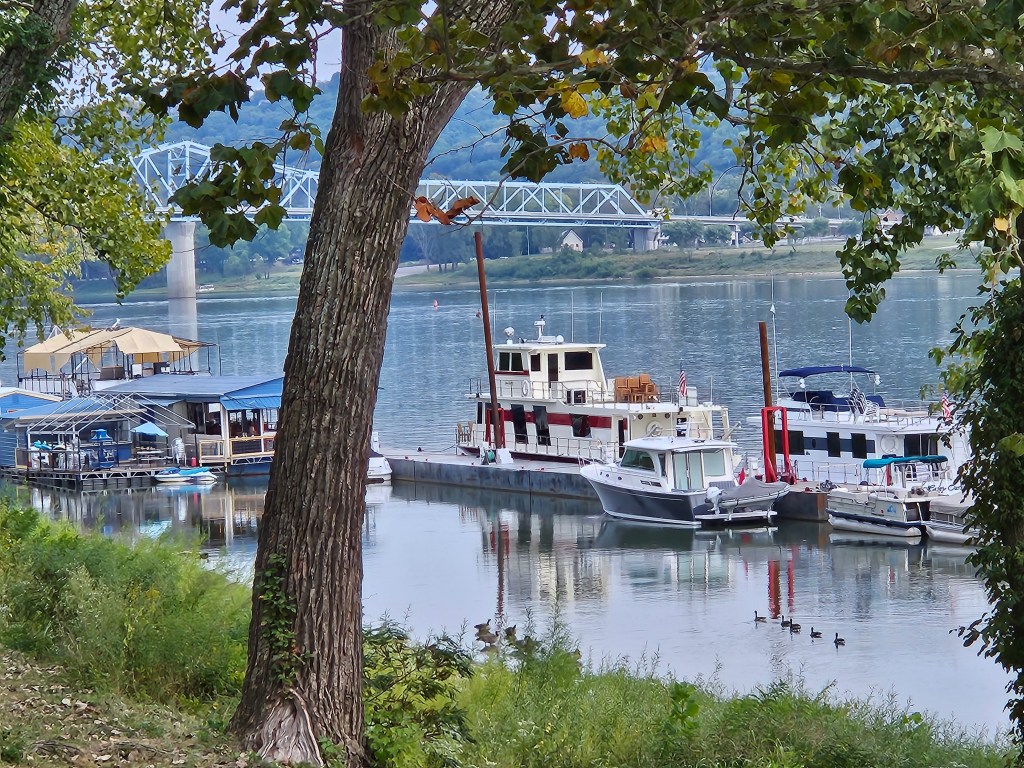
From the dock, we could walk into town. Alternately, rented golf carts are available and allowed on town streets.
Tourists flock here to shop at candle, craft/ art stores and numerous antique vendors located along Main Street. Wealthy bankers, politicians, and successful entrepreneurs once lived here and today, you can tour their mansions and visit local museums.
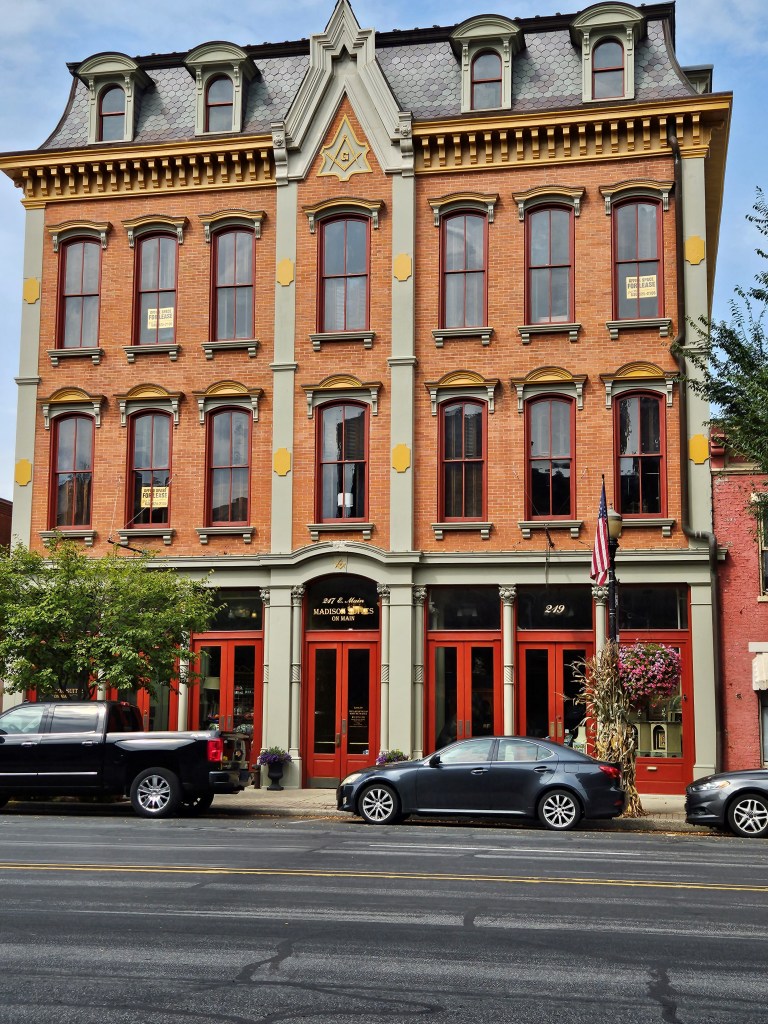
Formerly a Freemasonry (Masonic Lodge) this building is a replica of a building formerly built in Albany, NY, the capital city of New York. The ceilings and walls of the upper two floors are constructed of local marble. Originally, the bottom floor sold harnesses and saddles.
The historical part of Madison, or ‘under the hill’ as locals refer to it, was once the capital of Indiana.
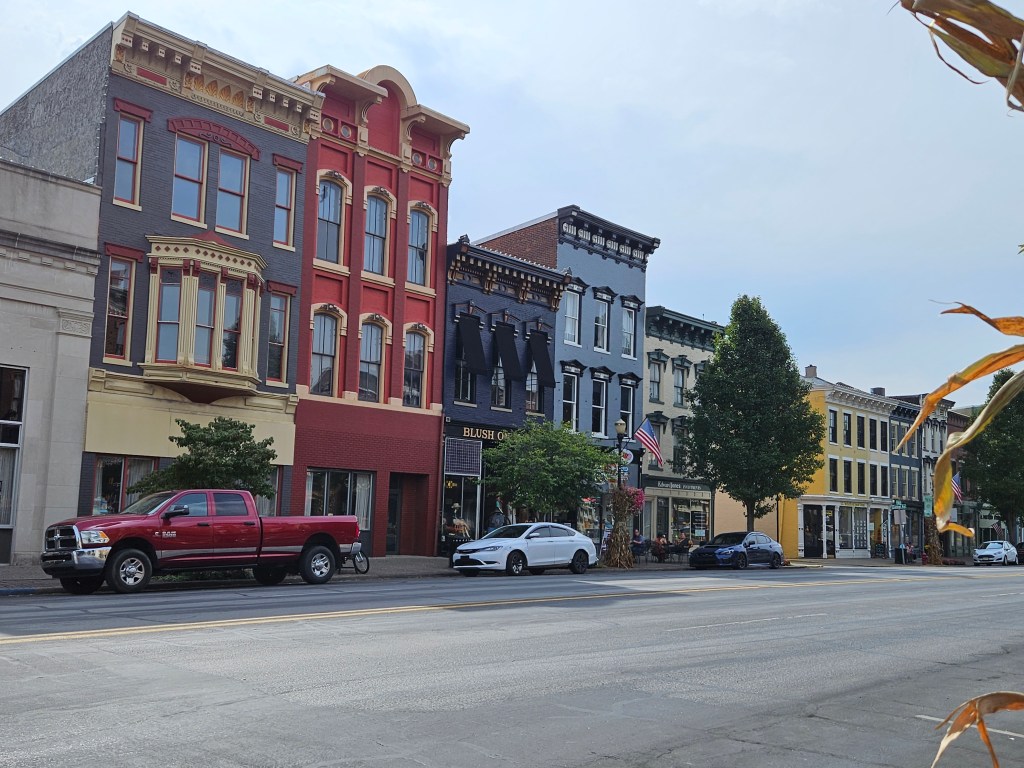
It was also the starting point of the first long-distance railroad in the U.S.
From Main Street, you cannot see the 400 foot/122m hill behind the town, but one of the most interesting pieces of local history, is how the railroad dealt with that hill.
Rails and ties and were laid in the cut-through at a grade of almost six percent, 1 foot for every 17 feet. At first, train cars needed to be disconnected from the locomotive and lowered up and down the hill using horses. In later years, a cog-wheel system dealt with the elevation and in 1868, a powerful 50-ton, wood-fired locomotive was used. The engine was in use for thirty years and still in working condition, it is now on display in a local museum.
I learned more about the town from Hurley Adams.
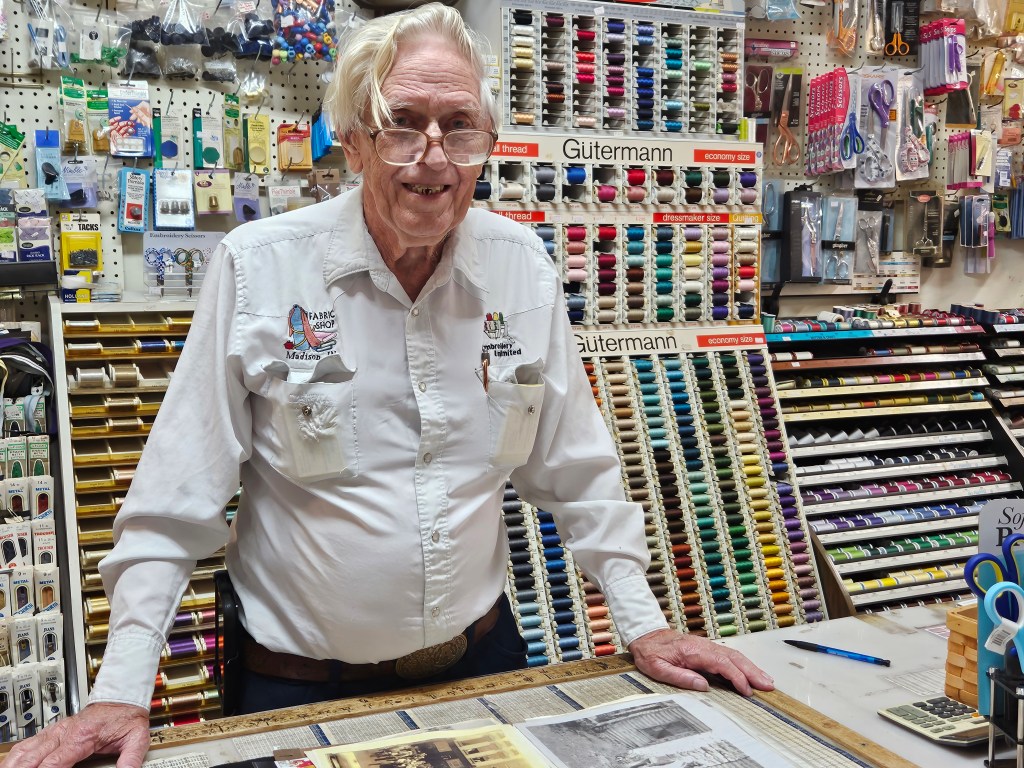
Hurley is 88 years old
Raised in an old sound and movie theatre at the top of the hill in Madison, Hurley reminisced how he had fought in the Korean war, and throughout his lifetime, lived in 36 different locations in five U.S. states. “I went where the work was,” he said. During World War II, an Army Ammunition plant had been built 30 miles from where he lived. At nighttime, he would hear planes flying overhead followed by an explosion followed by a flash of light which would illuminate his bedroom. “They were U.S. bombers”, he said, “engaged in target practice.”
Today, he owns a farm outside of town where he and his wife farmed and raised their two children. His estate includes a second country house, 2 additional farms, and “a zillion years ago”, he invested in stocks including a Texas oil company. He has been selling fabric, knitting supplies, quilting, tatting, crochet and arts and crafts supplies for the past 34 years in the 200-year-old building where he now works. I was there to purchase a piece of fabric I needed for a project on the boat.
“Has business been good?”, I asked him. “Yes, it can’t help but be,” he replied. We’re located four hours from St louis, Chicago, Cleveland, Corydon and Nashville and one to two 2 hours from Lilli Ville, Cincinnati, Indianapolis, and Frankfort, Kentucky.
I followed him to the back of his store where he showed me a thickly constructed, but narrow door that was once the door to a room-sized freezer. “This was the walk-in freezer of the Kroger Grocery store that opened their business in 1924 right here in this store,” he said. The first Kroger store to open was in Cincinnati, Ohio. According to the Cincinnati Enquirer, today, Kroger is the largest supermarket chain in the United States.
Hurley continues: “In early days, before the flood, the Madison river shoreline was a continuous row of factories producing among other goods, charcoal, leather products and shoes.” At one time, Porpoise skins were used to make smith-bellows, the fat rendered for oil, and the remains sold for fertilizer.
The 1937 flood caused severe damage to the factories, but it was the following January, while the water was still high, that the water froze; it was the ice that tore the buildings apart. When constructing Main Street, damaged factory goods were used as the foundation of the street.
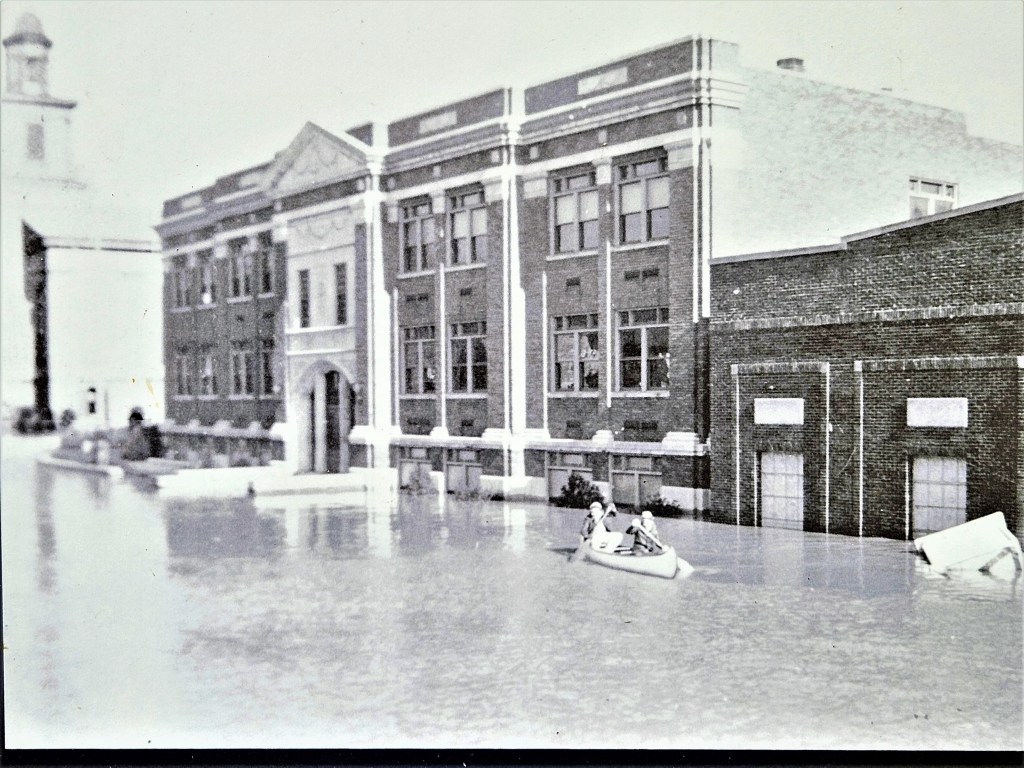
Canoeing down Madison’ streets during the flood.
The town was located several hundred feet above the river. The factories that were destroyed, were located nearer to river level.

Thank you for joining my blog. We will travel many miles together.


 Traveling the Great Loop
Leave a reply to phlbrwn Cancel reply