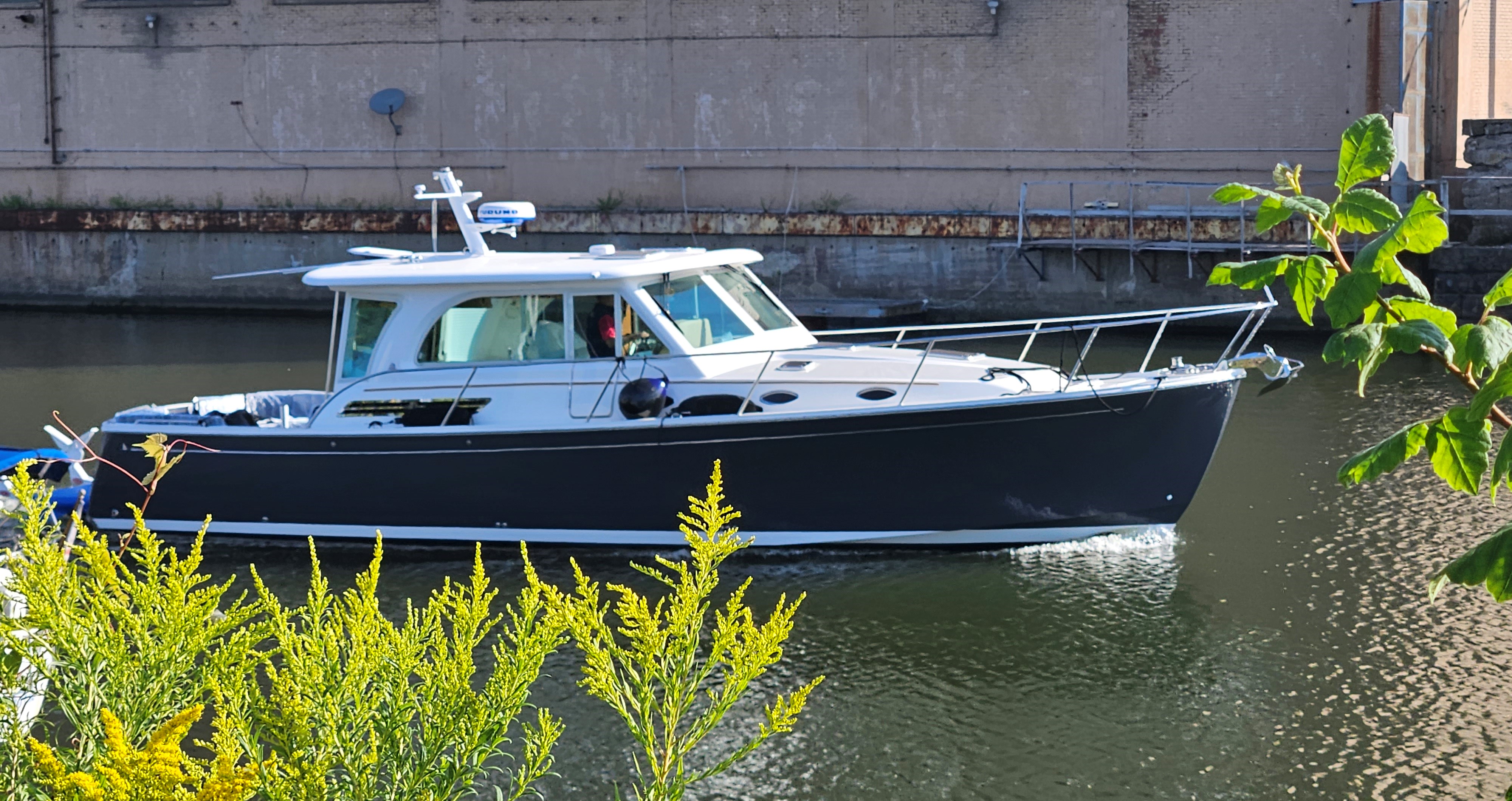
Nov. 24; mile 39; Day’s run: 85 miles
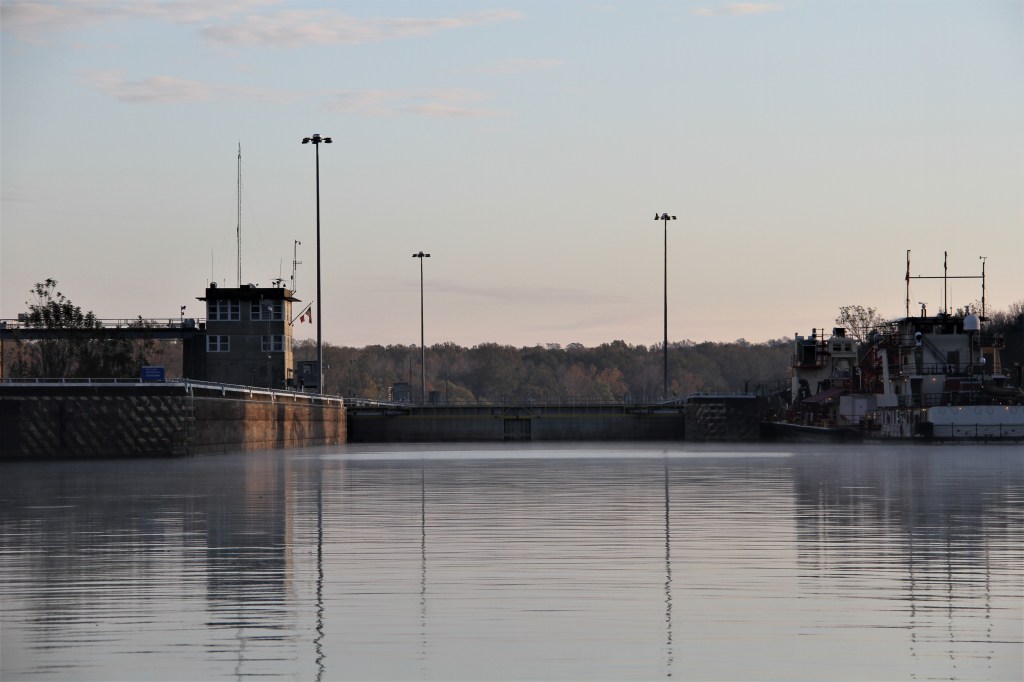
The evening before, while anchored in Okatuppa Creek, the Coffeeville Lock, (mile 116), confirmed they would lock pleasure boats through the following morning at 7 o’clock.
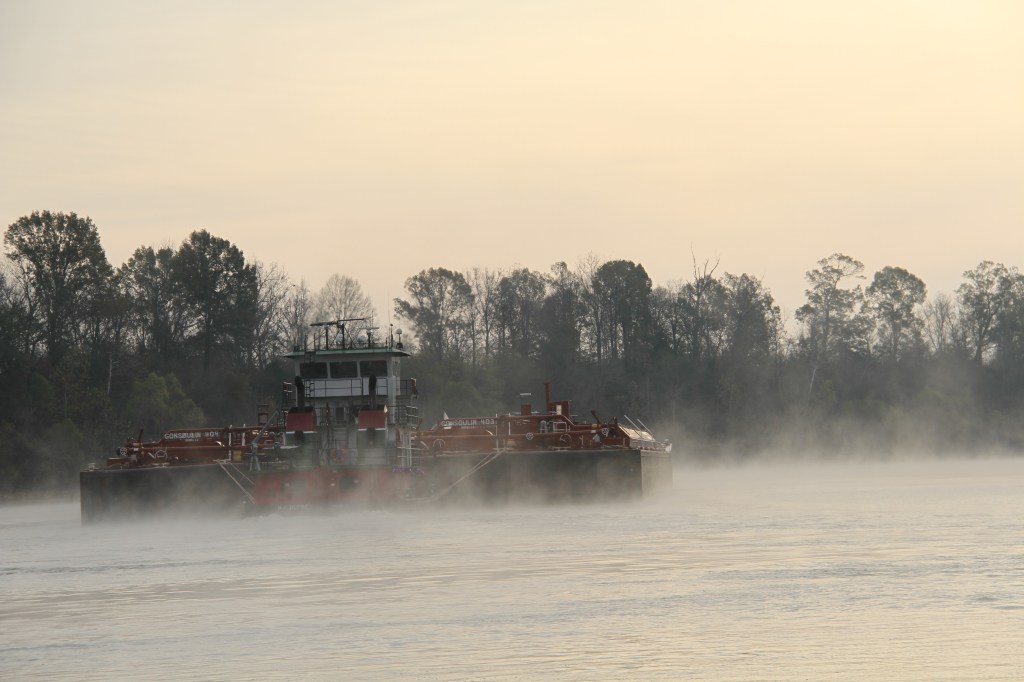
It was barely light when we lifted our anchors, confirmed that our fenders and lines were in place for the lock, and headed 5 miles downriver towards the lock. A boat that had anchored nearby, left shortly after us but there was no movement from a sailboat that had anchored nearer to the river. Arriving to the lock, we threw a line around a pin; the second boat did the same. Our timing to the lock was perfect. Then, the lockmaster received a call from the sailboat announcing they were on their way towards the lock. We waited for over an hour for them to arrive and tie up.
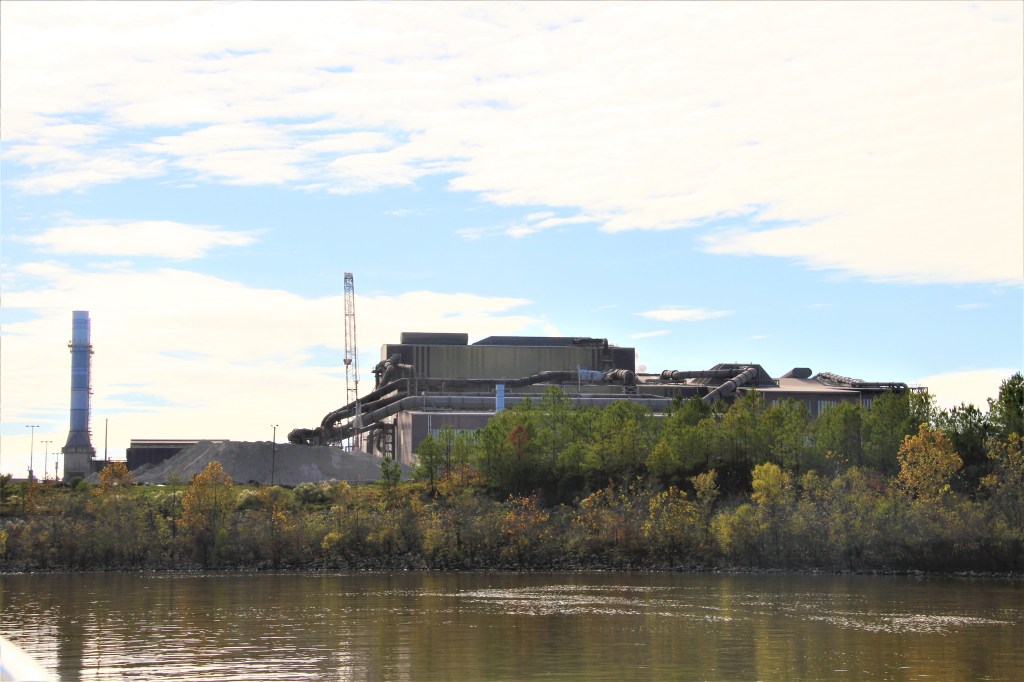
The Mobile River: en route to the turnoff to the Tensaw River.
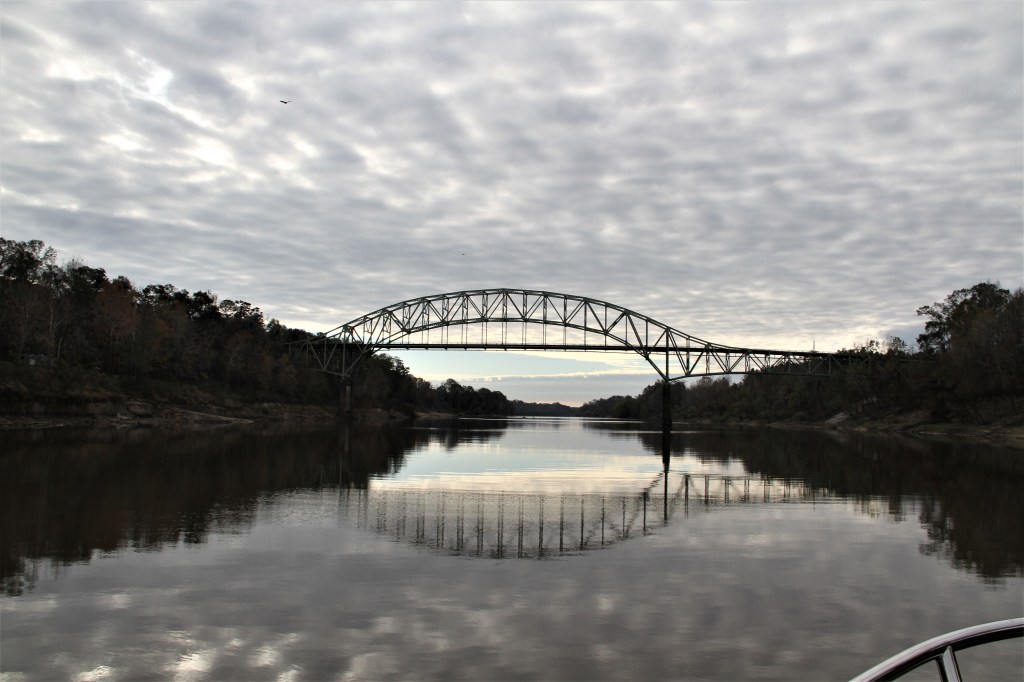
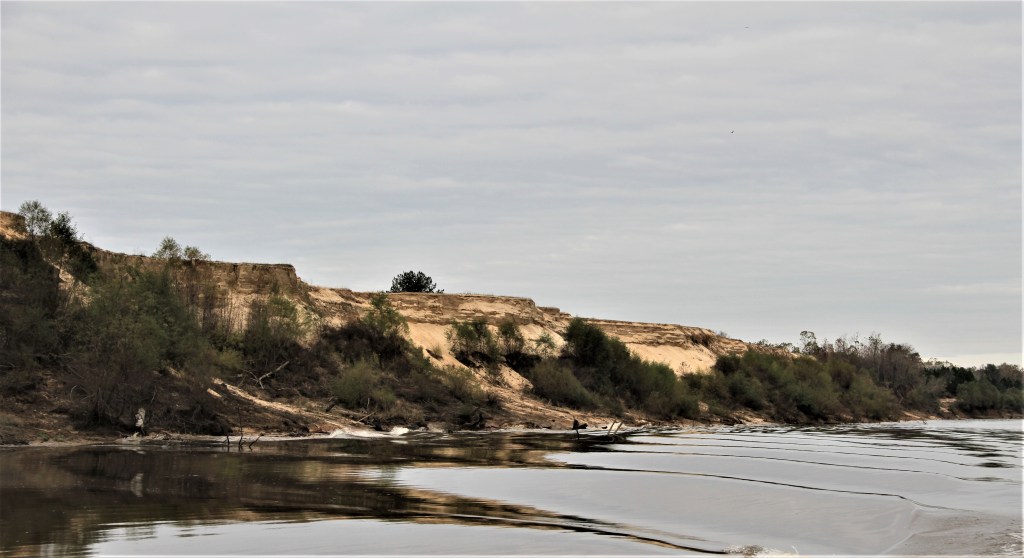
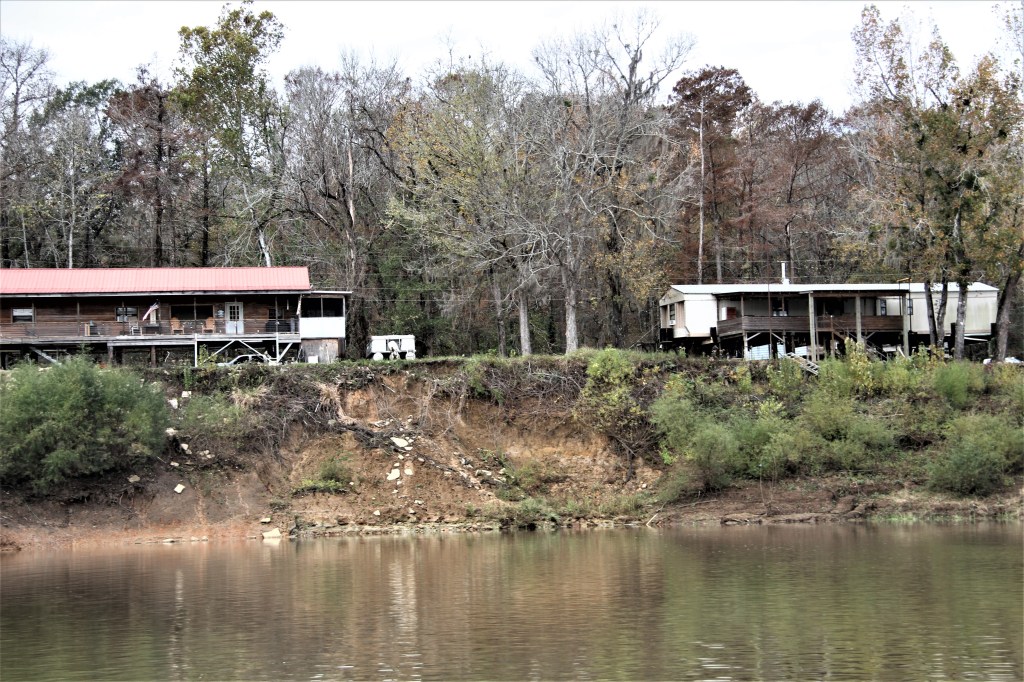
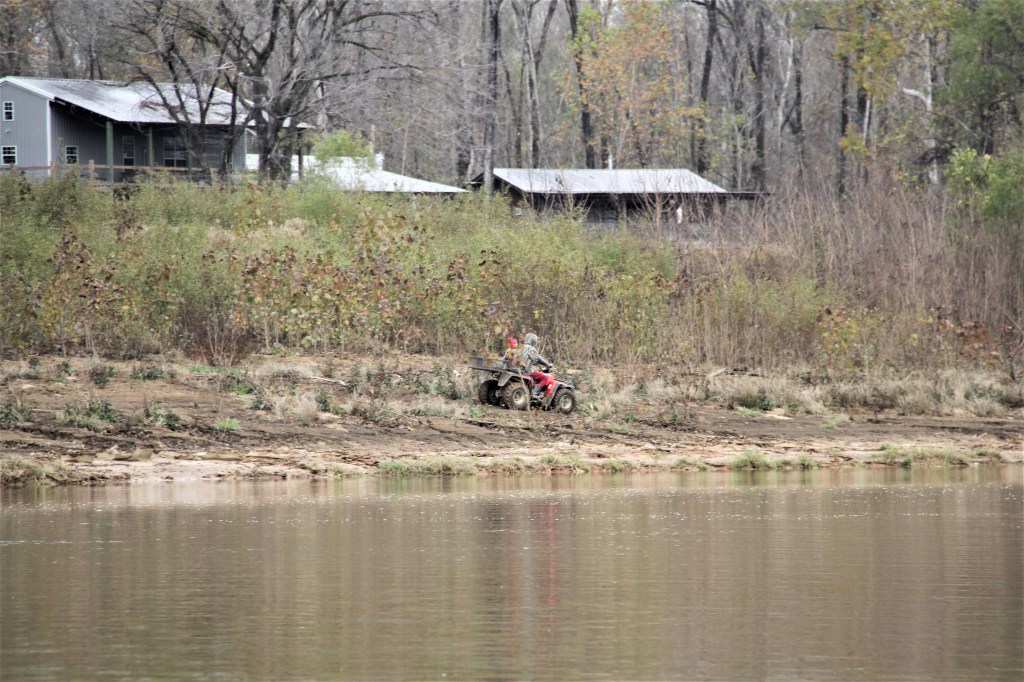
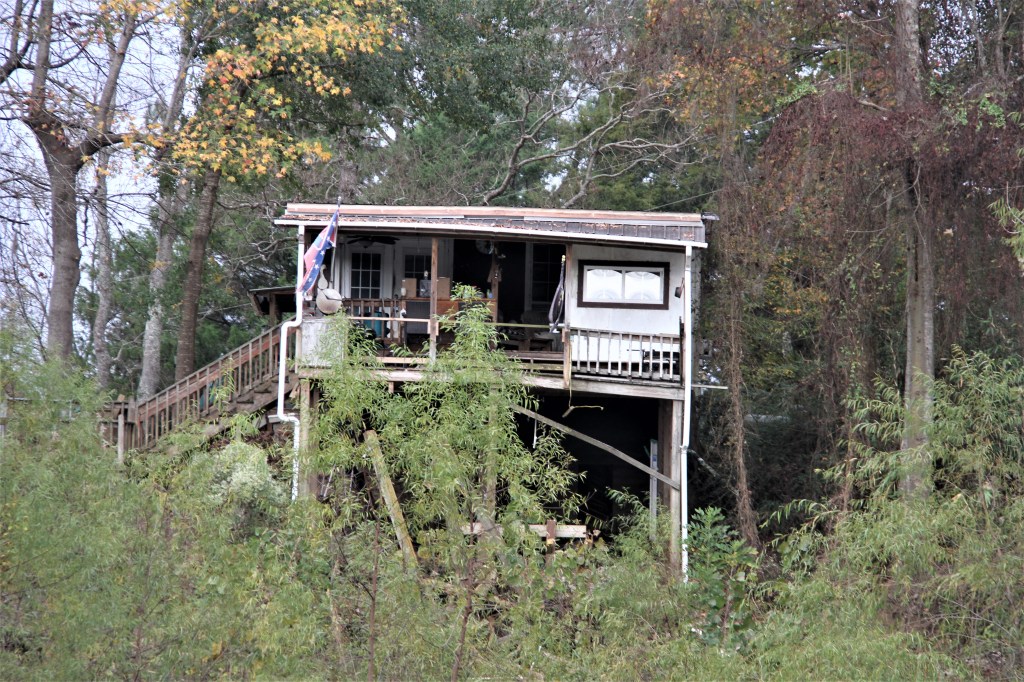
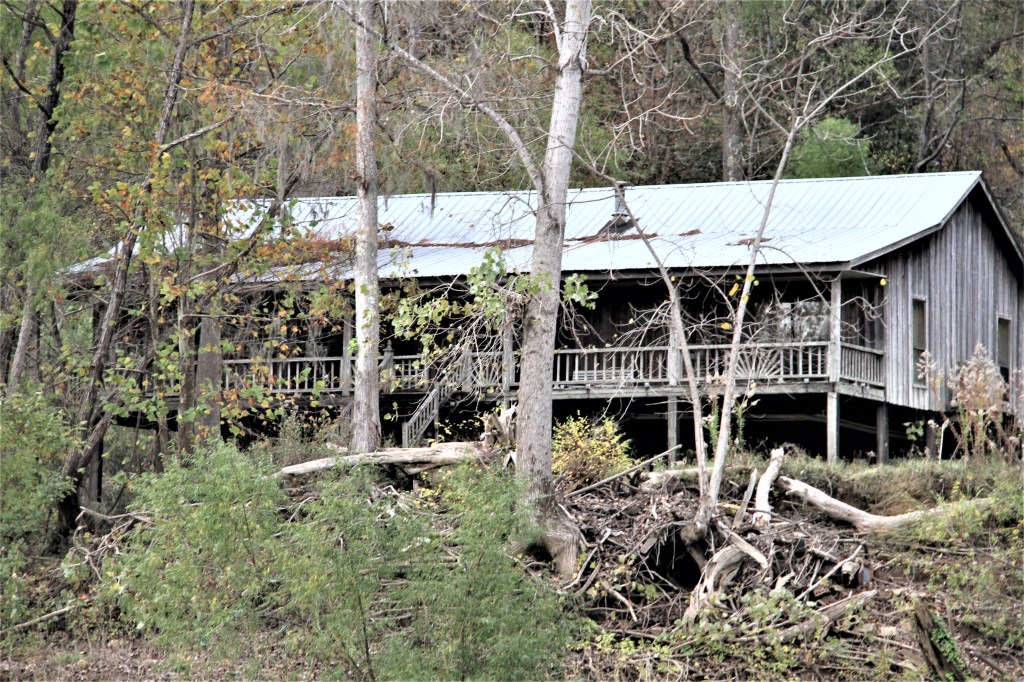
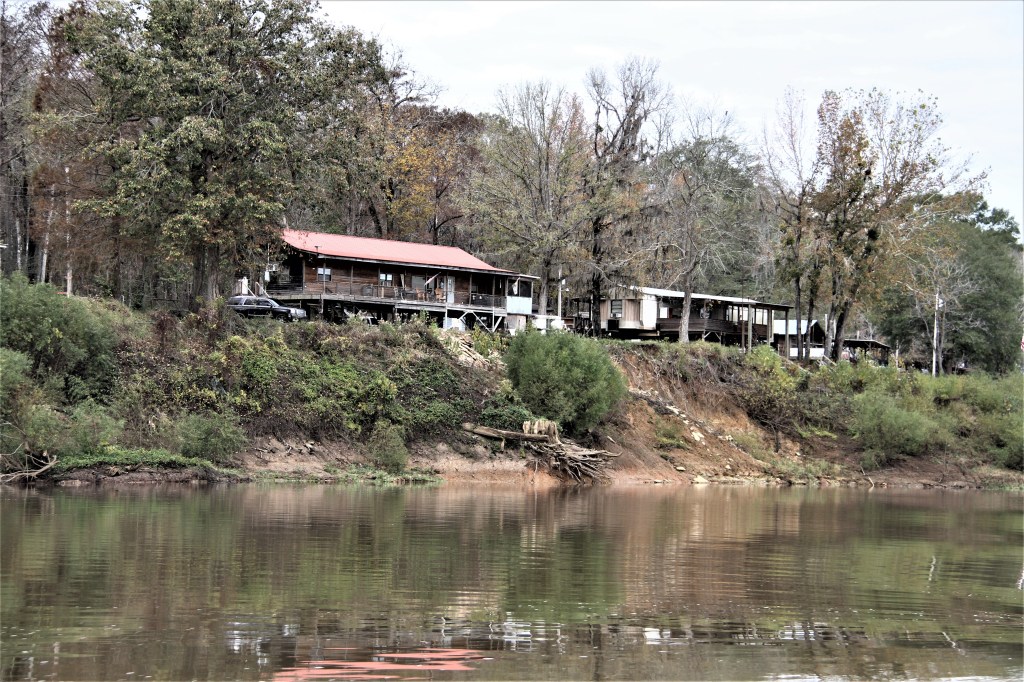
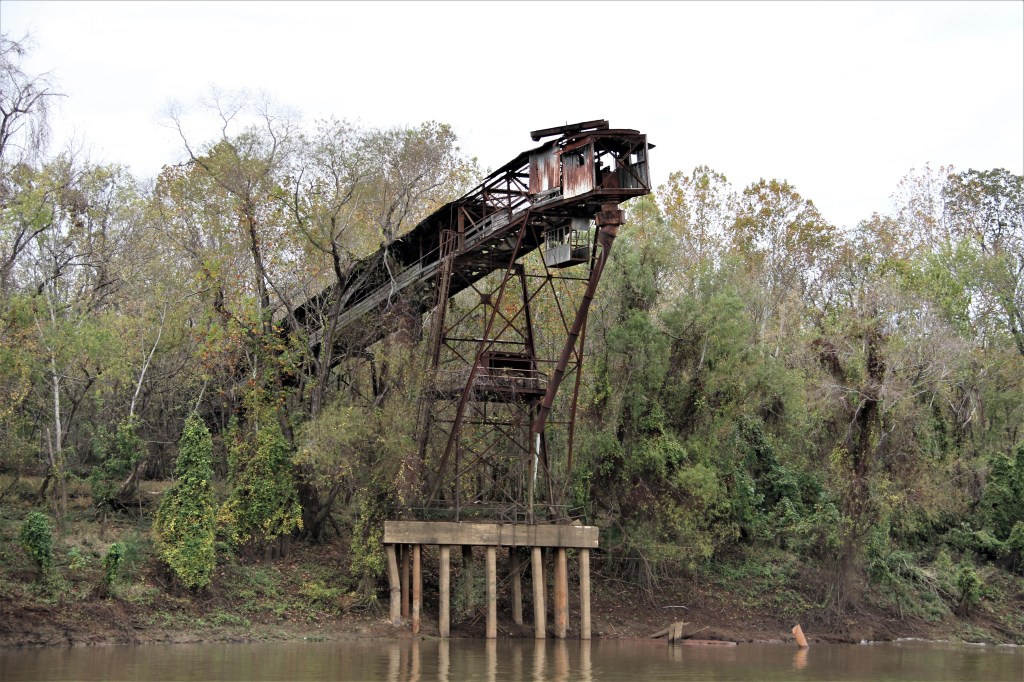
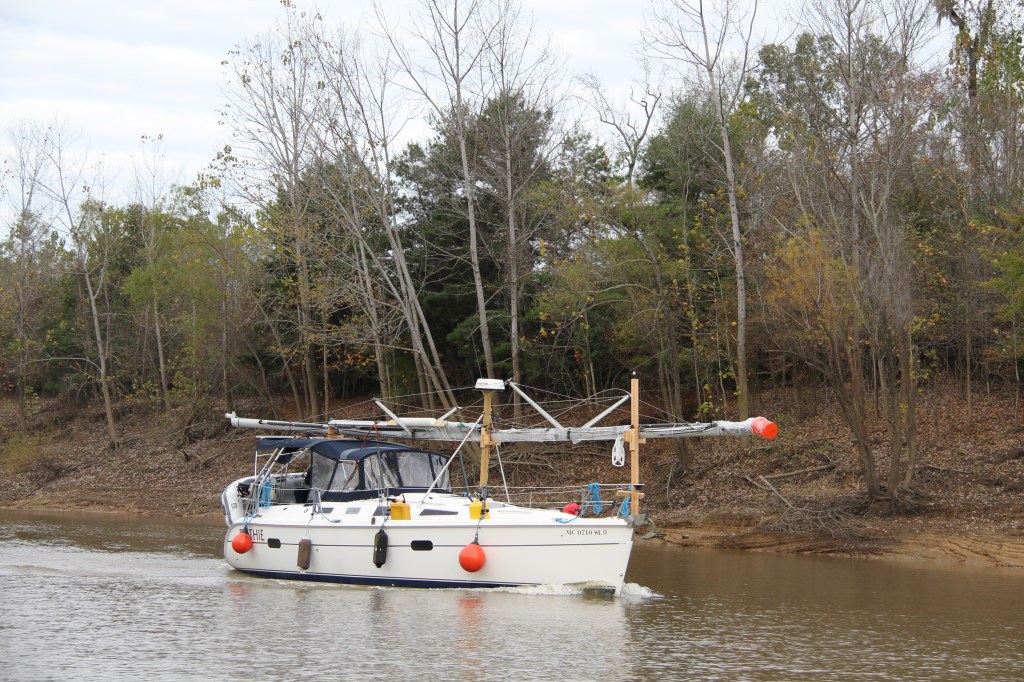
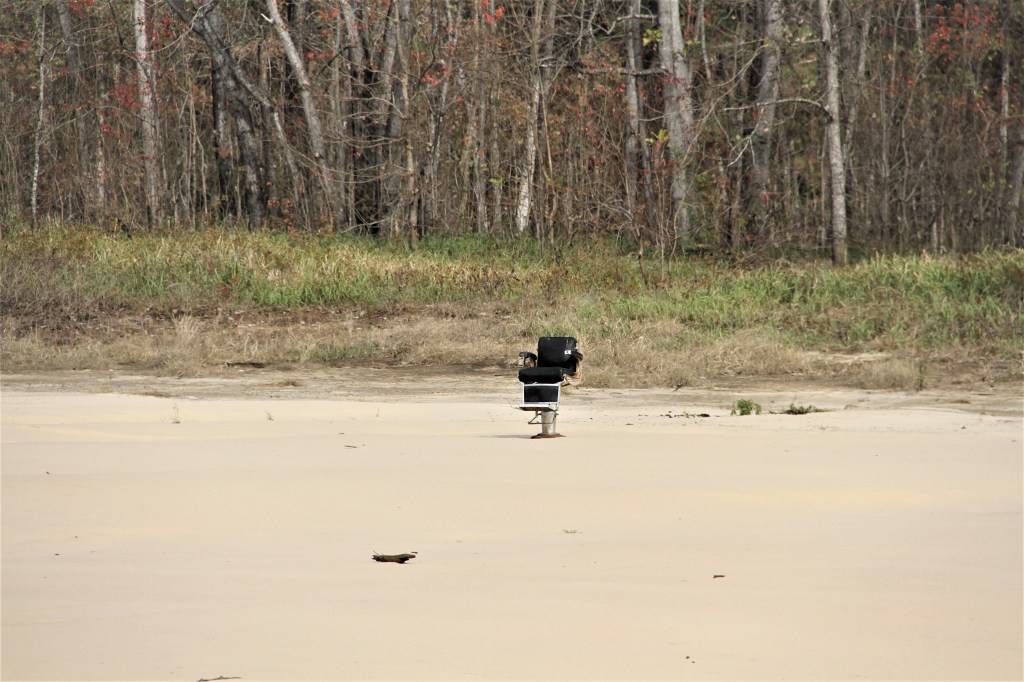
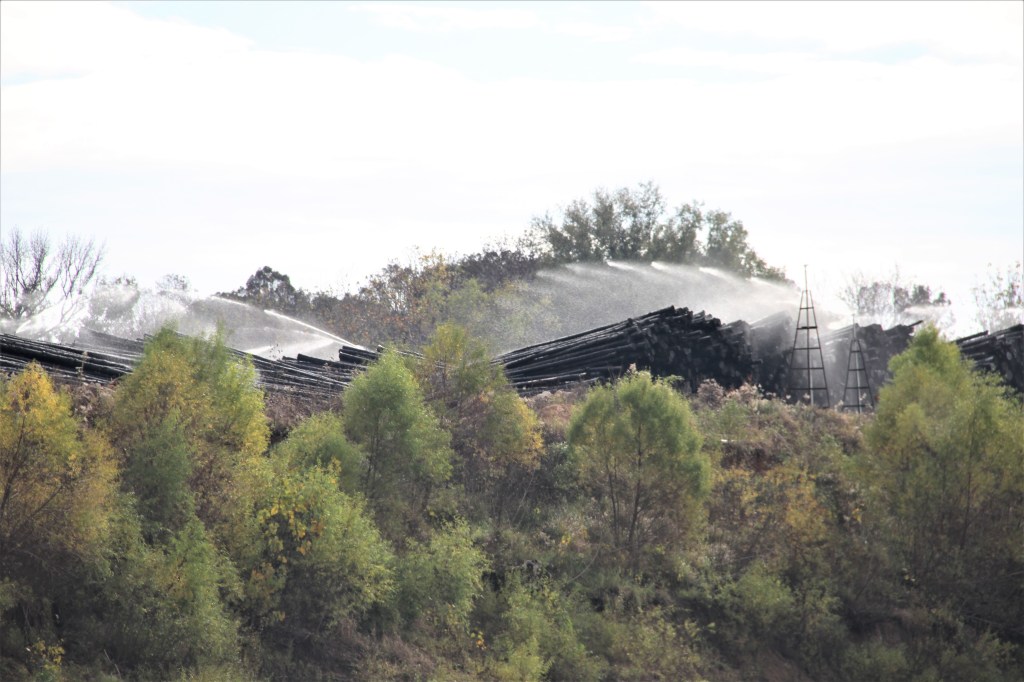
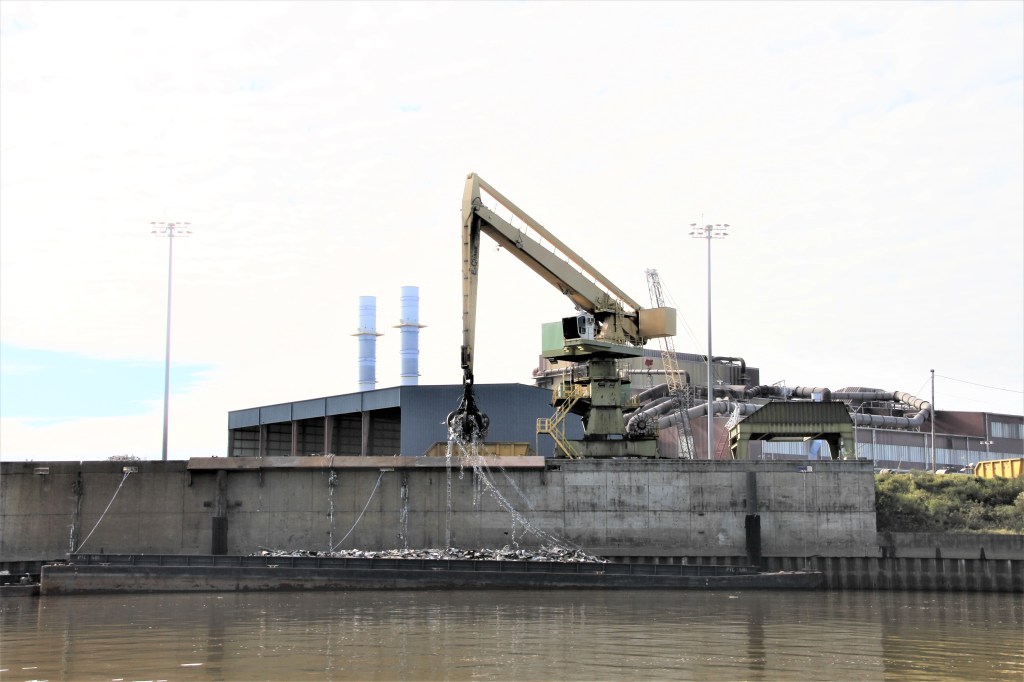
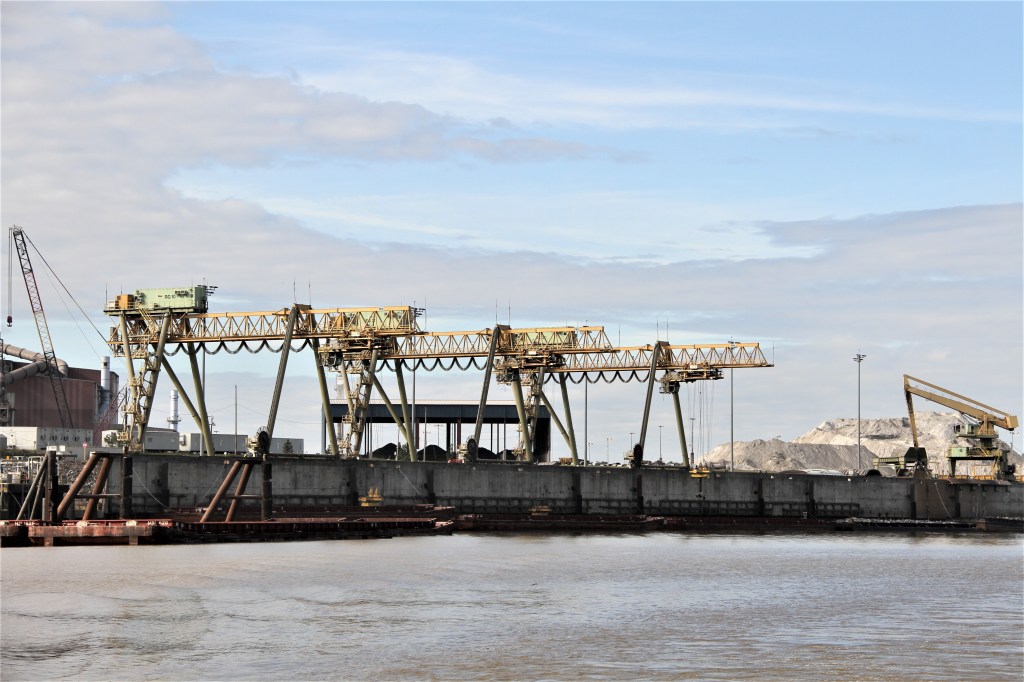
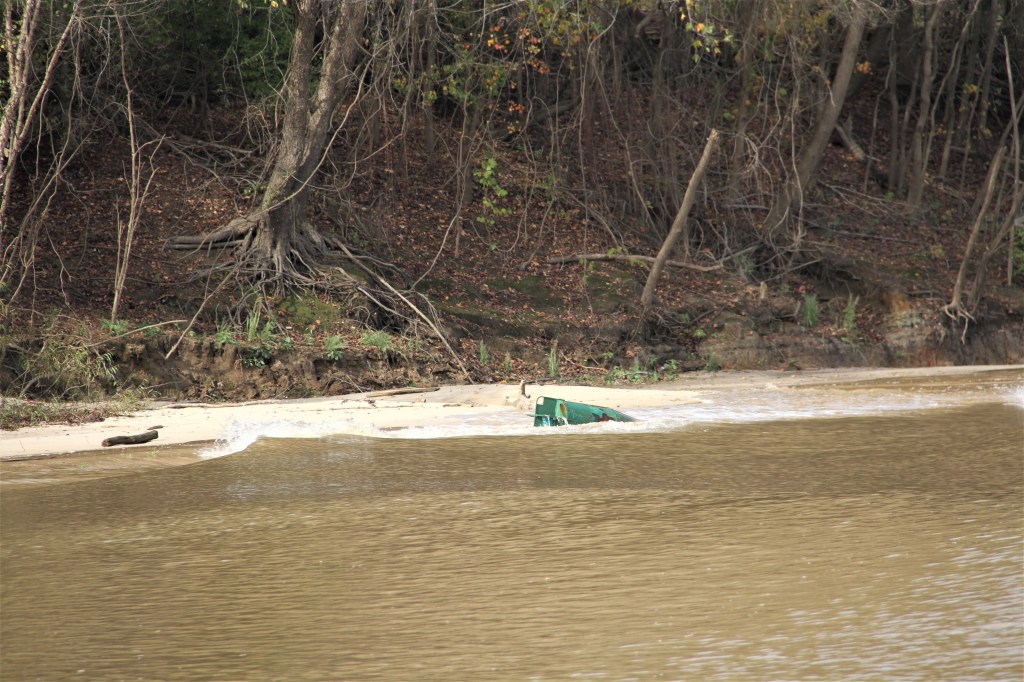
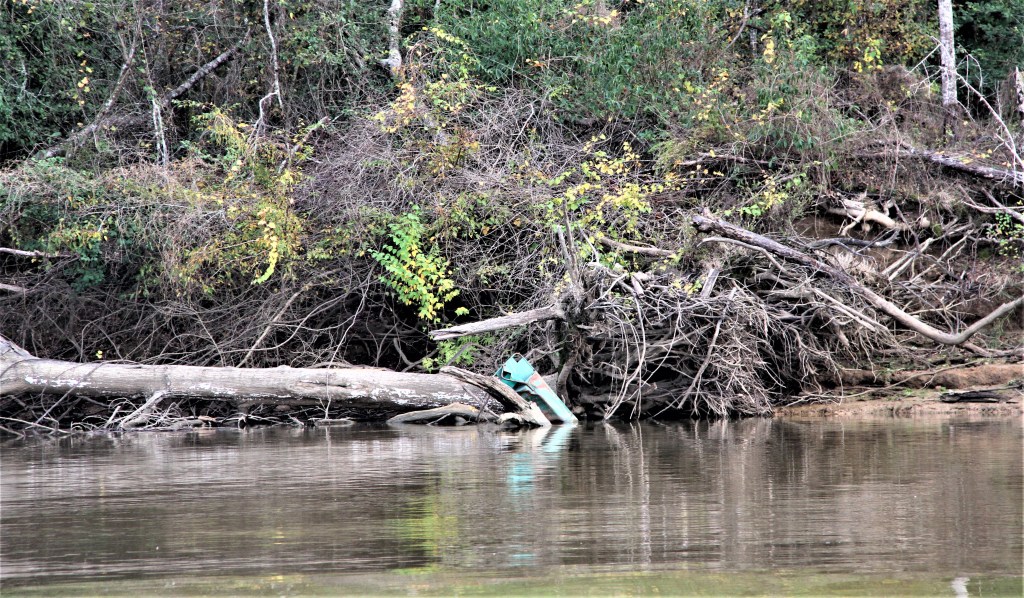
It is not an unusual occurrence to have the occasional marker missing on any river, the exception is the wide Tennessee River which is very well marked including her bridges. On this stretch of the Mobile River, several buoys were visible on the chart but missing on the river. Sometimes, we saw buoys swept to the shoreline.
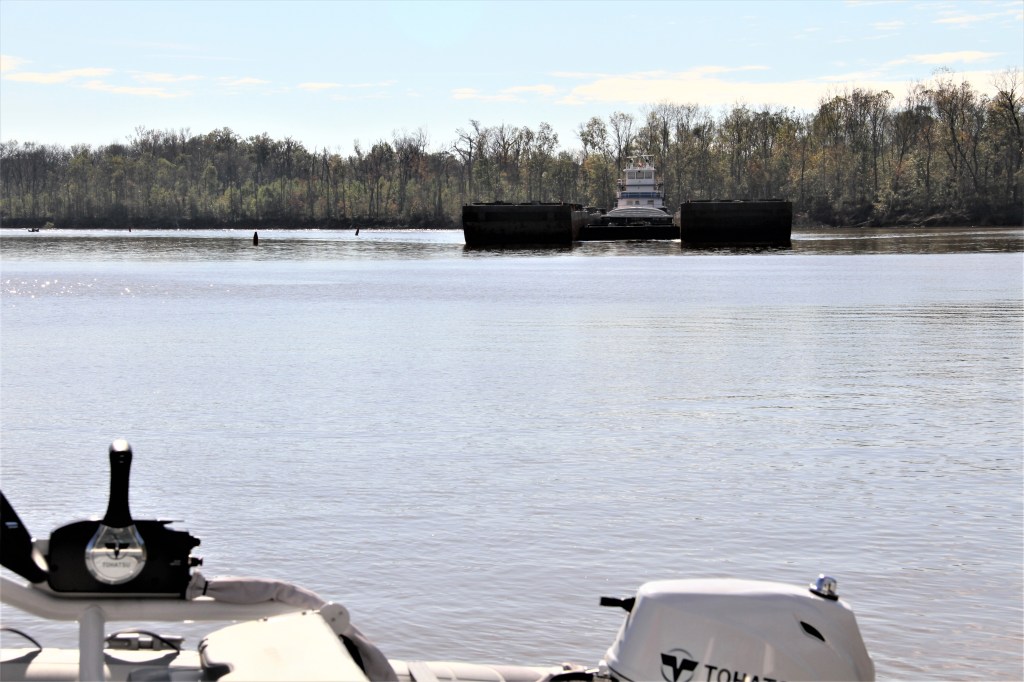
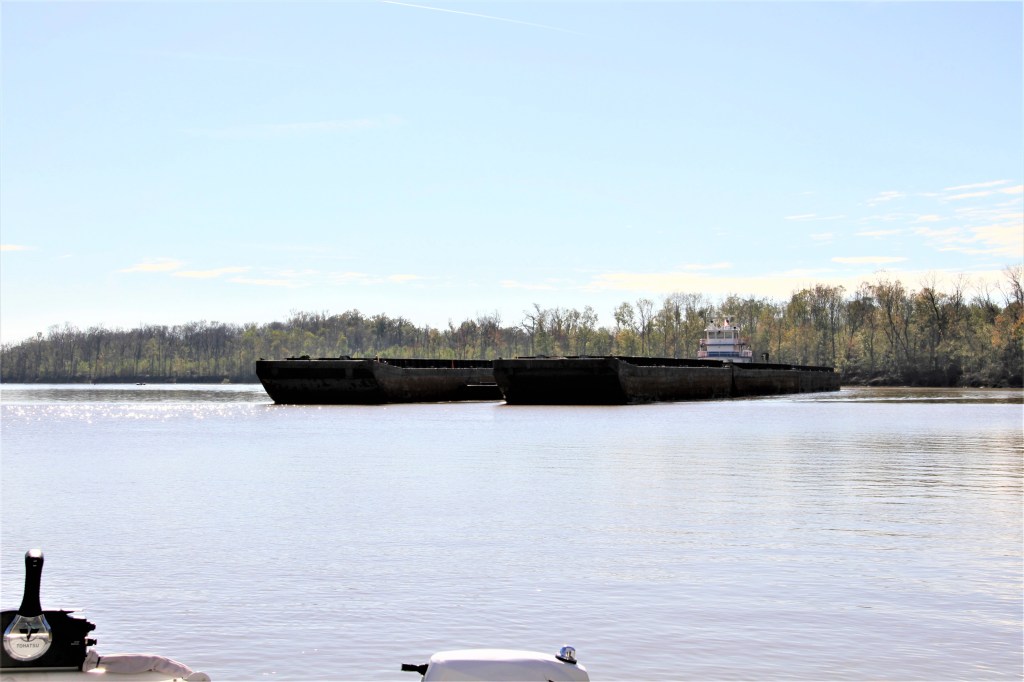
One red buoy in particular concerned us. The buoy was on the wrong side of the channel to what the sequence of the other red buoys were, and it laid too near to shore to think it was in the right place. The chart indicated that if we left it to port, we would be in shallow water. We pondered the situation and left it to starboard but then felt the propeller grind through sand. As we steered more towards the middle of the river, we found deeper water. No harm done, but we never felt confident to say what the safer route was. There are times when you don’t want to rely on the charts either.
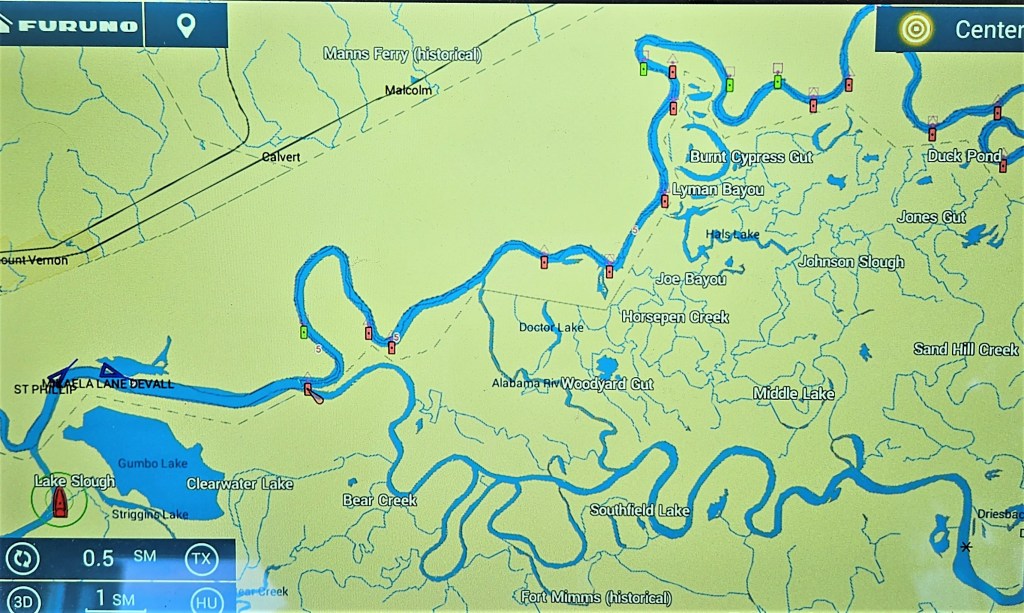
The Tensaw is wide and only 41 miles long. About a mile and a half upriver, we dropped our anchor for the night.
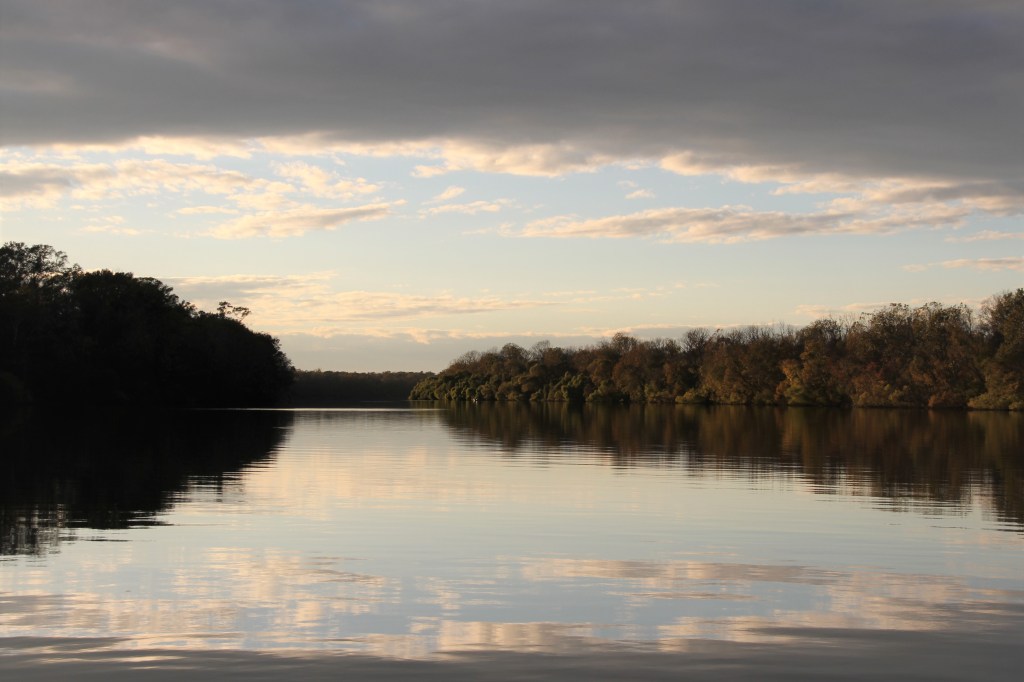
Before going to bed, we noticed a distant spotlight searching the shoreline from a boat. What were these people searching for? A few days later, we learned that they could have been hunting for wild pigs. * In the morning, we heard several gun shots. Maybe a firing range I thought. But the sounds came from opposite directions. The gunshots must have come from hunters, which isn’t surprising because here in Alabama, camouflage clothing was as common to see as blue jeans.
*Feral hogs pose a serious threat to native wildlife in Alabama and also in our home province of Ontario, Can. However, they are found all over the world where they are devastating waterways, disastrous to agriculture, insatiable predators that can bring down a deer, decimate bird populations and threaten entire species. Equipped with tusks and teeth, and afraid of nothing, they attack people; a woman was killed on the doorstep of a home in rural Texas. Wild boars are the single most invasive, adaptable and destructive mammals (other than humans), on the planet. (The Globe & Mail, Can.). “They have high reproductive rates, a lack of natural predators, voracious omnivorous feeding habits, destructive rooting behavior and habitat. The U.S. Department of Agriculture estimates that feral hogs cause more than $800 million of agricultural damage in the United States annually. Courtesy of Outdoor Alabama


 Traveling the Great Loop
Leave a reply to jockmacrae Cancel reply