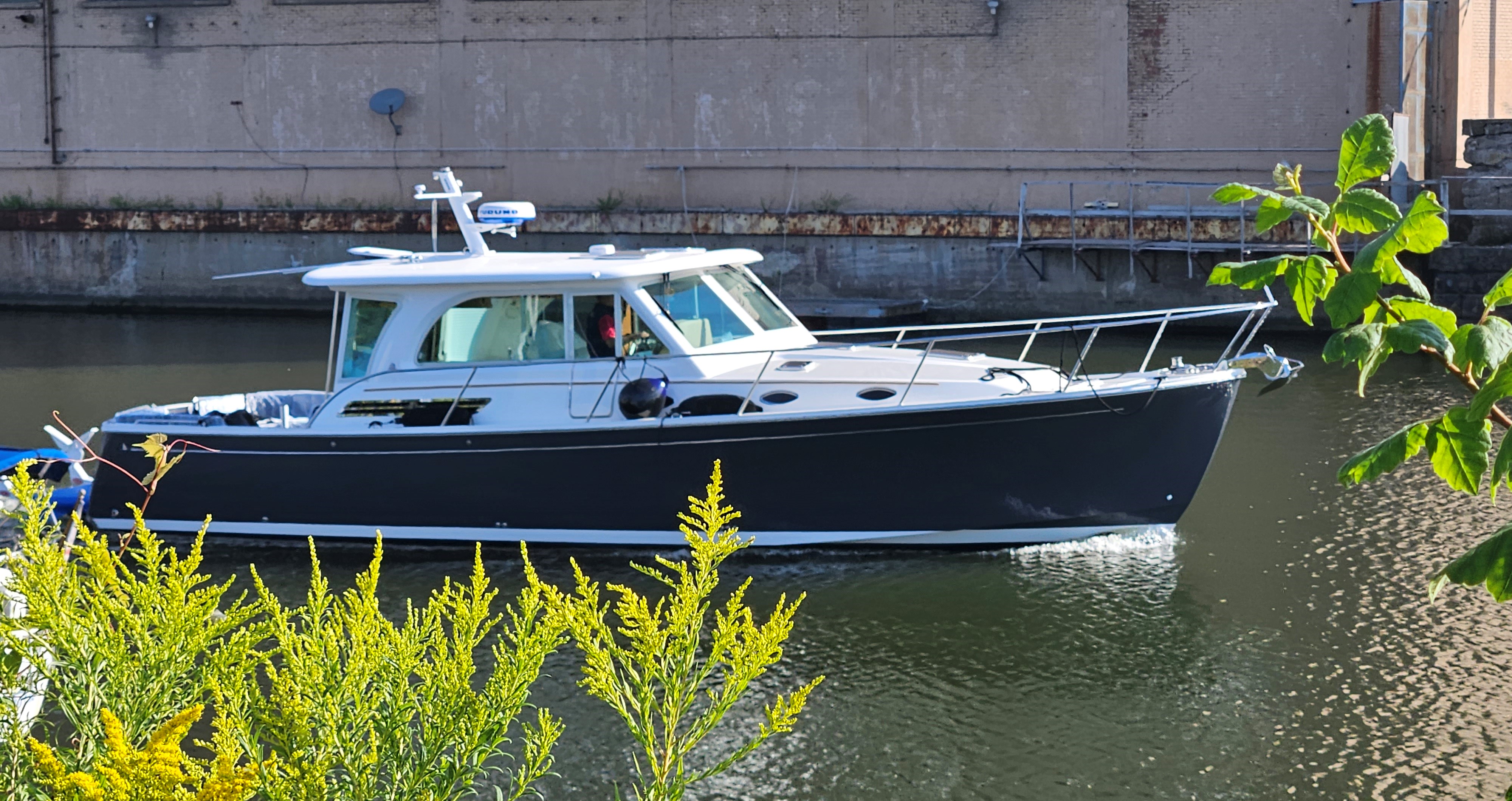
Feb. 23-25, 2024; Today’s Run: 50 miles. The name ‘Marathon’, originated during the construction of the Over Seas Railroad. A familiar complaint among labourers, was their nonstop working hours resembled running a marathon.
We left Key West around 9am for Marathon, a small city located in the middle of the Key’s chain of islands. It was a lumpy passage. The Keys to the West, and a submerged barrier reef Atlantic side, reduce the effect of rolling ocean waves, but there are numerous breaks in the reef where ocean swells enter and we needed to hold onto grabrails when we left our seats.
There is a choice of routes arriving to, and leaving Key West; the ICW is located on the Gulf side of the Keys and is known as the ‘inside’ route. It offers more protection from the elements. But it can be shallow. When leaving Key West, my navigator-man, chose Hawk Channel running along the ocean side of the Keys where there is more motion but little chance of going aground.
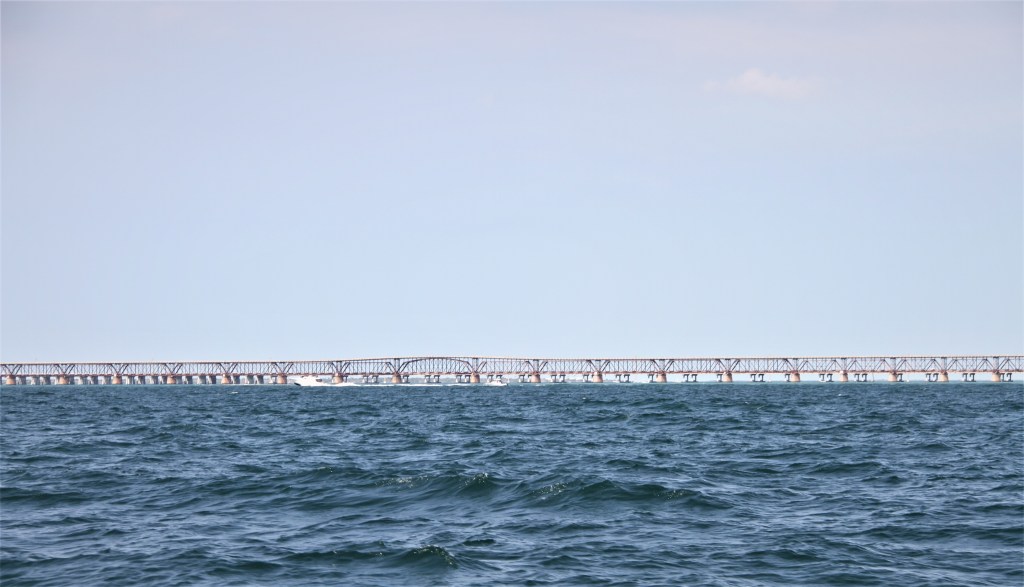
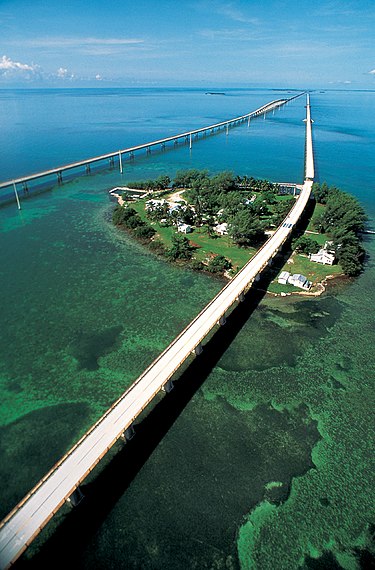
The old Over Sea Railroad Bridge, (1912), and the highway bridge, (1935, constructed using the same bridge structures), was replaced between 1978-’82. Most of the original bridge still exists. Both bridges are shown in this picture (courtesy Wikipedia). The Florida Keys separate the Gulf of Mexico and the Atlantic Ocean.
Today, the bridge carries optic cables and the Florida Keys aqueduct. Everything, other than seafood from the Gulf, arrives to the Keys via the two-way road: food, medical supplies, lumber, beverages, and fresh water which is pumped through the aqueduct from Florida City 130 miles/290 km away.
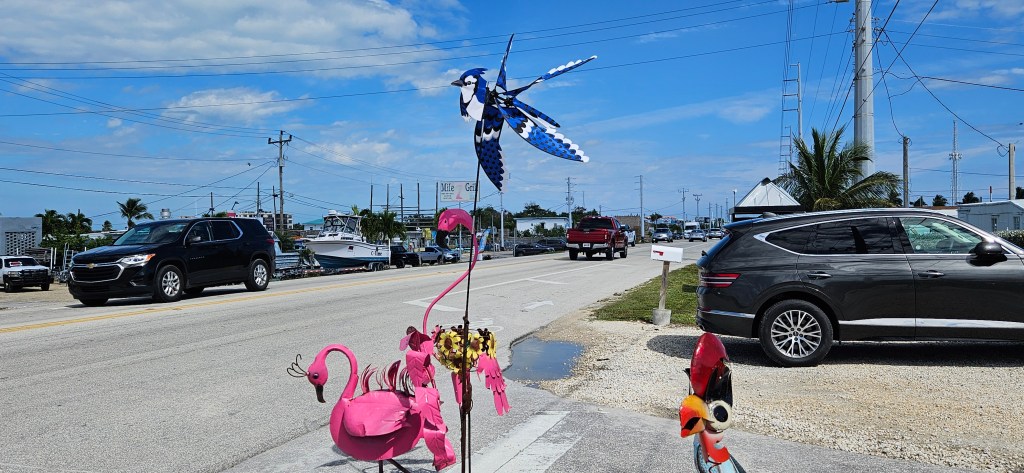
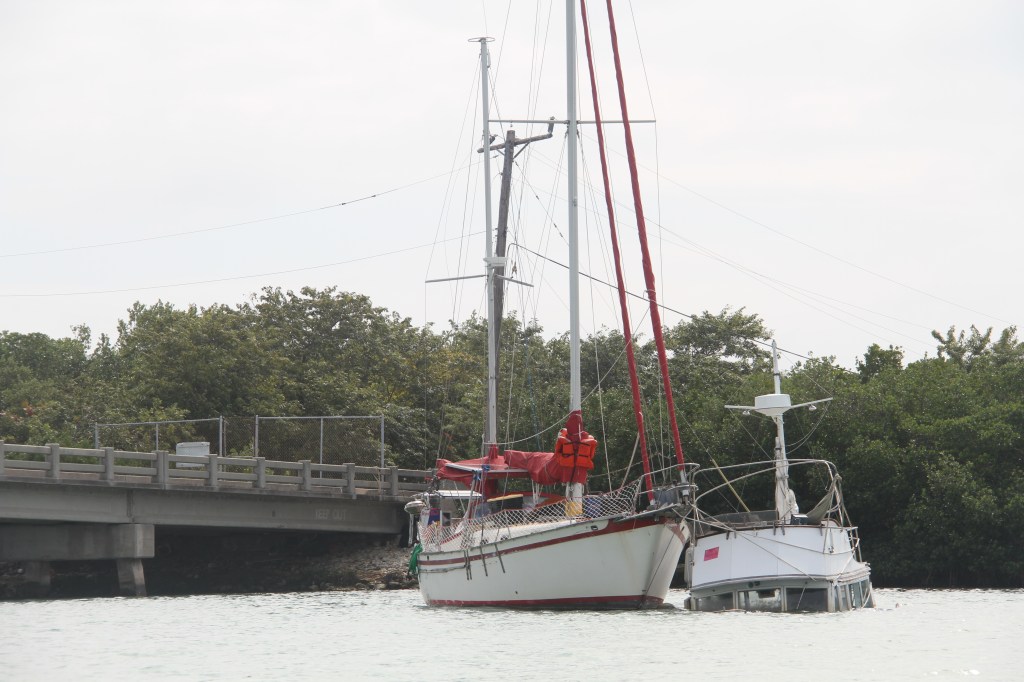
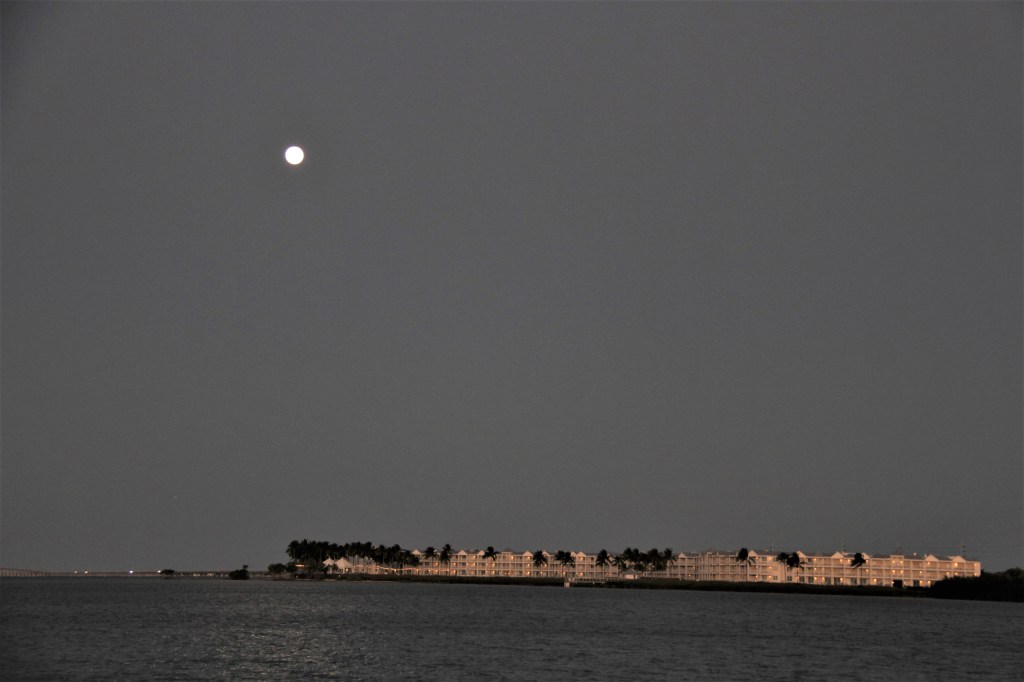
MARATHON FROM THE WATER
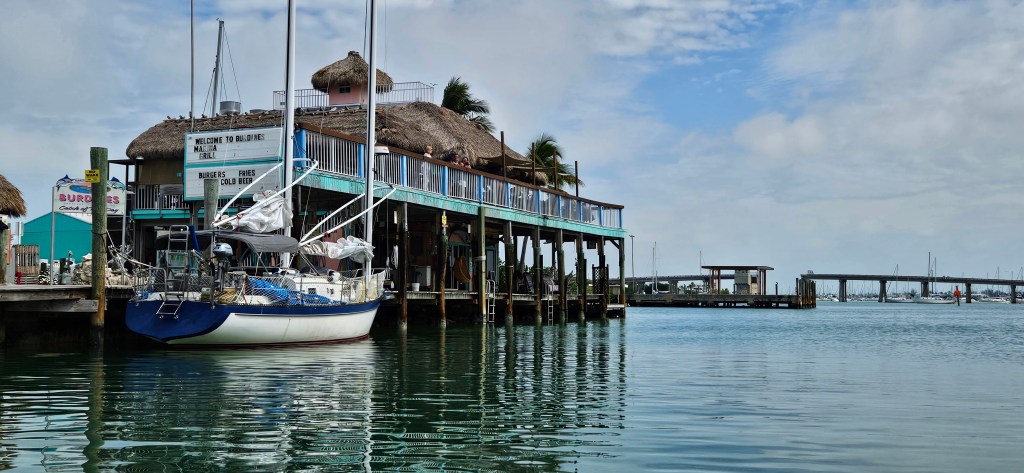
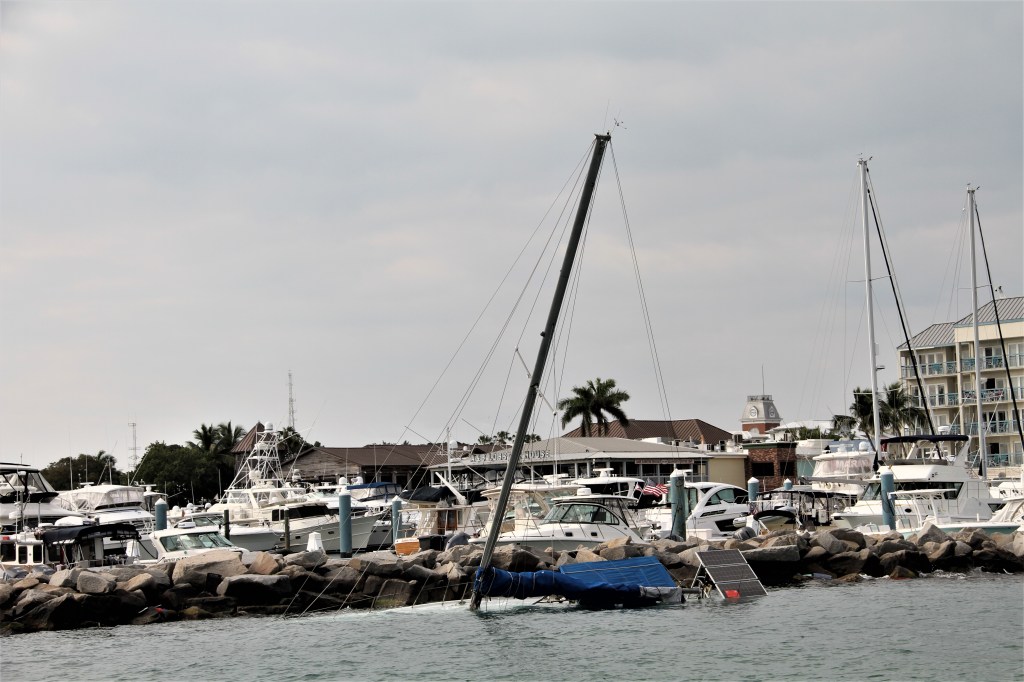
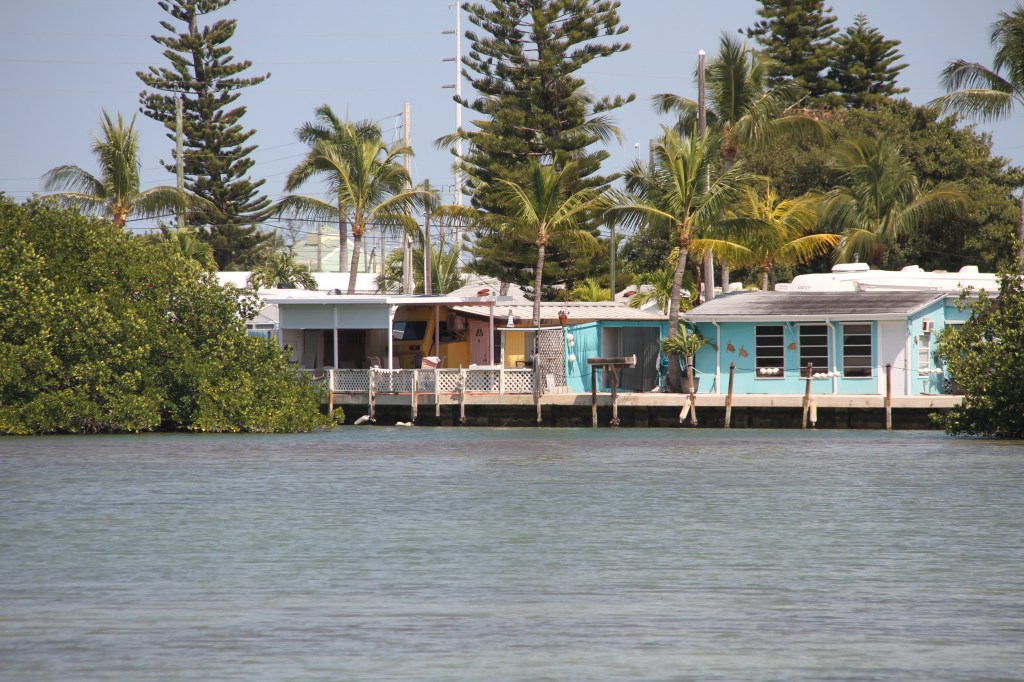
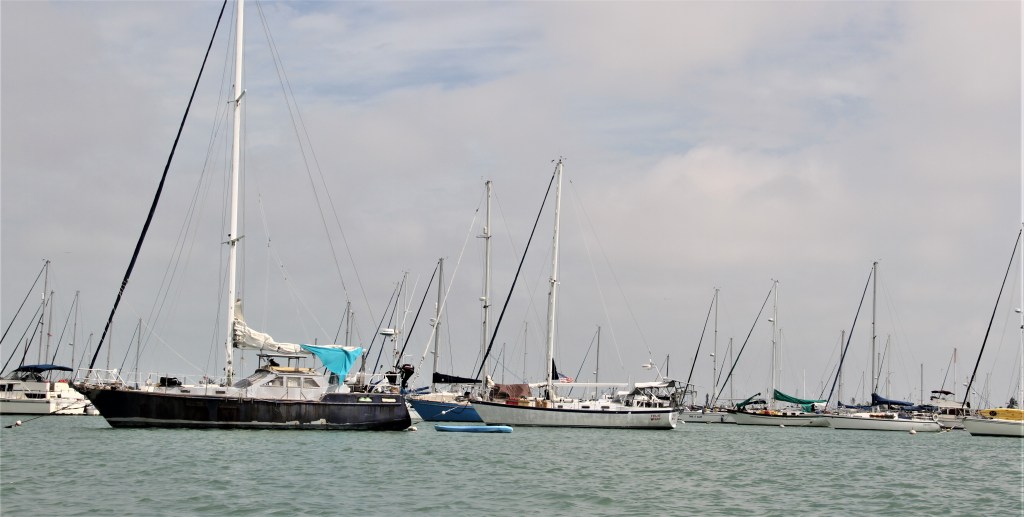
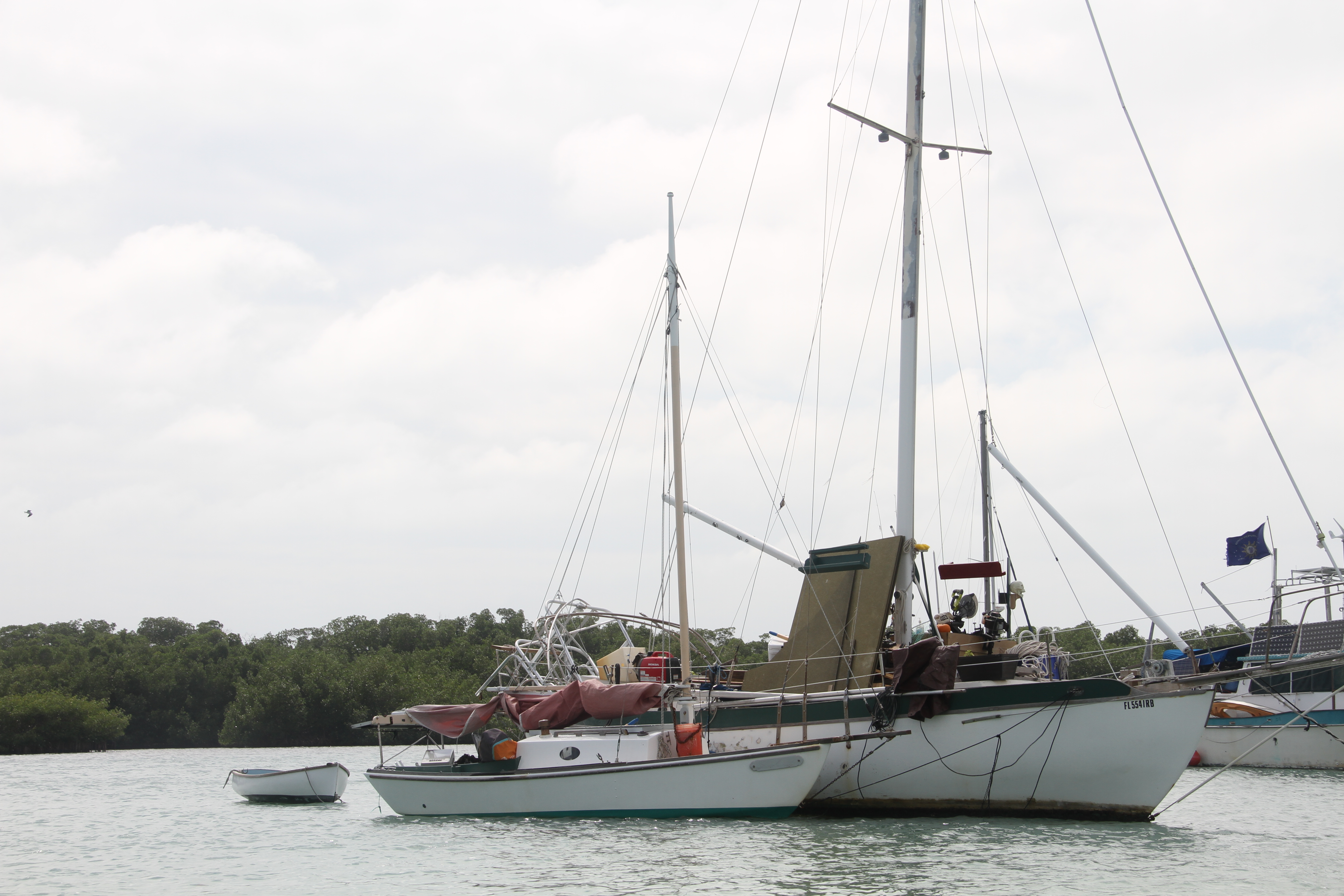
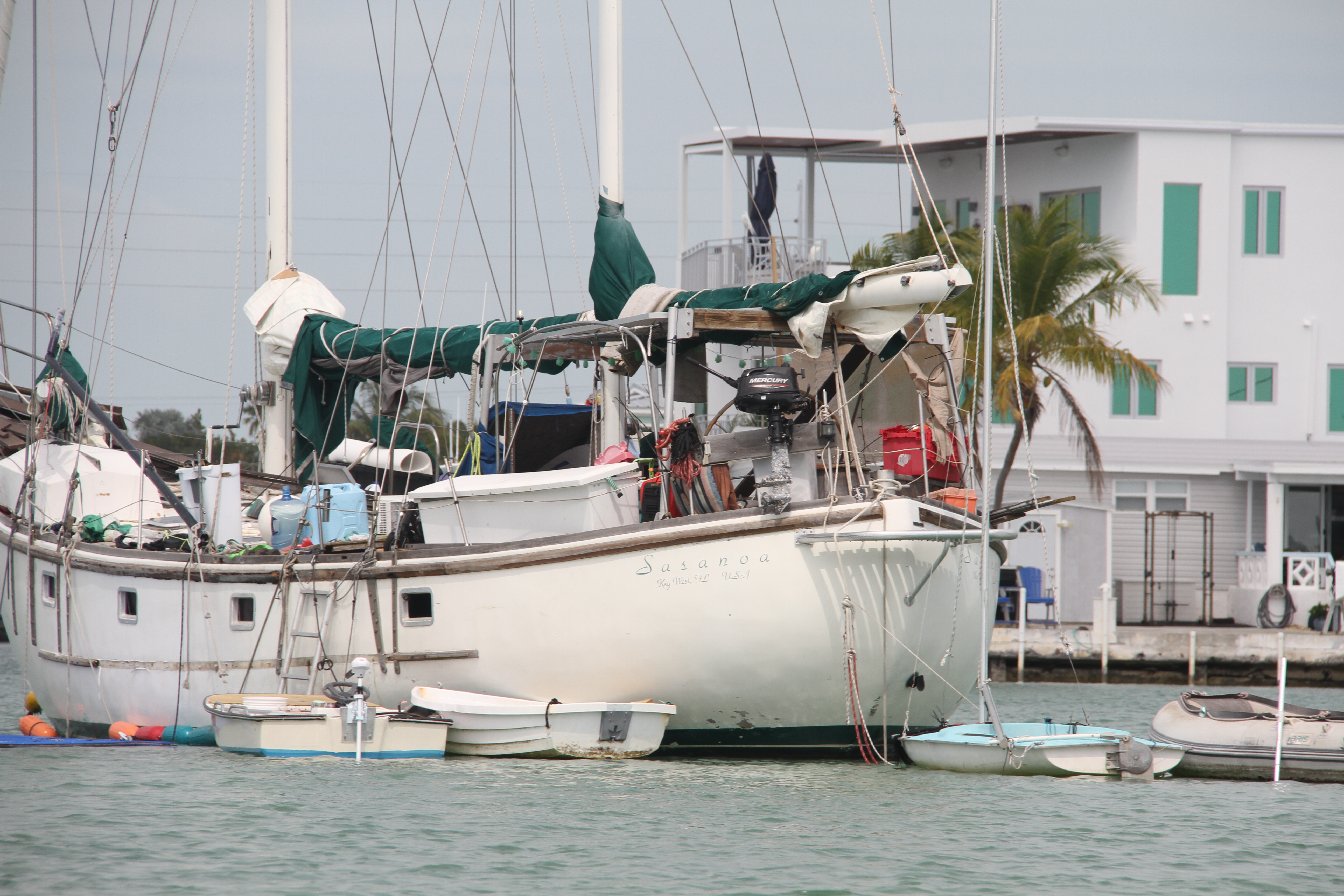
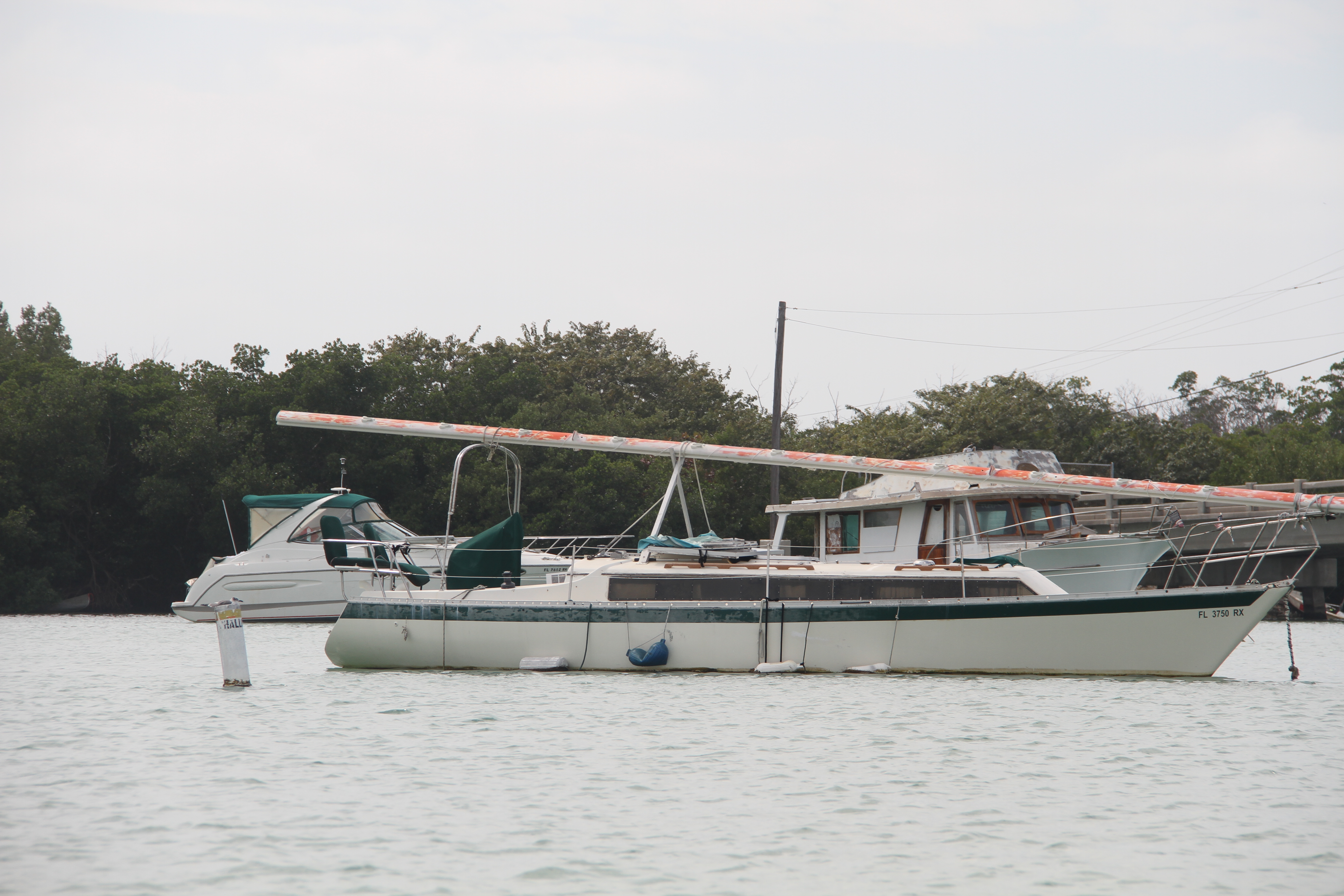
… including numerous liveaboards, some having no other purpose than to house their owners.
Planning For The Bahama Islands
ROUTE PLANNING:
Boaters who have been to the Bahamas often share their knowledge with other boaters. They recommend their favourite guide books, share their favourite stopovers and what to do while there; where the best beaches are, places to snorkel, swim, eat, drink, where you can get laundry done, where you can find groceries;
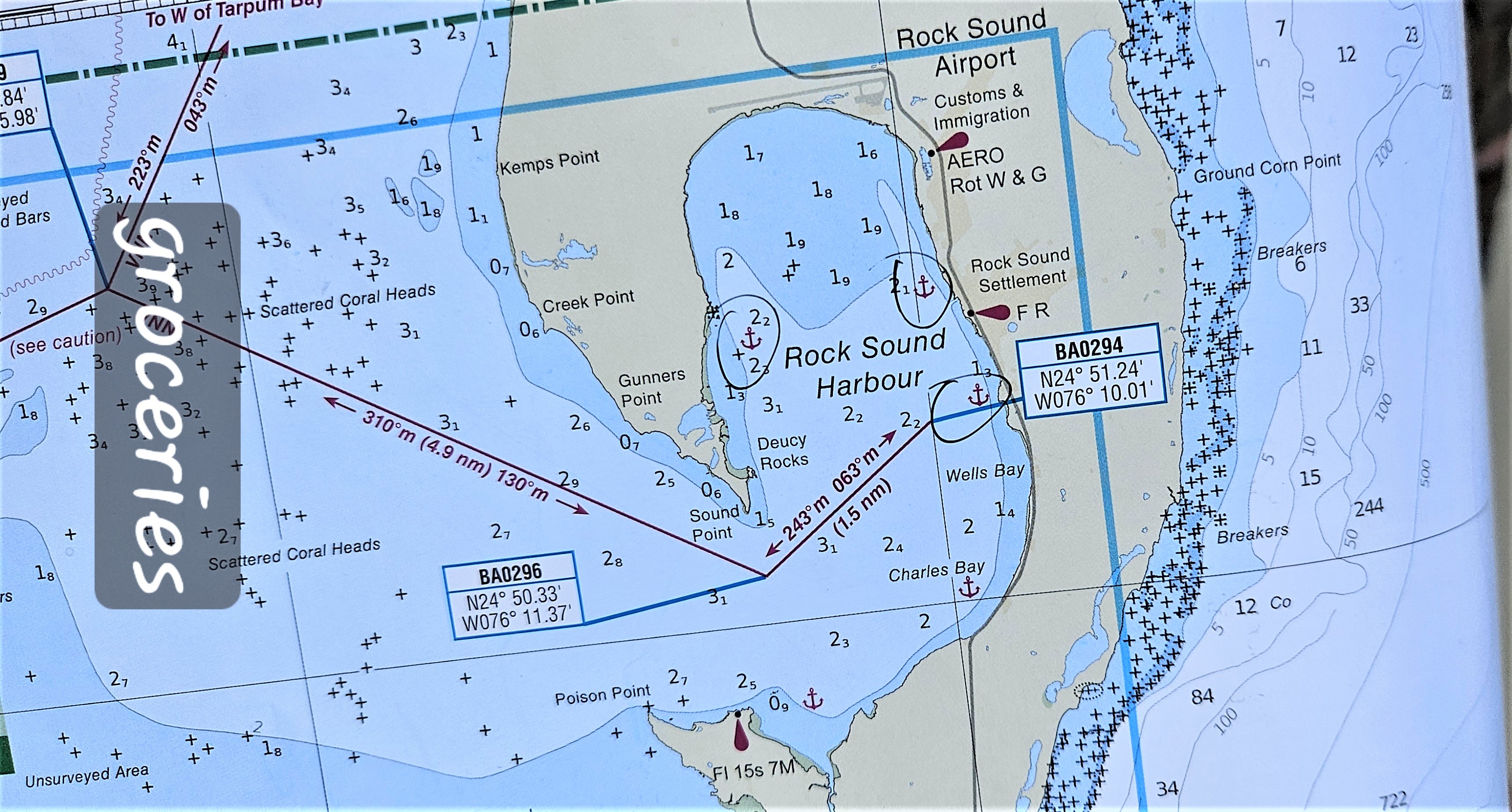
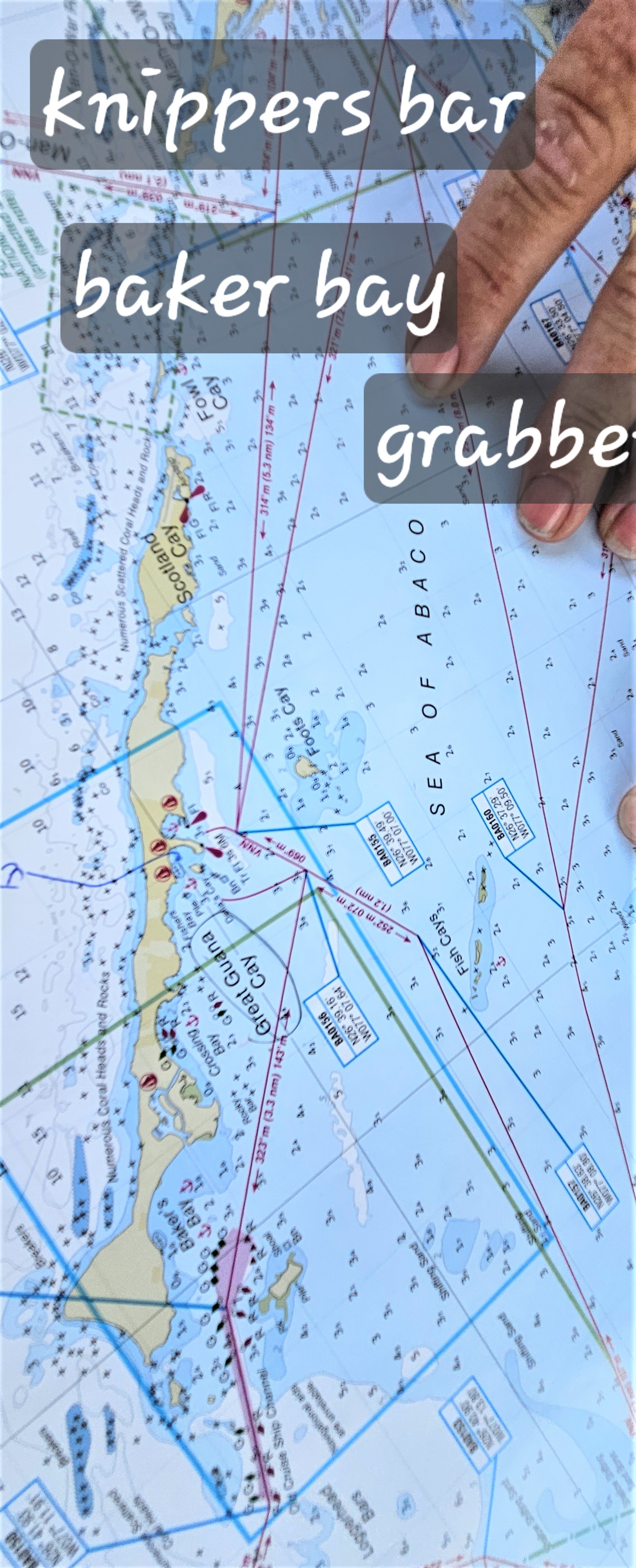
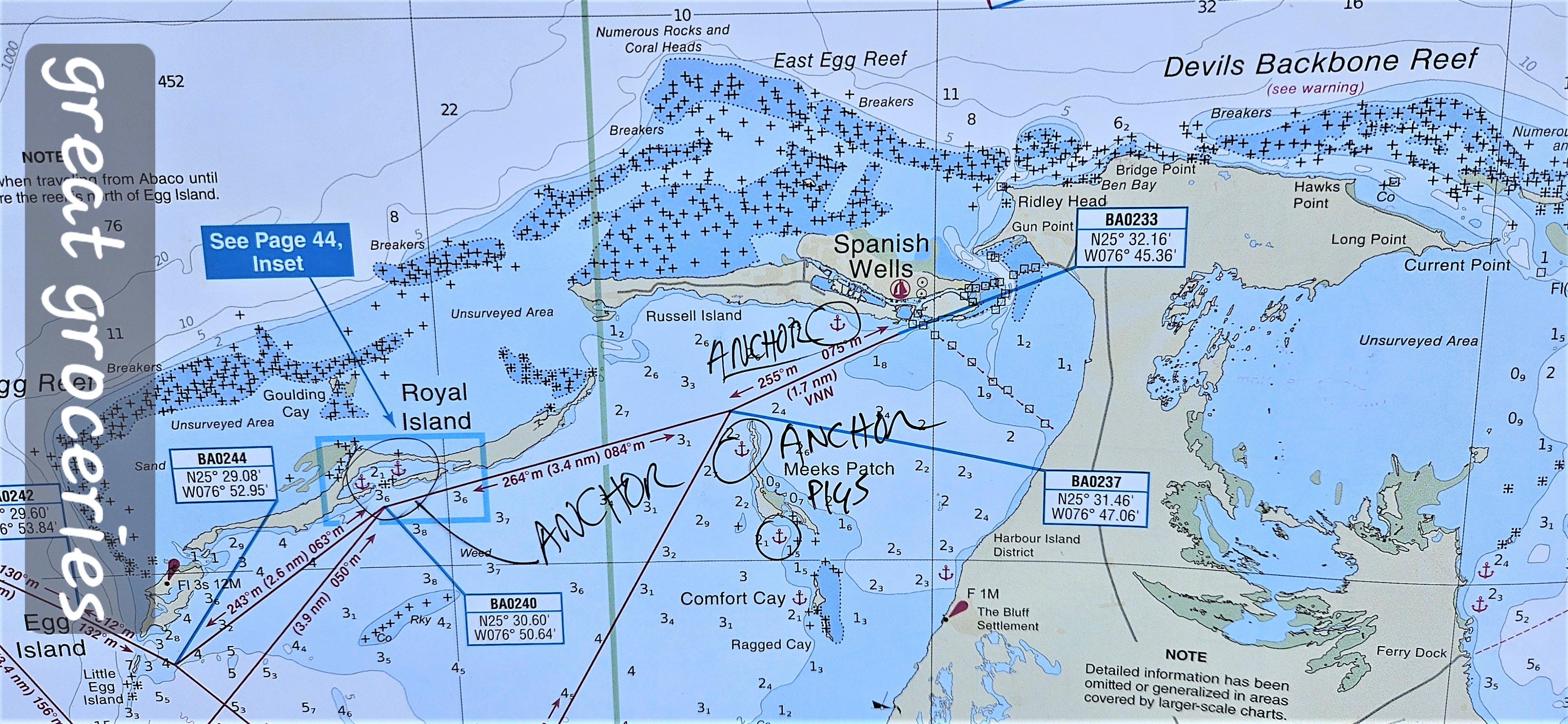
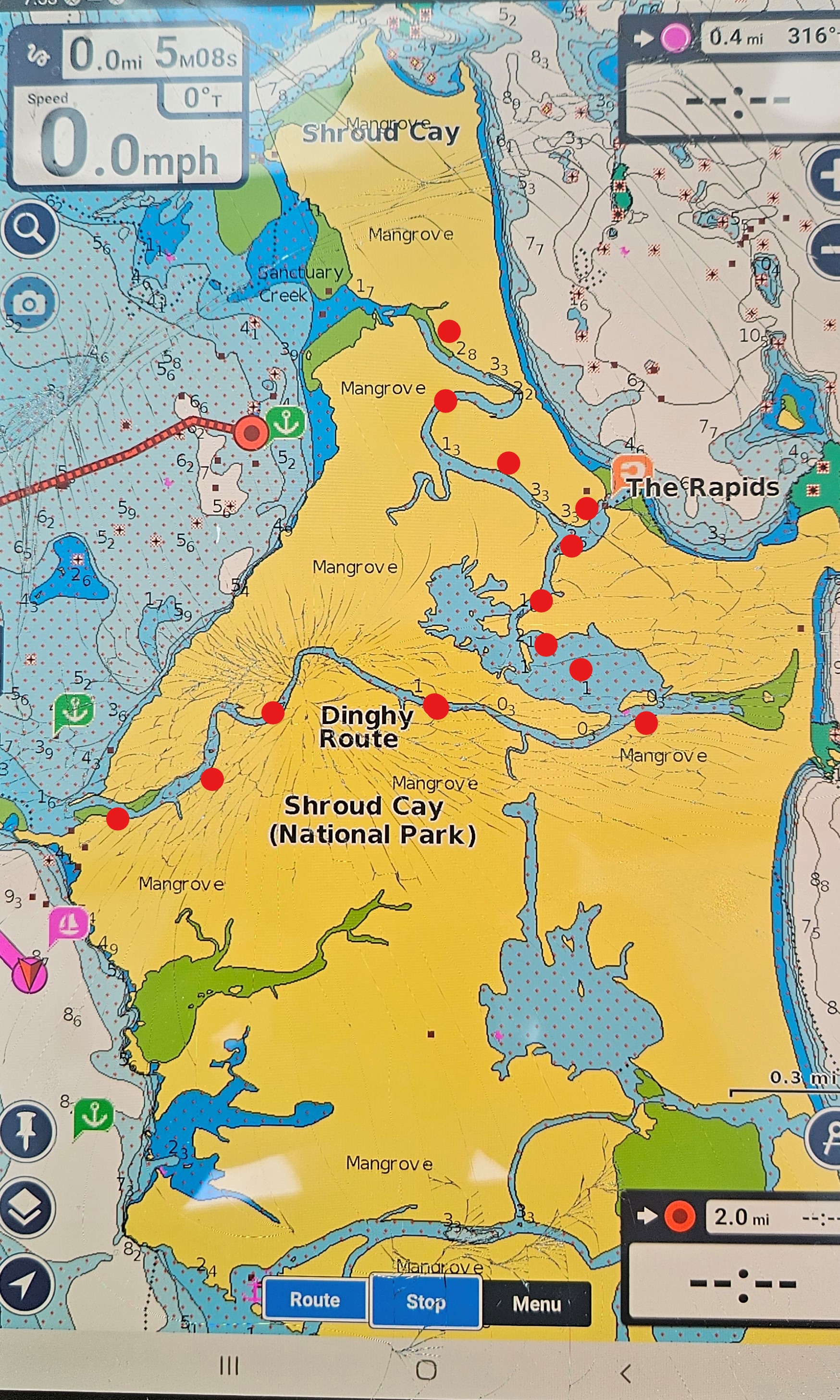
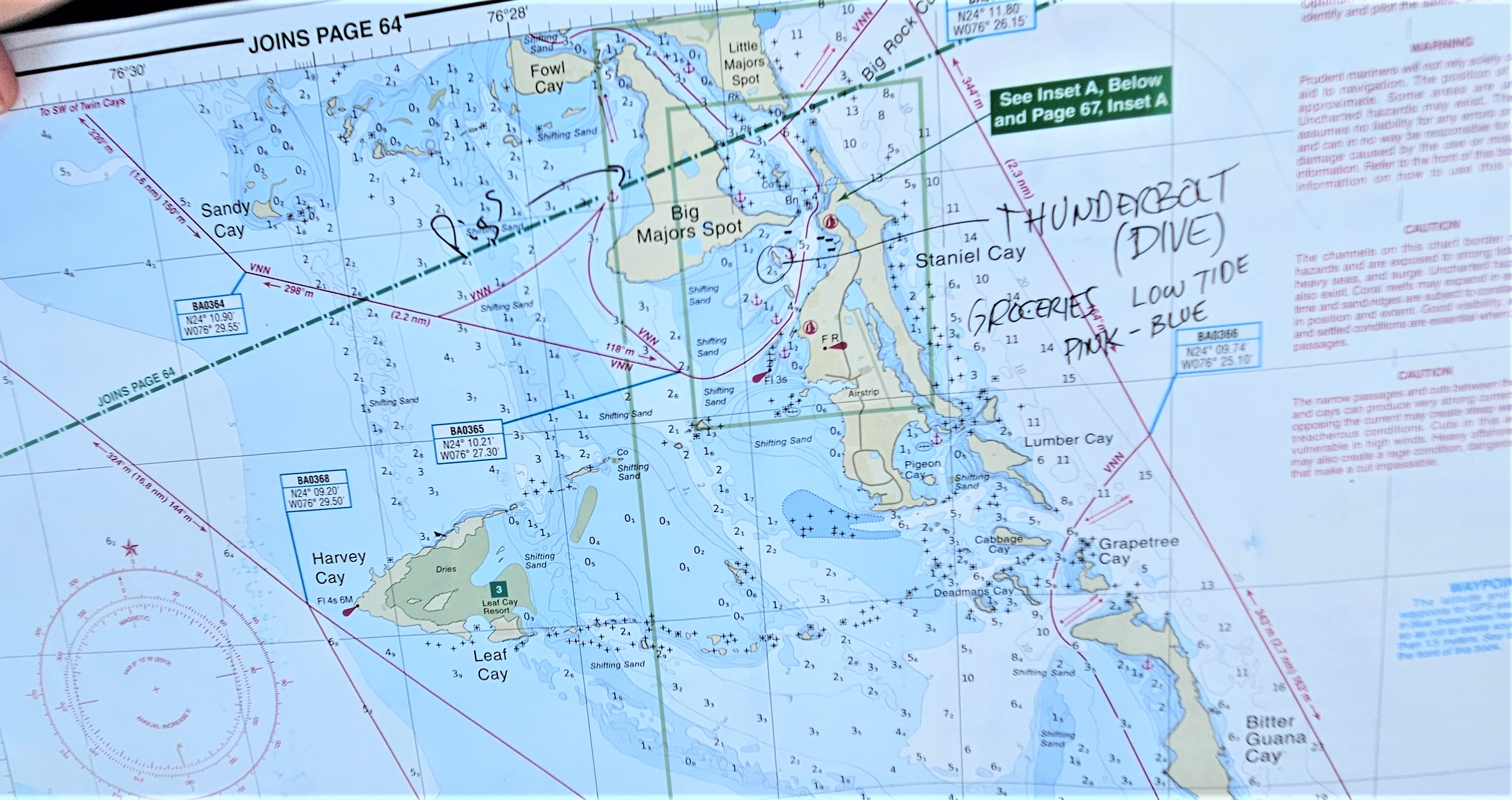
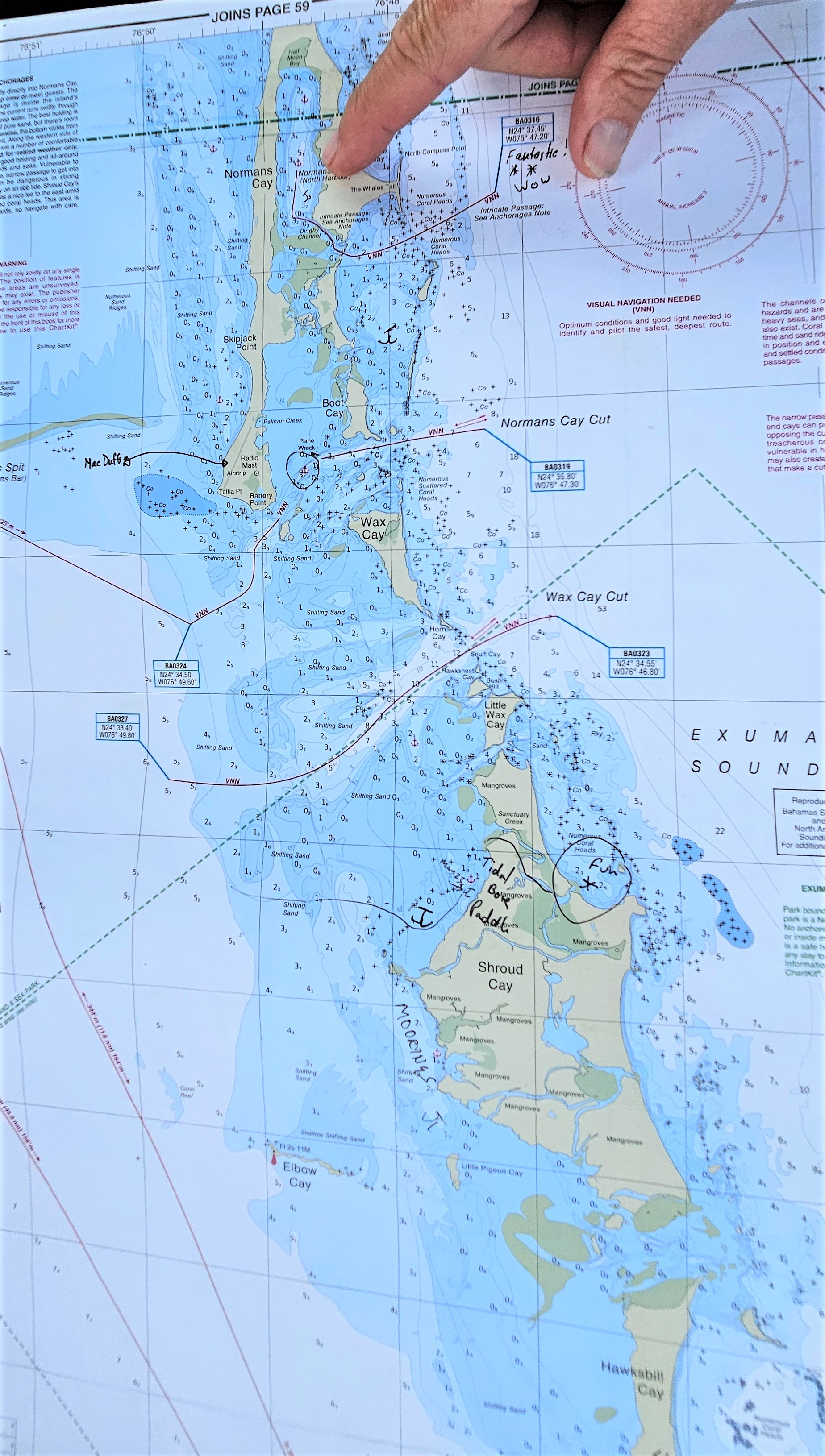
and they will often have you onboard their boats to look at their charts they have marked-up with their own handwriting. We came away with lists of ‘do not miss’ locations and pictures of their charts or someone else’s charts because often this information gets passed around. In addition, we had two chart books onboard: Waterway Guide: Bahamas 2024, and MAPTECH: The Bahamas to Crooked Island Passage.
We picked up hints of what to take and how to store certain goods; for instance, friends told us how they discarded the corrugated boxes that hold foil wine pouches and store the unopened foil pouches in a bin, hence saving room to store – yes- more wine!*
PROVISIONING FOR THE BAHAMAS
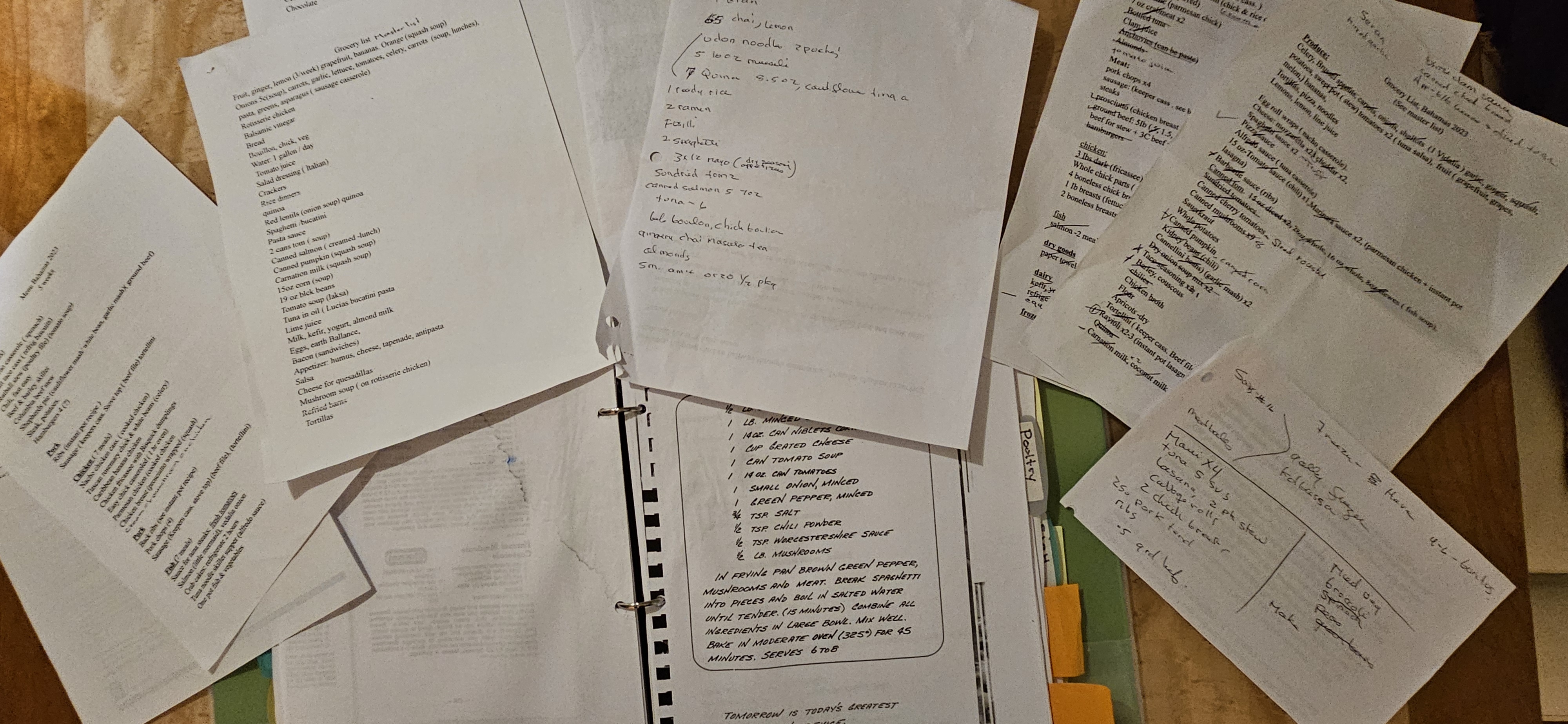
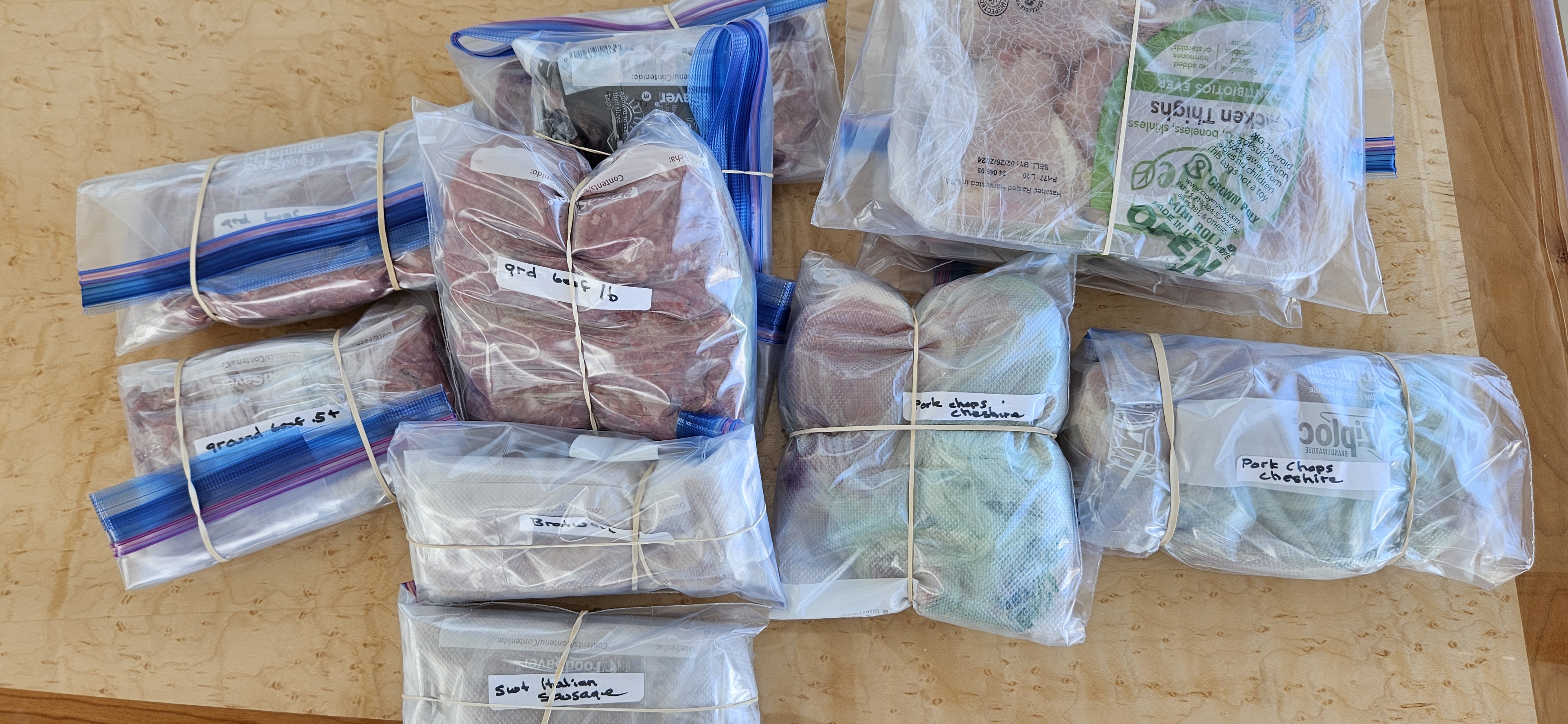
Months before leaving Cincinnati, I had collected easy-to-make, stovetop recipes, keeping in mind that I would have fewer spices onboard than at home, I would be cooking on a two-burner stovetop, using a small convection oven, and refrigerator and freezer space would be limited. Freezer space needed to be divided between meat, (in many locations, red meat is scarce and expensive in the islands.) Vegetables are hard to find especially the green variety. For extra freezer protection, I used heavy-duty vacuum pack storage bags inside freezer Ziploc bags and pushed out as much air as possible by hand.
Our plan was to spend 5 weeks in the Islands. I made a 5-week menu, not that I would make these meals in any order, but I would know what products I needed and how much of an item I would need. There would be no guessing why I had bought certain canned goods; “What was I thinking of using that for?”
I knew how many cans of tomato products I would need, how many packages of cereal, the number of cartons of LTH milk, which can be stored at room temperature for long periods, and so on.
I knew we would be rationing water; we do not have a water maker. Besides using it for cooking, fresh water is needed for galley cleanup, flushing toilets, showering, rinsing after a saltwater swim and drinking, although we do not drink from our tanks. I did not include traditional pasta in meal planning because cooking pasta takes a large pot of water. Instead, I substituted couscous or bulger, floured tortillas which can be sliced and substituted for pasta, and ready-cooked pasta, available in some grocery stores.
Fresh water is available at most marinas. Depending on where we were located, we could get to a marina approximately every 10 days. Our freshwater tank holds 160 U.S. gallons.
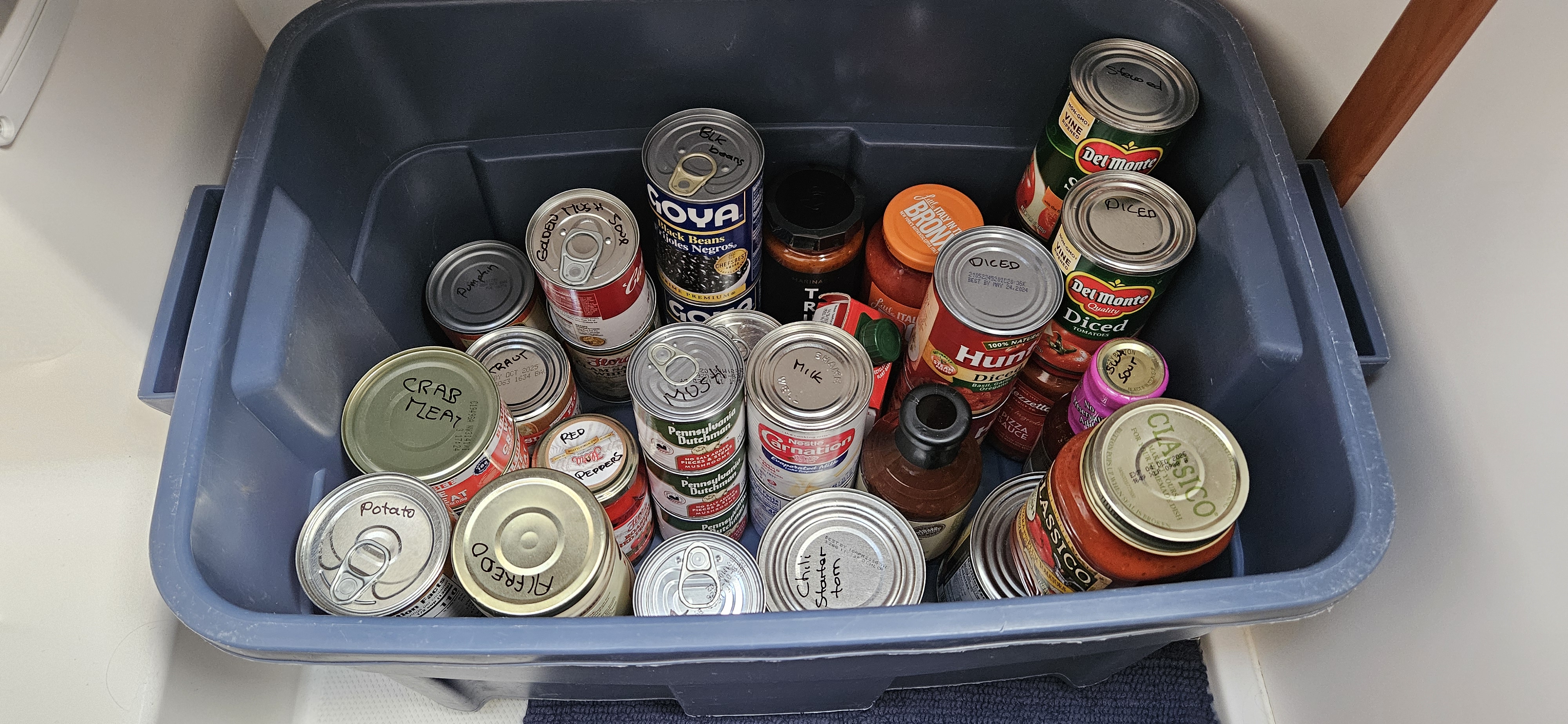
Everything is significantly more expensive in the Bahamas, there are less choices, and cash needs to be used as payment to avoid exorbitant credit card charges.
Before leaving Marathon, we eliminated unnecessary garbage: packaged materials such as cardboard sleeves, boxes and Styrofoam were substituted with reusable Ziploc bags, (carboard attracts moisture). While in the Bahamas, we kept our garbage clean by rinsing empty cans etc. in seawater before placing in the garbage. This helped eliminate odours until we could find a place to dispose of it.
The day before leaving, we filled three 2.5 gallon/10L containers with drinking water, did a last minute shop for produce and fresh meat that would be used for meals while at anchor the night before the crossing, and for when we arrived. I also purchased a rotisserie chicken for supper before departing Marathon, and for making sandwiches and chicken soup for the next day’s lunch.
The challenge of provisioning is probably easier for me than for others who have not provisioned for ocean crossings. In 2004, it had taken 18 days to sail across the Atlantic, but provisioning included additional days in the event of a weather-challenged crossing. Even more challenging was provisioning for the voyage that included crossing the Pacific Ocean, and island hopping the French Polynesia islands to Tahiti. That required 7 weeks of planning.
*Boxed wines have improved greatly over the years. Consumers Report sampled several brands and published their findings. If you would like a list of the Editor’s Choice, get in touch with me. Upon request, I will send you the descriptions of each wine.


Leave a Reply