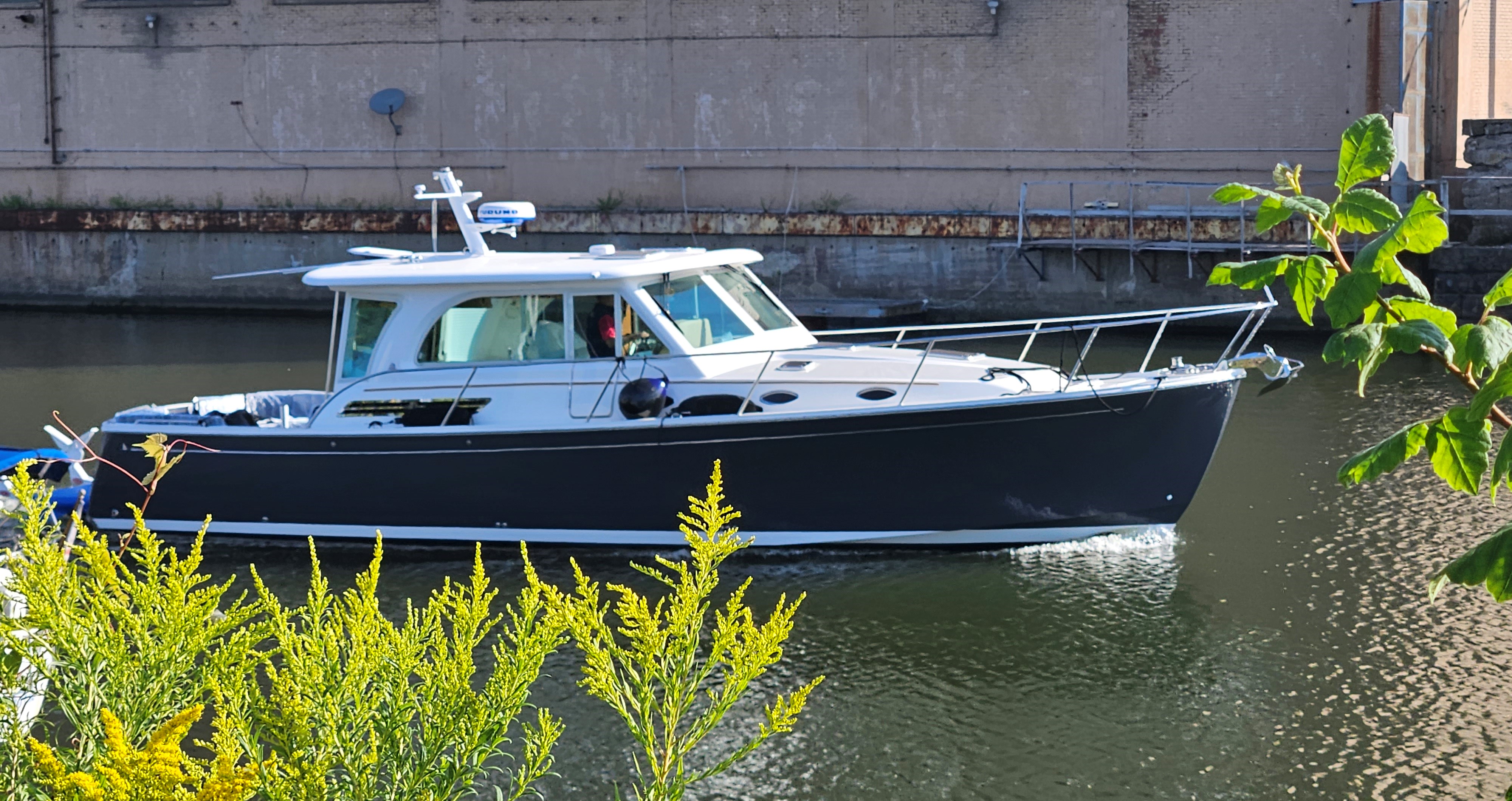
November 17th, 2024; River Forest to Cape Coral; Today’s run: 58 miles/travel time: 5hrs.
When summer ended, we returned to River Forest Yachting Center to commission the boat for the last leg of the Great American Loop.
When we arrived, the boat had been launched, but we stayed at the River Yacht Inn again until the refrigerators and freezers were up and running. Due to an icing problem, one of the freezers needed to be replaced, but the new freezer didn’t freeze as low as the original one we had, and the one we had taken out was put back in.
In preparation for leaving, we ran the inboard diesel and outboard dinghy engines, the generator, tested the anchor windlass, thrusters, checked the electrical charging systems and operated the toilets. The horn had been replaced due to an ingress of water and sounded sickly. (We have never had reason to use the horn, but if we needed it, we didn’t want it to sound whiny).
Testing included working the radar, VHF radio, running lights, and ensuring that the communication antennae could be lowered. We downloaded the most recent Furuno charts, tested the windshield wipers, retractable cockpit SureShade, and Cable Master (power cable storage).
The steering, and dinghy-lift hydraulics- (Freedom Lift), checked-out , as did the charges in the PFDs -(lifejackets), and personal locator beacon. While the boat was out of the water, the engine room automatic fire extinguisher, and the fire extinguishers in the living area, had been professionally checked and serviced. We confirmed that the expiry dates on the emergency flares were still current.
Once we moved onboard, the water pump, water heater, air conditioners, microwave, cooktop, TV, and Starlink, were used. Mike replaced a filter in the fresh water tank.
For days we had been lucky not to have the boat covered in sugarcane ash*, or more accurately bagasse ash, from one of the nearby sugarcane mills.
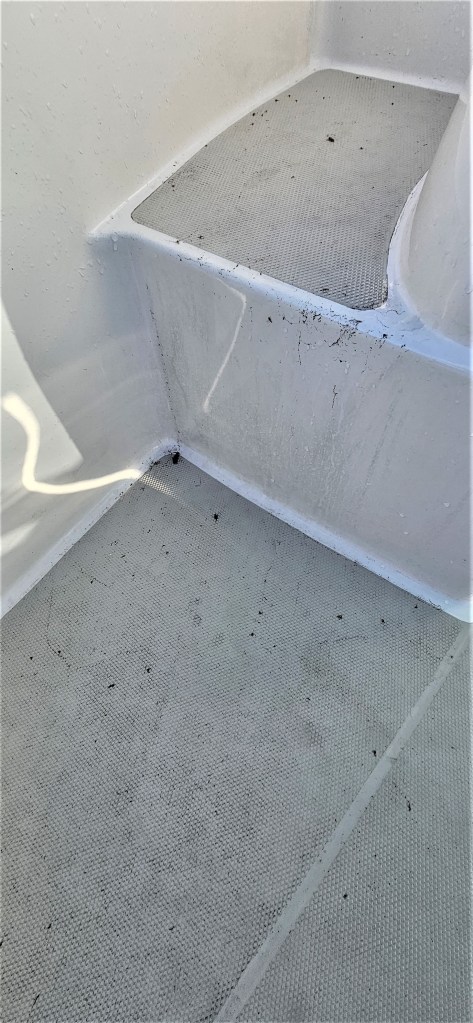
Then one day the wind changed directions and we got sprinkled with sticky black stuff. To watch a field being burned, and to learn more, click here: If you use ‘full screen’ you can read subtitles. https://www.youtube.com/watch?v=th2fhfNFbJg
*A few facts about sugarcane: – Cane fields are burned before harvesting to get rid of excess leaves and deadfall, and to help control pests and pathogens. In modern facilities, the manufacturing plant is run using a bio-fuel, a byproduct of the sugar refining process called bagasse, (the fibrous material left over after processing the sugarcane stalks). The bio fuel is used to produce electricity.
Each stalk of sugarcane contains 30 teaspoons of sugar, six teaspoons of blackstrap molasses, (mostly sold for cattle feed), a quart of water, and six ounces of solid fuel, ( bagasse). Every portion of the sugarcane stalk is used. One ton of sugarcane produces approximately 220 pounds of raw sugar. The 2024 forecast for manufacturing sugar in Florida and Louisiana, is 909,000 acres.
Our plans were to head north to Sarasota and then to Sanibel or Captiva Islands. But these marinas had not recovered from Hurricane Helene. And neither were Legacy Harbour and Edison Ford marinas up and running. Fort Myers Marina had rebuilt but they were not accepting transient boats. Mike made numerous phone calls and sent countless emails attempting to find dockage.
In real time, tropical storm Sara was forecasted to hit Florida. While in the development stage, she showed a 90% chance of coming ashore near our location. If it did, the boat was in the safest location in the state to avoid damage if she were indoors, therefore, we made arrangements for the boat to be hauled and put back into safe storage if that prediction came true. To avoid injury to ourselves, we booked a flight home. While waiting to learn what path the tropical storm was taking, we were not allowed to take the boat out of the Yachting Center, or we would not be allowed back. The Center has annual customers who pay a sort-of insurance to move their boats indoors in the event of a hurricane. We were not an annual customer.
For 10 days, we waited while following the weather. Never have we experienced such high humidity !
One of our concerns about taking the boat out of the water, was what to do with the food. We had two 55 Litre freezers full of meat and other foods. None of it could go into storage; we would need to find a home for it; donate it or worse – throw it out. I fretted for days about possibly having to throw out the food, and then one day we asked the boatyard if they had a freezer. “Yes”, they said. “We have 2 freezers that you can use!”
When we heard that Sarah was tracking towards Venezuela, we left the marina for Cape Coral.
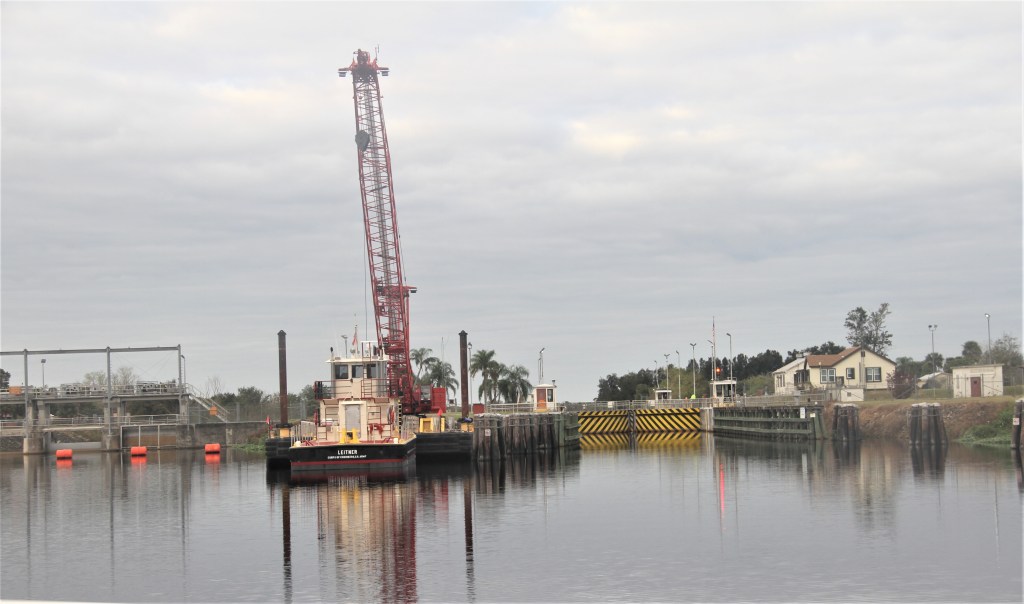
Ortuno Lock is about 5 miles downriver from the marina. As is customary on an approach to a lock, we requested a lock-through over the VHF radio. The lockmaster replied that a boat was locking-up, and it would be a few minutes; he mentioned there was a manatee in the lock. Another boat joined us in the wait.
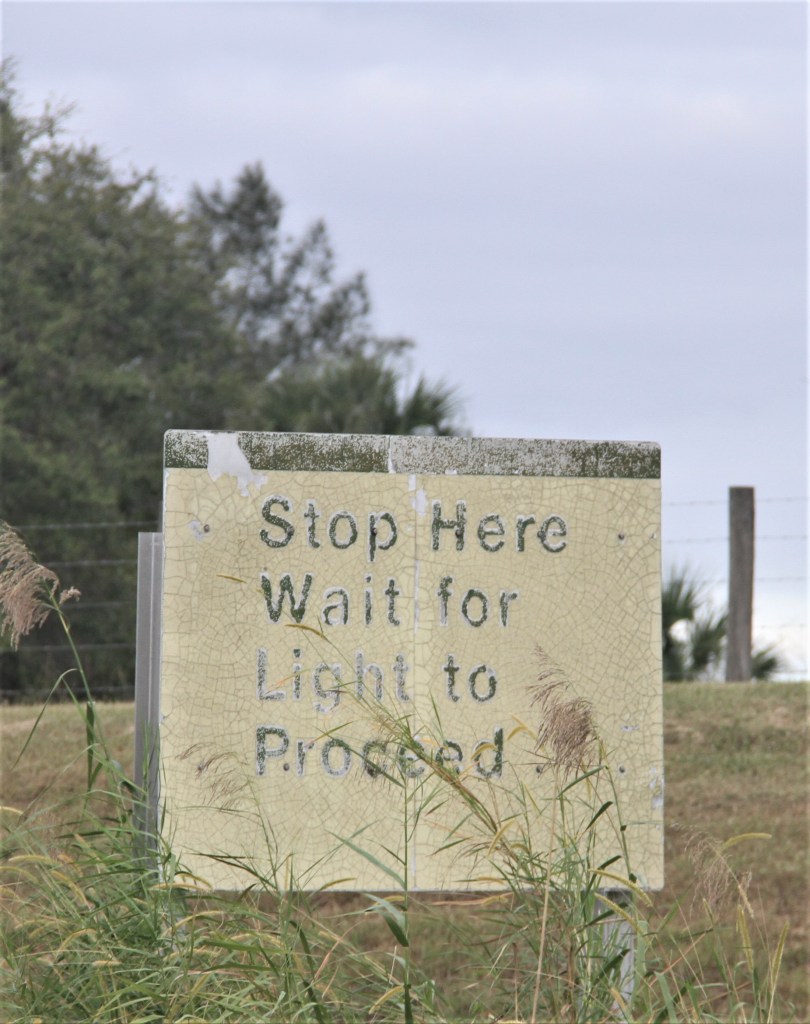
While maneuvering in the stand-off area, Mike reported he was having steering problems.
We turned the boat around and returned to the marina where we discovered a fuse, related to the steering mechanism located on the breaker panel in the lazarette, had been tripped; probably nudged when placing something in that storage area.
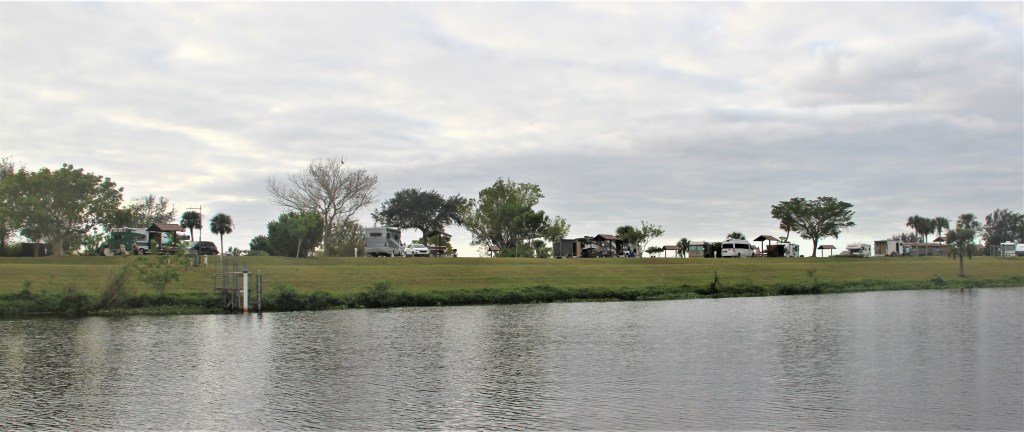
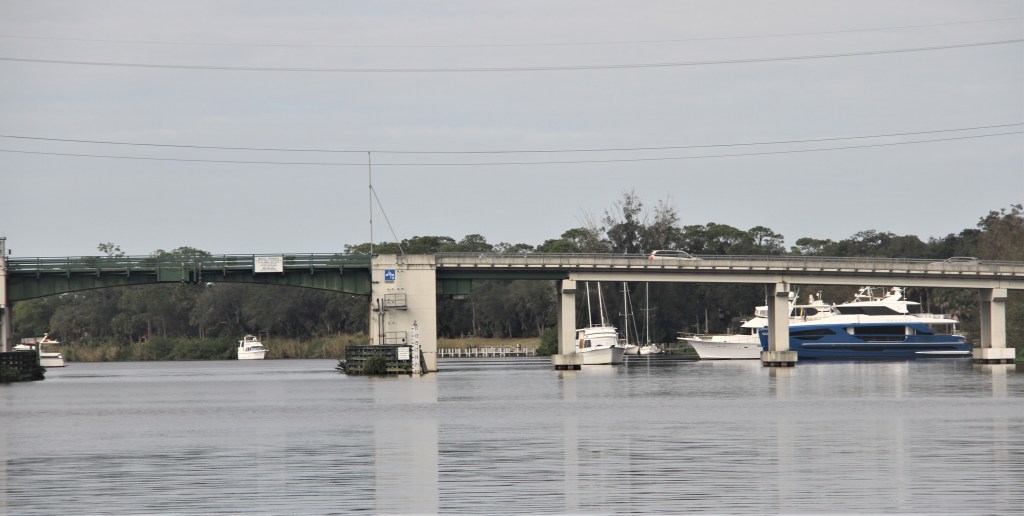
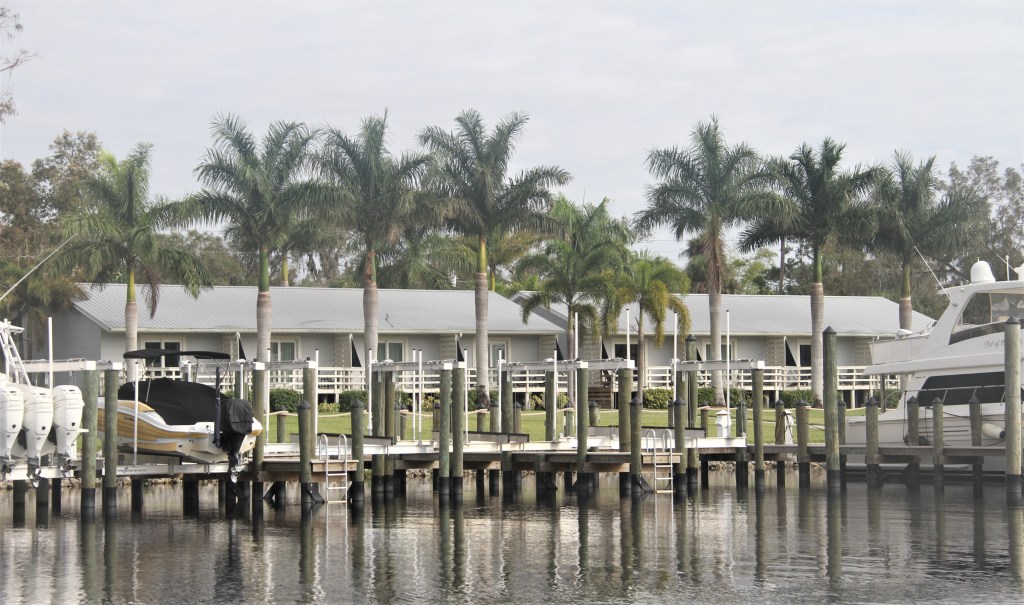
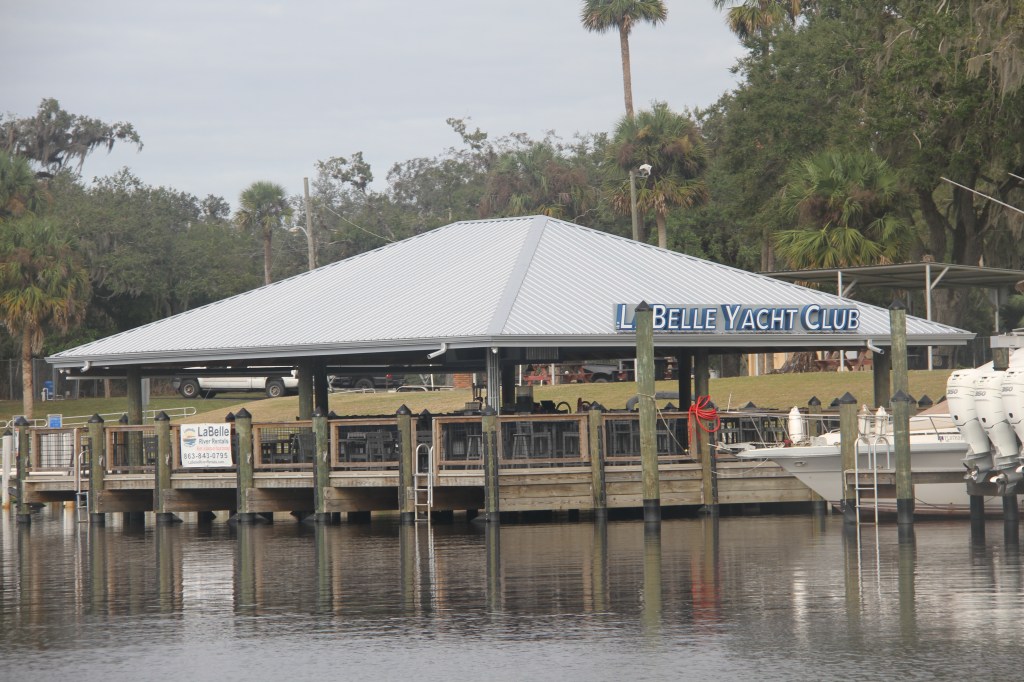
Continuing down the river:
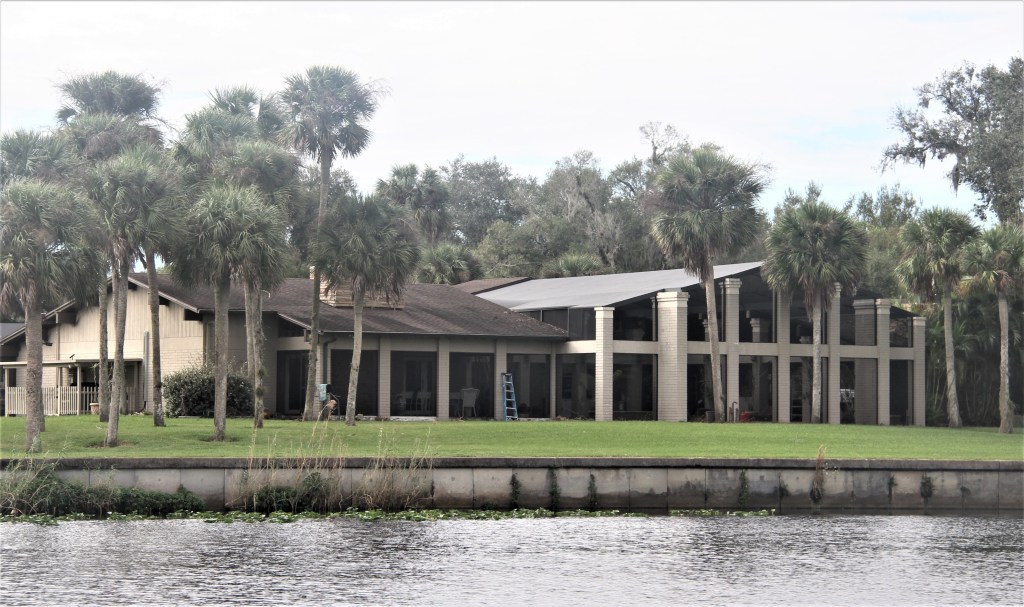
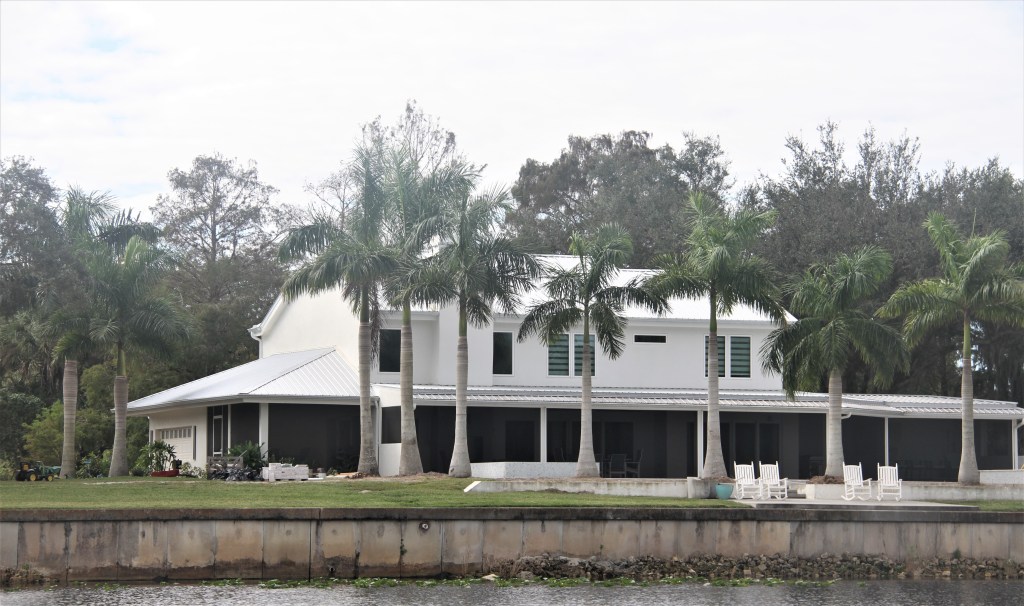
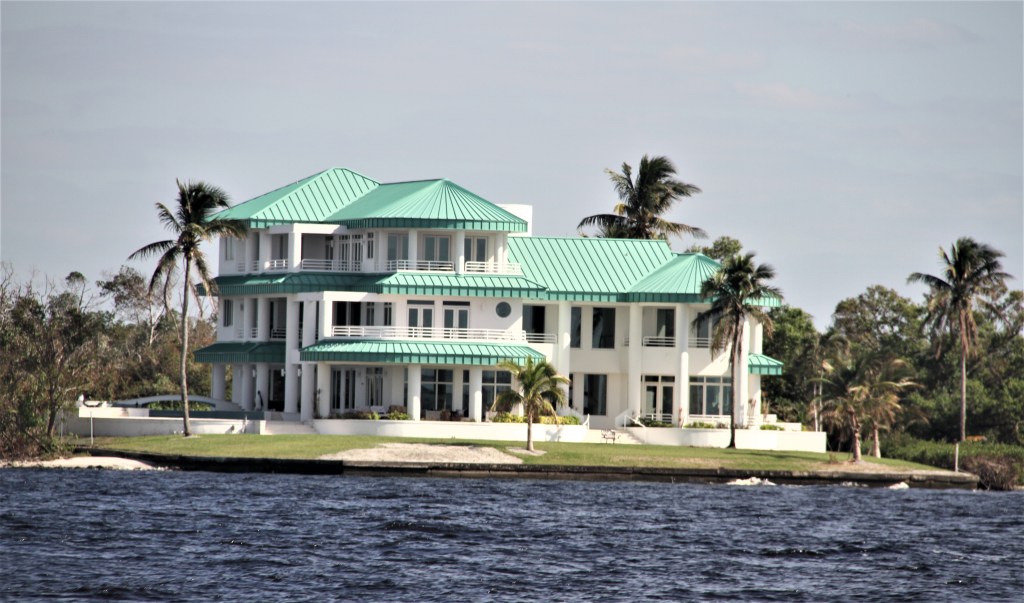
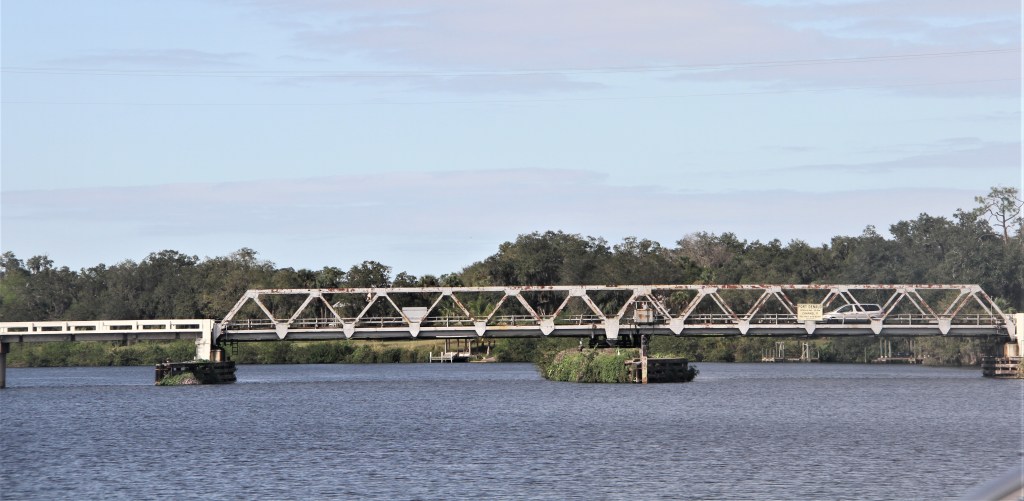
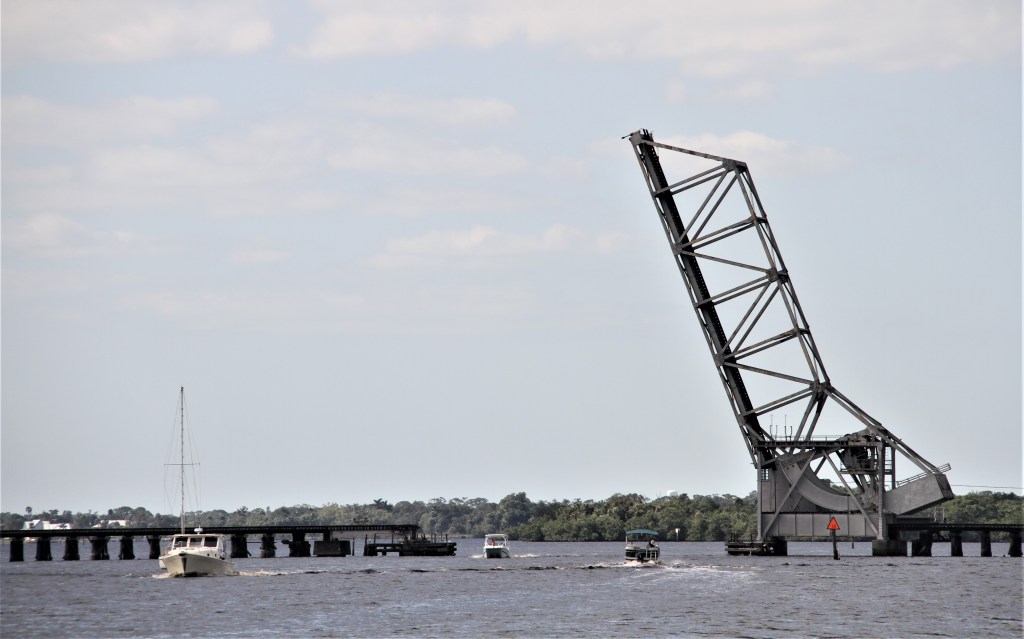
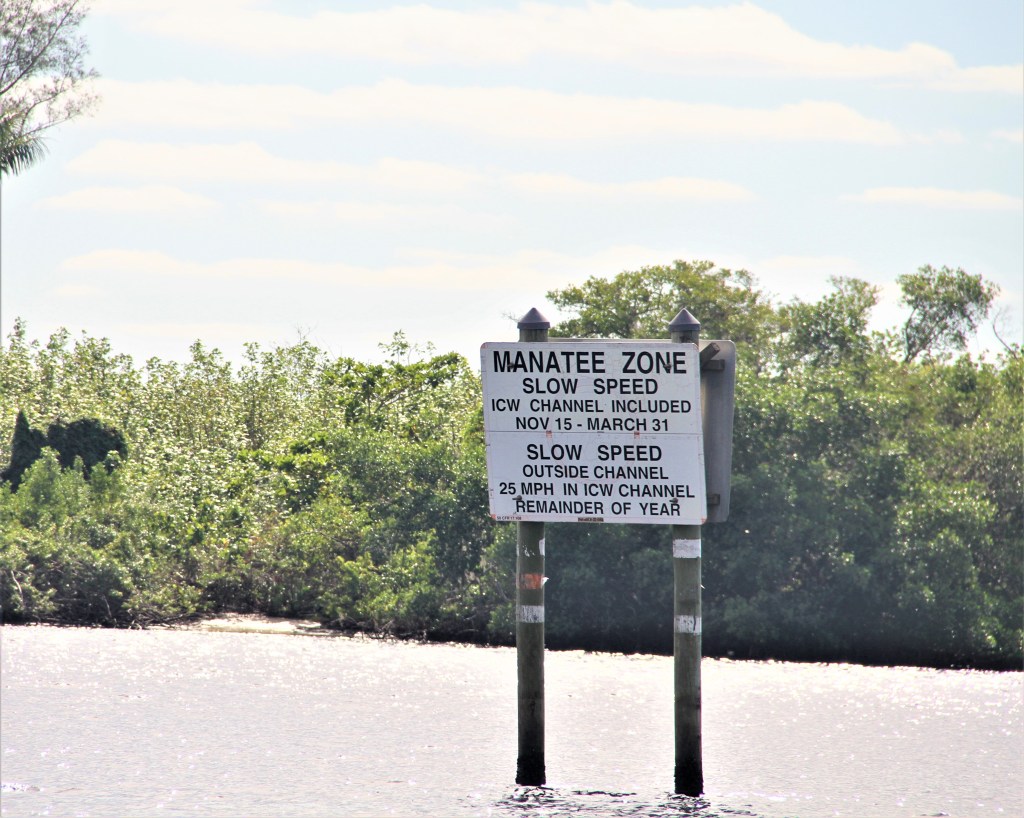
The channel here has a speed limit of 25mph but certain shallow areas, which often attract manatees, require slower speeds such as ‘No Wake’ or ‘Idle’ speed.
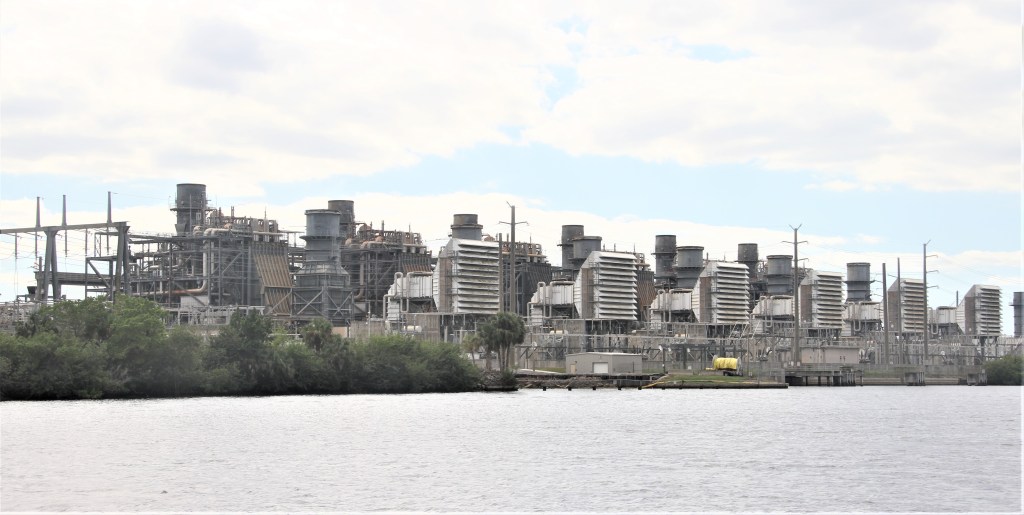
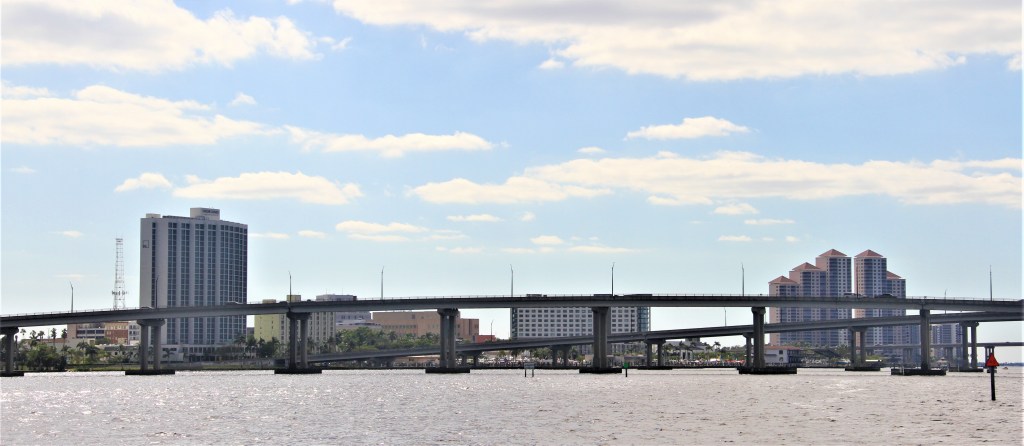
CAPE CORAL: Where the Caloosahatchee River meets the Gulf of Mexico.
Cape Coral* History; The Making of a City: During the late 1800s, only a few pioneer homesteaders farmed cattle in southwestern Florida. Following the Civil War, (1861-1865), thousands of US citizens acquired land in Florida through the US government land-grant program, (1862). The program exchanged a piece of land for a homesteaders promise to make the land productive. The government further encouraged settlement by holding land auctions whereby land was sold to investors at very low cost, especially to railroad builders. But it was World War II, that sparked serious development. Two million GIs had trained in Florida, and following the war, many of them returned to Florida and purchased land from investors such as the Rosen brothers*, (Gulf American Land Corp.).
*In 1956, the Rosen brothers purchased nearly 2000 acres where Cape Coral is today. The brothers, plus a second investor, initiated an ‘installment land sales’ industry: 10% down, $10 a month. With this system, the brothers could finance and sell ready-to-build lots.
Properties needed to be serviced by septic tanks and therefore needed to be elevated 5½ feet/1.6 metres above sea level; “millions of tons of dirt [was dredged] from miles of [dug out] canals, three yacht basins, and fourteen artificial lakes”. The earth was used to elevate the properties.
Numerous methods were used to attract potential customers to the area like free plane rides to view the properties. Once a customer chose a lot, a sack of flour was dropped from the plane onto the site as notification the lot was spoken for.
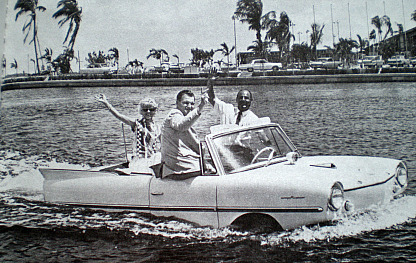
Homes were given away as prizes on game shows such as The Price is Right, and Queen for a Day. Movie stars, like Bob Hope and Anita Bryant were invited to receive awards there and to participate in Golf & Country Club activities. Movies and commercials were shot there. The brothers dug a yacht basin, and built a tennis club, inn, restaurant, and an airfield. In 1964, they constructed a bridge over the Caloosahatchee River, a link to Fort Myers.
Salesmen went overseas to find buyers.
Also attracting hundreds of thousands to the site, was an 80 acre rose garden which included 40,000 roses. From the park’s grand entrance, a vehicle carried visitors down a 2-mile avenue of blooming roses which led to several illuminated fountains, pools where dolphins performed, an amphitheatre, arched bridges and numerous lagoons.
The park, however, became too expensive to maintain, and for several reasons, the state of Florida was hesitant to take it over.
The water fountains, a replica of the famous veteran’s Iwo Jama statue, and a collection of presidential busts, are now standing in other parts of the state. Other than a street sign, Rose Garden Road, there is no hint that the garden complex was ever there; the site is now a subdivision of single family homes.
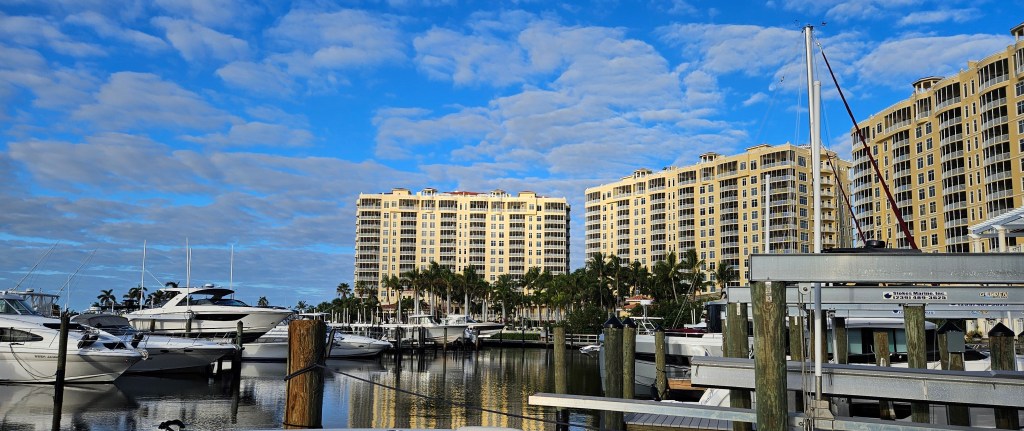
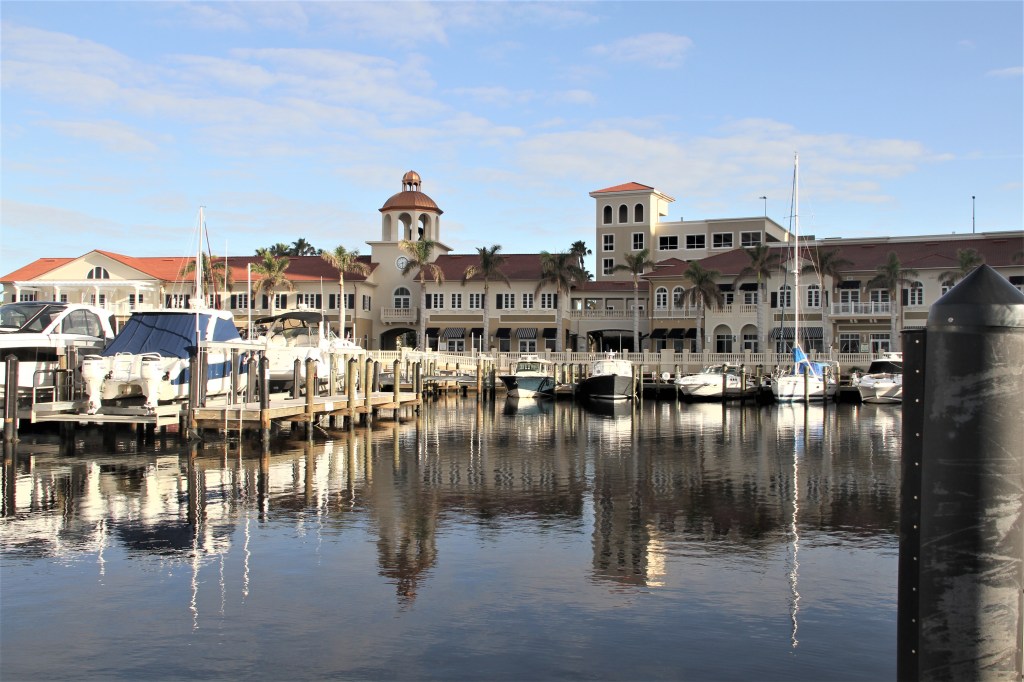
*Cape Coral, (population 224,455 (2023), was never designed to be a commercial centre, and it is often referred to as a subdivision of Fort Myers. There is no ‘downtown’ to visit, but the city is known for its’ numerous canals – 400 miles of them!
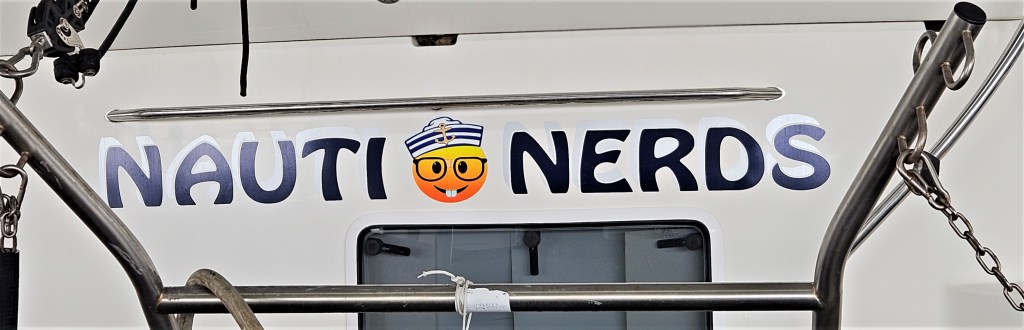
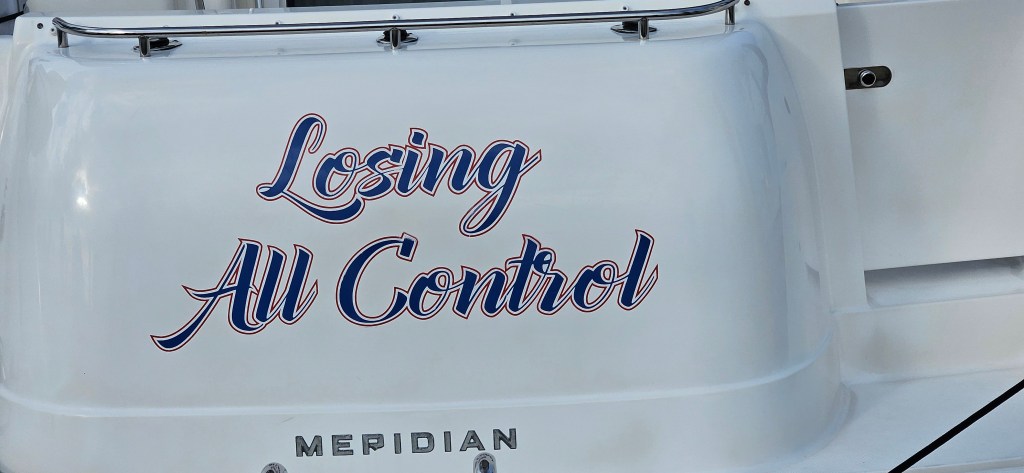
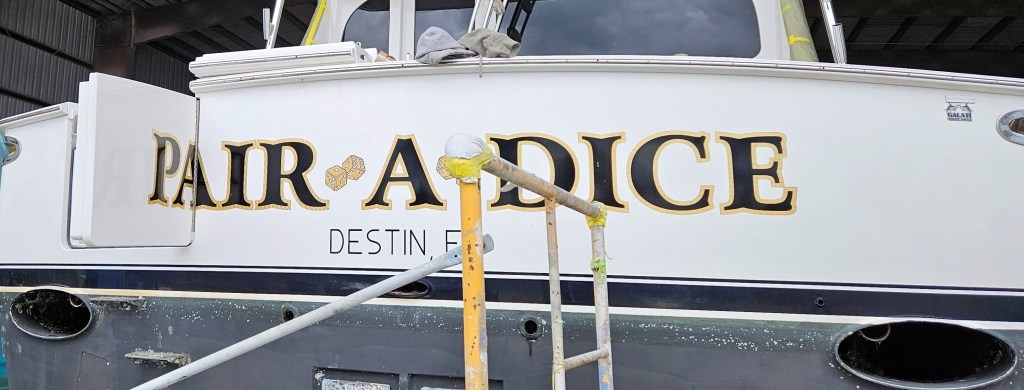
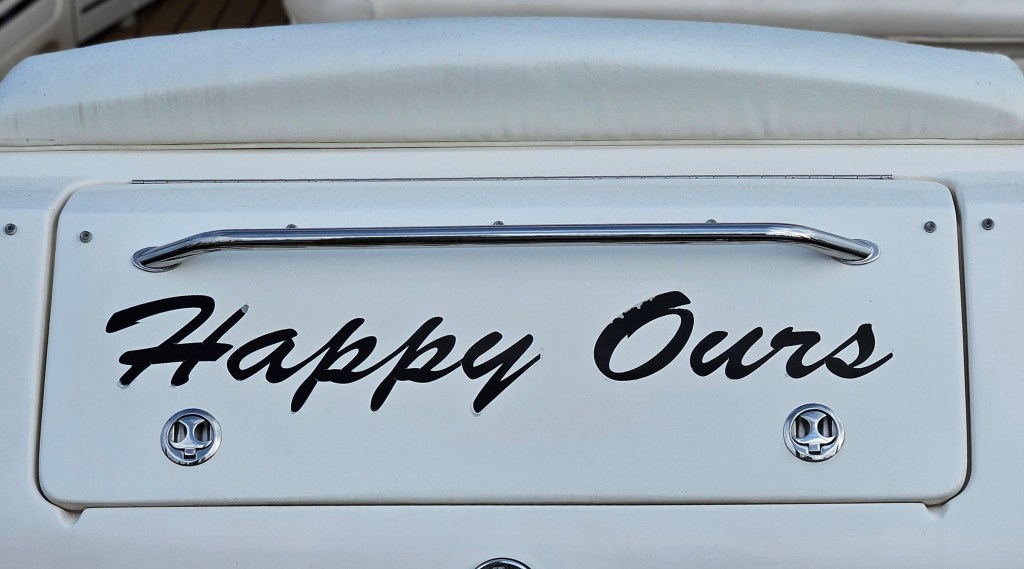
A Collection of Boat Names:


 Traveling the Great Loop
Leave a reply to phlbrwn Cancel reply